Sunday, April 17, 2011
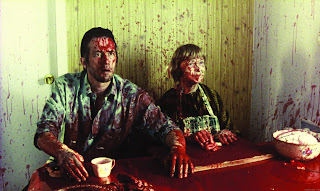
LIGHT AND QUIET (2008, Rouzbeh Rashidi, Iran, 67 min, A+)
Thursday, April 14, 2011
FAVORITE QUOTES FROM JEAN-CLAUDE ROUSSEAU
From an interview by Cyril Neyrat in Lumen Journal
http://lumenjournal.org/i-forests/interview-rousseau/#fnref-291-2
"What do I gaze at? At nothing describable, that one can observe and detail. To detail the shot would be to lose the image. I’m thinking of that beautiful preface to the book of geography, but which, as a passage, couldn’t be appropriated into the film. It’s a question of observation; the goal of the textbook is evidently to teach children and to stimulate their observation with the pictures. But to observe isn’t to be seized by the image. It’s to seize but not to be seized. The lengthiness of the shot corresponds to this gaze that doesn’t interpret, that doesn’t insist on a motive, but that is a pure vision, as we say, “to have visions.” This goes back to those disorienting moments where someone you’re with seems “out of it,” when his vision’s taken him somewhere else. And when you ask him, then, “what are you looking at?” it’s always the same reply: “nothing.” Suddenly he’s there again, as if the question had broken a charm. That’s what it is to see the image: it’s an absence."
" Let’s just say that very quickly I saw the promise of a film: I was watching the elements orient themselves, and without being able to say where it was leading, what I really wanted, it was clear that this current knew where it was going. It was simply a matter of following something that would sustain itself, that had its path, and that I only had to recognize and follow. These different vectors were converging at a single place and making the film itself this nexus: Petrarch, a geography book, a Giorgione painting, an erotic photo, an abandoned factory, the fountain at Vaucluse, and then inspiring correspondences between all these, as if validating them, the text by Lucretius on the movement of atoms, or more exactly, Bergson’s summary of it that he did in a book for philosophy students."
More about Jean-Claude Rousseau:
http://landscapesuicide.blogspot.com/2011/04/illuminations-6-or-movement-of-atoms-is.html
http://supposedaura.blogspot.com/2007/11/domestic-interiors-of-jean-claude.html
http://www.ncncine.com/20052.html

Wednesday, April 13, 2011
BANGKOK POST'S ARTICLE ON DOMINO FILM EXPERIMENT
http://www.bangkokpost.com/arts-and-culture/film/231749/small-money-big-names
A HOTEL IN AYUDHAYA
FAVORITE QUOTE FROM PATRICIO GUZMÁN
SCREAM 4 (2011, Wes Craven, A+)
DOMINO FILM EXPERIMENT
Sunday, April 10, 2011
FILM WISH LIST: FADE TO BLACK (1980, Vernon Zimmerman)
I like SCREAM TRIOGY very much, so I want to see FADE TO BLACK, because it is also about a serial killer and has many references to old films, such as DRACULA (1931, Tod Browning), THE MUMMY (1932, Karl Freund), KISS OF DEATH (1947, Henry Hathaway), WHITE HEAT (1949, Raoul Walsh), HOPALONG CASSIDY (1952-1954, TV series) and PSYCHO (1960, Alfred Hitchcock).
http://www.imdb.com/title/tt0080711/movieconnections
Vernon Zimmerman seems to be very interesting. I also want to see LEMON HEARTS (1961) by Zimmerman very much.
Here is what Jonas Mekas wrote about LEMON HEARTS (1961, Vernon Zimmerman) in 1962:
"RON RICE. VERNON ZIMMERMAN. THE POETRY OF THE ABSURD.
THE FLOWER THIEF (1960) by Ron Rice, and LEMON HEARTS (1961) by Vernon Zimmerman, are two of the latest and most successful examples of post-PULL MY DAISY cinema. Both are made with the utmost creative freedom, with the utmost disrespect for the "professional" camera, plot, character conventions. They merge and combine the spontaneous cinema of PULL MY DAISY, the freedom of the image of Brakhage, the "uncleanliness" of action painting, the theater of Happenings (Kaprow) and the sense of humor of Zen. Their imagination, coming from deeply "deranged" and liberated senses, is boundless. Nothing is forced in these films. They rediscover the poetry and wisdom of the irrational, of nonsense, of the absurd—the poetry that comes from regions that are beyond all intelligence, the regions of ZÉRO DE CONDUITE, of FIREWORKS, of DESISTFILM.
Nevertheless, the materials with which they create are embedded in reality. Didn't Rimbaud write his ILLUMINATIONS out of the burning, intensified reality of his own life? Such are the lives of the modern film poets. With their own lives, they create a "cinema reality" that is tense to the point of explosion. In a sense, they don't have to "invent"'; they just have to turn the camera upon themselves, or upon their close friends, and it explodes into the pyrotechnics upon which no imagination could improve."
The quote above comes from the book FILM CULTURE READER (edited by P. Adams Sitney).
Ed Halter wrote about THE FLOWER THIEF here:
http://www.villagevoice.com/2005-03-08/film/central-asian-indie-wastes-post-apocalyptic-landscape/
ZERO FOR CONDUCT (1933, Jean Vigo)
http://www.youtube.com/watch?v=HTS9yoX_2_g&playnext=1&list=PL540C9807689CBA8B
FIREWORKS (1947, Kenneth Anger)
http://www.youtube.com/watch?v=7XPm9iULJTE
DESISTFILM (1954, Stan Brakhage)
http://www.youtube.com/watch?v=gIRw7Kxz5rY
PULL MY DAISY (1959, Robert Frank + Alfred Leslie)
http://www.youtube.com/watch?v=V8jz8fgN-QM

SCULPTURES AT BANGKOONG TEMPLE
The photo is from
http://www.seasunholiday.net/index.php?lay=show&ac=photo_view&event_id=7788&pagephoto=1
ประวัติวัดบางกุ้งจาก wikipedia
Friday, April 08, 2011
THE MYSTERY OF THE SIBERIAN MUMMY (2004, Ute Gebhardt, Russia, A+)
Maybe this documentary should be screened after STORM OVER ASIA (1928, Vsevolod Pudovkin, Soviet Union). If I remember it correctly, STORM OVER ASIA does not portray the Buddhist institutions in Mongolia positively. STORM OVER ASIA is a powerful film, and it is right to attack bad things in religious institutions. But somehow I feel the film is a little bit too biased.
There are many interesting things in THE MYSTERY OF THE SIBERIAN MUMMY. One thing that I like very much is that the film talks about many Buddhists in Siberia who were massacred during the Stalin era. This massacre of the Buddhists somehow makes me think about the ideology presented in STORM OVER ASIA. I don't think that Vsevolod Pudovkin supported this massacre. But somehow an ideology in his film might be used in a wrong way or was used by an evil person, and led to bad things.
Watching these two films reminds me that both religions and communism are not good or bad things in themselves. What's important is how to use them or the persons who use them.
If a person doesn't try to "force" other people to believe in what he/she believes, or if a religious person doesn't try to "force" other people to be religious, or if a communist doesn't try to "force" other people to be communists, maybe the tragedy in THE MYSTERY OF THE SIBERIAN MUMMY wouldn't have occurred.
Wednesday, April 06, 2011
ME AND MY VIDEO DIARY (Tani Thitiprawat, 30 min, A++++++++++++++++)
1.I think this film is the right combination between home video, political film, and experimental film.
2.This film reveals the poetic side of Tani Thitiprawat, especially in the segment "THE STRONG FAMILIY" and the last segment of the film.
Tani belongs to a group of Thai filmmakers called THE UNDERGROUND OFFICE. I used to think that he might not be as poetically-inclined as the other two members of the group: Teeranit Siangsanoh, who makes extremely poetic films like Derek Jarman; and Wachara Kanha, who is inspired by Wong Kar-wai. But ME AND MY VIDEO DIARY shows that Tani can make poetic films, too.
Other films made by Tani, such as DISAPPEAR (2010, 26 min, A++++++++++), TO WALK NIGHT (2009, 25 min, A++++++++++), and HUNTER THE BAG (2009, 17 min, A+/A), reminds me of Quentin Tarantino, because these three films have crazy plots, and DISAPPEAR and TO WALK NIGHT combine many film genres together. So I'm surprised to find the tender, poetic side of Tani in ME AND MY VIDEO DIARY.
3.The last part of the film is very touching and made me cry. In this part, we can hear the voiceover of a man reading a poem or something like that. A part of this poem is also featured in the film FUENG (2010, Teeranit, Wachara, Tani, 28 min), which is my most favorite film I saw in 2010. The poem is used more fully in ME AND MY VIDEO DIARY.
If I remember it correctly, this poem talks about a man who tries to continue living, tries to continue to be alive, tries to reconcile with the hardship in life and move on.
In this scene, we can also see some footages of the political violence in Bangkok last year. Somehow the combination between the visual (footages of political violence) and the sound (voiceover reading the poem) in this scene yields a very powerful result.
4. In a way, Tani is breaking genre boundaries in this film again. His TO WALK NIGHT is "FUNNY GAMES meets TAXI DRIVER meets 28 DAYS LATER". His DISAPPEAR is "Alfred Hitchcock meets Quentin Tarantino meets Kiyoshi Kurosawa, etc."
In ME AND MY VIDEO DIARY, we see poetic home video. The segment THE STRONG FAMILY shows the life and atmosphere of a family. This segment can stand alone as a powerful film. But its power increases exponentially when it comes after the segment interviewing Khattiya Sawasdipol before he was killed last year.
There is no obvious connection between these two segments. But I like it very much that the segments are juxtaposed like this, because it represents "many parts" of a human being--a human being who loves both his family and politics.
If one makes a film which belongs to only one genre, that film risks representing only one side, or too few sides, of human beings.
The fact that ME AND MY VIDEO DIARY combine "political documentary" genre, "home video" genre, and "poetic experimental film" genre in one film is the reason why this film can present a human being much more fully.
5. Because the segments in ME AND MY VIDEO DIARY are half-connected, half-unconnected, ME AND MY VIDEO DIARY becomes stranger or weirder than many Thai documentaries which deal with the families of the directors. However, the "unconnectedness" between the segments in ME AND MY VIDEO DIARY is not as strong as in Alexander Kluge's films.
Thanks to Reading Room for showing this film on March 26.
YOU SAY YOU WANT A REVOLUTION FILM PROGRAM
"You Say You Want a Revolution: เปลี่ยนเถิดชาวไทย"
งานฉายหนังสั้น ว่าด้วยสังคมไทยและการเปลี่
ทั้งทางด้านการเมือง เศรษฐกิจ สังคม ศิลปะ การศึกษา เพศ และเรื่องอื่นๆ
โดยผู้กำกับหนังสั้นที่น่าส
พร้อมเสวนากับผู้กำกับตัวจร
ซึ่งได้แก่
จุฬญาณนนท์ ศิริผล, เฉลิมเกียรติ แซ่หย่อง,ไทกิ ศักดิ์พิสิษฐ์, ธัญญ์วาริน สุขะพิสิษฐ์, นฆ ปักษนาวิน, นวพล ธำรงรัตนฤทธิ์, ปราปต์ บุนปาน, ไพสิษฐ์ พันธุ์พฤกษชาติ, มานัสศักดิ์ ดอกไม้, รัชฏ์ภูมิ บุญบัญชาโชค, วิวัฒน์ เลิศวิวัฒน์วงศา และ ฮาเมอร์ ซาลวาลา
ดำเนินรายการโดย : ไกรวุฒิ จุลพงศธร, ชญานิน เตียงพิทยากร, บดินทร์ เทพรัตน์, ศาสวัต บุญศรี
ฉายทุกวันเสาร์ 15.00-18.00 สัปดาห์ละท่าน
ที่ชั้น 9 หอศิลป์ กทม. ตรงข้ามมาบุญครอง
พิเศษ! เปิดงานวันที่ 7 เม.ย. 2554 18.00 น.
หนังดีทุกเรื่องจริงๆ พลาดไม่ได้ ที่สำคัญ เข้าชมฟรี!
ติดต่อสอบถามได้ที่ 0840296421 หรือ otto2py@hotmail.com ครับ
ขออภัยที่ไม่ได้เรียนเชิญด้
************
โปรแกรมฉาย ฉบับสมบูรณ์
[7 เมษายน เปิดงานพร้อมฉายหนังสั้นบาง
- I’m Fine สบายดีค่ะ (ธัญญ์วาริน)
- ๓ กษัตริย์ / Three Kings (ไทกิ)
- Emplyee leaving the Lumiere Factory (เฉลิมเกียรติ)
- อย่าลืมฉัน (มานัสศักดิ์)
- หนังสั้นสีขาว/ชั่วแสงเทียน
- คาราโอเกะเพลงแผ่เมตตา (จุฬญาณนนท์)
- กำแพงปริญญา (Wall of Diploma) (วิวัฒน์)
- '...ออกเสียงไม่ได้ในจักรวร
- ค้างคาวเดือนพฤษภา Bat in May (ฮาเมอร์)
- อัตถิภาวะนิยมสุขสันต์ (ไพสิฐ)
[9 เมษายน นวพล ธำรงรัตนฤทธิ์]
หนังสั้นที่ฉาย
-เชอรี่เป็นลูกครึ่งเกาหลี (Cherie is Korean-Thai)
-คุณแม่อยากไปคาร์ฟูร์
-Bangkok Tanks
-ดุลยภาพแห่งจักรวาล! symmetry of universe
-ฝรั่งเศส (Francais)
-พี่หมีอยากไปอียิปต์ (Mr.Mee wanna go to Egypt)
ดำเนินรายการโดย ไกรวุฒิ จุลพงศธร
[23 เมษายน ไทกิ ศักดิ์พิสิษฐ์]
หนังสั้นที่ฉาย
- ถ้อยคำที่ถูกสาป / Whispering Ghosts
- ใต้กาลเวลา / “…I did not dream last night,”
- ต่อหน้ากาลเวลา / Looking in God's Eye
- อุรุเวลา / Deathless Distance
- นอกเสียจากเขาโกหก นอกเสียจากเขาโกหก / "Unless he tells a lie, unless he tells a lie."
- ๓ กษัตริย์ / Three Kings
- ภูเขาไฟพิโรธ / A Ripe Volcano
ดำเนินรายการโดย บดินทร์ เทพรัตน์
[30 เมษายน เฉลิมเกียรติ แซ่หย่อง]
หนังสั้นที่ฉาย
-กู่ก้องบอกรักนิรันดร
-คำพิพากษาของซาตาน
-ฆาตรกรรมสวาท ประหลาดน่านฟ้า ทำให้คนหายตัวไป
-สถานต่างอากาศ
-History in the Air
-Employee leaving the Lumiere Factory
ดำเนินรายการโดย ชญานิน เตียงพิทยากร
[5 พฤษภาคม มานัสศักดิ์ ดอกไม้]
หนังสั้นที่ฉาย
-อย่าลืมฉัน
-ข้อเท็จจริงเกี่ยวกับนายโด
-ไม่มีภาคกลางเพราะเบื่อคนช
-งานเฝ้าระวังความฝันของบุค
-ข่าวกีฬา : พวกห่ากำลังไป พวกสัมภเวสีกำลังจะมา
-หลอก
-นครพนมมือบ้าง
-นครไม่พนมมือบ้าง
-ความลับเหนือความรัก
ดำเนินรายการโดย ศาสวัต บุญศรี
[7 พฤษภาคม ปราปต์ บุนปาน]
หนังสั้นที่ฉาย
-ทวิภพในเอกภพ
-หนัง "ผี" 16 ปีแห่งความหลัง
-จดหมายจากความเงียบ
-ความลักลั่นของงานรื่นเริง
-ห้องสันติภาพ
-หนังสั้นสีขาว/ชั่วแสงเทีย
ดำเนินรายการโดย ไกรวุฒิ จุลพงศธร
[13 พฤษภาคม จุฬญาณนนท์ ศิริผล]
หนังสั้นที่ฉาย
-ภัยใกล้ตัว ฉบับผู้กำกับ
-บางสิ่งที่หายไป
-หัวลำโพง
-บ้านทรายทอง
-มิสสิสนวล ฮูแคนรีคอลเฮอร์พาสต์ไลฟ์
-ประวัติศาสตร์ขนาดย่อของคว
-คาราโอเกะเพลงแผ่เมตตา
-แบบทดสอบวิชาการเมืองไทยร่
-0814561286
-Surprise film
ดำเนินรายการโดย ไกรวุฒิ จุลพงศธร
[14 พฤษภาคม ไพสิฐ พันธุ์พฤกษชาติ]
หนังสั้นที่ฉาย
-คืนวันหนึ่งที่ถนนตะแลงแกง
-สัตว์วิบากหนักโลก
-อัตถิภาวะนิยมสุขสันต์
-หนีนรกโพธ์พระยา
-take off
ดำเนินรายการโดย ศาสวัต บุญศรี
[21 พฤษภาคม ธัญญ์วาริน สุขะพิสิษฐ์]
หนังสั้นที่ฉาย
-กะเทยนรก
-ตุ๊กตาอยู่ไหน (Where’s My Doll)
-I’m Fine สบายดีค่ะ
-แหวน (The Ring)
-เด็กหลง (Lost Child)
-เปลือก (Deep Inside)
-รักผิดบาป (In the Name of Sin)
ดำเนินรายการโดย ชญานิน เตียงพิทยากร
[28 พฤษภาคม วิวัฒน์ เลิศวิวัฒน์วงศา]
หนังสั้นที่ฉาย
-เธอกล่าว ที่เขากระซิบ (She Talk, What They Whisper)
-เดียวดายทุกแห่งหน (Loneliness Everywhere)
-ภาพเหมือน (Portrait)
-Encantos
-พายุผีเสื้อ (The Butterfly Effect)
-เพ็ญ (La Lunar)
-กำแพงปริญญา (Wall of Diploma)
-ครอง (Own)
-Surprise film
ดำเนินรายการโดย ศาสวัต บุญศรี
[4 มิถุนายน รัชฏ์ภูมิ บุญบัญชาโชค]
หนังสั้นที่ฉาย
-ของเหลวที่หลั่งจากกาย
-Ma vie incomplet et inacheveee'
-'ชุติมา'
-'...ออกเสียงไม่ได้ในจักรว
-เงือกสวมกางเกง
-เกมโบกรถ
ดำเนินรายการโดย บดินทร์ เทพรัตน์
[11 มิถุนายน นฆ ปักษนาวิน]
หนังสั้นที่ฉาย
-ไพร่ฟ้า
-แมวสามสี
-ประวัติย่อของบางสิ่งที่ยั
-ภาพยนตร์เรื่องใหม่ที่ยังไ
ดำเนินรายการโดย บดินทร์ เทพรัตน์
[18 มิถุนายน ฮาเมอร์ ซาลวาลา]
หนังสั้นที่ฉาย
-แมวบนหลังคา Cat on the roof
-War Before War
-ค้างคาวเดือนพฤษภา Bat in May
-Balloon
-ผ่านฟ้า
ดำเนินรายการโดย ชญานิน เตียงพิทยากร
Monday, April 04, 2011
Sunday, April 03, 2011
DÉCHAÎNÉES (2008, Raymond Vouillamoz, Switzerland, A+++++)
Friday, April 01, 2011
GOOD NEWS FOR TODAY
Thursday, March 31, 2011
TIGER'S EYES (1989, Thai TV series)
This TV series stars Chamaiporn Jaturapush, which is one of my most favorite actresses of all time.
Wednesday, March 30, 2011
FAVORITE OLD SONGS 110: DON'T GIVE UP ON US (1976) – David Soul
http://www.youtube.com/watch?v=YY8APrYU2Gs
Thanks to Graiwoot for telling me about this song. This song is used in the soundtrack of RABBIT HOLE (2010, John Cameron Mitchell, A+).
FAVORITE SONGS 18: QUEL JOLI TEMPS – Barbara
HOW TRIVIAL IS LIFE!