Filmsick wrote in Thai about FATE (1994, Fred Kelemen). Here is my translation of what he wrote (with some added information). I translate it to contribute to the Contemplative Blogathon 2 at http://unspokencinema.blogspot.com/ :
FATE (1994, Fred Kelemen, Germany, 80 minutes)
FATE is a graduation film of Kelemen. He directed it in 1994, and Susan Sontag, a famous writer, called it a wonderful film in her essay THE DECAY OF CINEMA.
The opening scene of FATE consists of many gloomy images of people on the streets. The camera leads us through the streets to watch old people, little children, vagabonds, some men and women. The camera seems to take us by the hand to guide us to watch human faces, before it pauses to stare at a man who is playing an accordion on a roadside. The camera stops wandering to focus on this man before it starts to follow him. This musician is hired by a guy to play an accordion in his private room, but the customer looks down on the musician because the musician is a Russian, and he forces the musician to drink vodka. The musician doesn’t fight back. He just leaves the customer’s room and walks into a glowing fountain to try to cleanse something which is inerasable. After that, he goes to see a woman, but the woman doesn’t allow him to get inside her room. He gets so angry that he breaks down her door and meets a male stranger in the room. He passes on his cruel fate to other characters. Then the camera shifts to focus on the woman, who wanders into the night with a half-naked body.
This film is shot on a video camera before transferred to 16mm film, so the images are very grainy and blurred as if it was shot long time ago. Some images look like pale shadows moving in the darkness, and darkness always embraces Kelemen’s films very tightly.
Kelemen usually made his films after long rehearsals with the cast, using just a rough script in the beginning. He let he cast share some opinions before the script was re-written in full details. After he was satisfied with the rehearsals and saw that the cast could take the film to the highest emotional point, he would start filming.
Kelemen said that he is against fast editing. In his opinion, an act of watching is not like watching a shot of a face, then a hand, then an eye. He thinks that an act of watching requires a long period of time, without unnecessary editing.
This 80-minute film only consists of twelve long scenes, and each scene depends on the power of the acting and the power of his expressionistic cinematography, while the camera rarely moves during a scene. Kelemen said that when you film a person in a room, if the person walks out of the room and you immediately cut away to another scene, then you treat that room as if it doesn’t really exist. Your film just presents the existence of human beings. But if you let your camera roll for a while to film an empty room, film it until the human atmosphere in the room fade away, you will start seeing that room as a real place, unconnected to human beings anymore. Human beings will become just something tiny in the vast universe. This way of filming is also a way to trace the marks left by human beings. It is like you sit on a chair, and then you stand up and walk away. If another person comes to sit on the same chair within a few seconds, that person will still feel the warmth in the chair, which is the result of your body temperature, though you have walked away from it. Kelemen tries to capture this kind of thing in his films. He intends to film an empty chair until the human warmth left in the chair fades away.
The situations in FATE are not unpredictable. The story seems to be very simple. It may look like a story told from an omnipresent viewpoint, with a satirical tone in the presentation of human failure. (Something in FATE may remind the viewers of some bad situations in Kieslowski’s films). But actually Kelemen’s point of view doesn’t focus on satirizing human weaknesses, but focuses on creating a universe of human failure. Therefore, human fate in this film is not a cruel joke of God, but it is the consequences of human’s own actions, the results of what we do to each other. This thing can be compared to the narrative strategy of FATE, which shifts focus from watching one character to another character.
Though FATE is full of pale, gloomy images, Kelemen said that he is attentive to every element of the film, including color which is a very important element in film. Making a movie is not just putting a camera somewhere to film anything, but you must choose very well for any color appearing in your films. FATE is filmed in color, but the technique of the film makes this film look like a monochrome film. This is not a black-and-white film, though it may look like one.
Characters in FATE don’t occupy spaces on the screen as if they are important people. The role of characters in this film is reduced to be just model of the movement of fate. This film doesn’t tell a sad story of a couple, but intends to show how a racist behavior of a man can lead to a serious assault of a woman, though that is not the end of everything. Men in Kelemen’s films are undependable, weak and try to cover up their weaknesses by being aggressive. Women in Kelemen’s films may look fragile and behave unreasonably, but they find a way to learn how to stand up on their own.
In the last scene of the film (the story of which happens in only one night), fate brings the main characters back together. The woman wakes up and doesn’t cry. She just puts on her clothes and walks on. We see her and the man walk further, being followed by a tractor which seems to be hungry for them. We see the couple and the tractor move out of the frame. The camera still doesn’t move. We begin to notice the movement of some dark shadows, causing by the clouds in the sky, in the pale, gloomy field. The couple never return into the frame. They leave the universe of unpredictable fate to stay on the screen.
--Filmsick also wrote a review of FALLEN (2005, Fred Kelemen, Latvia), but the review contains some spoilers. So some of you may want to read it after you have already seen FALLEN.
http://celinejulie.blogspot.com/2007/12/filmsicks-review-of-krisana-fallen.html
--The original writing in Thai can be read from the link below:
http://celinejulie.blogspot.com/2007/12/fred-kelemen.html
Sunday, January 13, 2008


THE FIFTH BANGKOK EXPERIMENTAL FILM FESTIVAL
THE FIFTH BANGKOK EXPERIMENTAL FILM FESTIVAL
http://www.project304.org/beff5/
CALL FOR SUBMISSIONS
The more things change …
The 5th Bangkok Experimental
Film Festival, March 2008
The more things change, the more they stay the same. Governments come and go. So do coups. The West keeps drawing its ‘roadmaps’, but who’s driving? For some, having no elected government is a terrifying state of affairs. For others, it’s just business as usual.
Change is not impossible. It’s constant. Nothing is permanent. Traditional wisdom – especially in Buddhism – says that time is cyclical, a rhythm of renewal and regeneration. But modernity’s clock is ticking. Its history is linear, irreversible, a path towards a different future. Will our history be one of progress, or will it be looped?
Political, social, historical, biological, cosmic? What are the cycles that give shape to contemporary life? Can art interrupt them, or should it work with them, go along with them?
The 5th Bangkok Experimental Film Festival is seeking films and other screen-based work that explores the rhythms and cycles of contemporary life. All genres and styles will be considered, including experimental film and video, documentary, art film, animation, machinima, etc.
Experimental film is not just about technical innovation – it’s about new voices and new perspectives. It’s about yesterday and tomorrow. It can articulate the furtive connections between the ordinary and the extraordinary, the personal and the public.
BEFF5 is organised by Kick the Machine, Project 304 and the Thai Film Foundation, and is also supported by Multimedia Arts Asia Pacific.
To submit your work, please download the BEFF 5 Entry Form here: http://www.project304.org/beff5/ and send it with your submission to:
BEFF 5, c/o Jim Thompson Art Center,
6 Soi Kasemsan 2, Rama 1 Road, Patumwan, Bangkok 10330
Thailand
Deadline: Friday, 1 February, 2008
For more info please call +66 (0)86 311 6062, or email beff.five@gmail.com
REGULATIONS
The Festival is being organized by Project 304, Kick the Machine, and the Thai Film Foundation, and is supported by Multimedia Arts Asia Pacific. The previous editions of the festival took place in Bangkok in 1997, 1999, 2001 and 2005.
Objectives
-- To present the latest experimental screen culture – by local, regional and international artists – to the Thai public, in Bangkok and other Thai cities;
-- To support the development of experimental film and art film in Thailand, and create opportunities for artistic expression in these experimental modes;
-- To allow artists and filmmakers to present their works, as well as share opinions and investigate new modes of creativity;
--To provide a forum for the arts and film community to expand its perspectives on contemporary society via experimental film, and for a wider discussion with the general public.
Format
DVD (PAL, NTSC) with English subtitles
Screening Period
Bangkok, March 26 – 30, 2008
(Schedules for other cities TBA)
Rules
1) All submitted works must have been executed after 2006 (except in Retrospective and special sections, for which works will be selected by our curatorial staff). The length of the work is not limited. Productions whose themes show a commitment to promoting the creative art of the moving image are strongly encouraged.
2) The work should be with subtitles in English.
3) The works should be sent ‘freight pre-paid’, i.e. at sender’s cost.
4) The Festival is responsible for the screening schedule of the film.
5) The Festival has the right to reject material that is not relevant to the objectives of the festival.
6) After the festival, the DVDs and accompanying materials will not be returned. They will be kept as BEFF archives and will not be shown to the public without the consent of the filmmaker or the film producer.
Application
1) Deadline for all applications is Friday, 1 February, 2008.
2) Entrants whose films have been selected will be notified soon after the selection.
3) DVDs, accompanying documents, and entry forms should be sent to:
BEFF 5, c/o- Jim Thompson Art Center,
6 Soi Kasemsan 2, Rama 1 Road, Patumwan, Bangkok 10330 Thailand Tel./Fax. +662.219.2911 Email: beff.five@gmail.com
http://www.project304.org/beff5/
CALL FOR SUBMISSIONS
The more things change …
The 5th Bangkok Experimental
Film Festival, March 2008
The more things change, the more they stay the same. Governments come and go. So do coups. The West keeps drawing its ‘roadmaps’, but who’s driving? For some, having no elected government is a terrifying state of affairs. For others, it’s just business as usual.
Change is not impossible. It’s constant. Nothing is permanent. Traditional wisdom – especially in Buddhism – says that time is cyclical, a rhythm of renewal and regeneration. But modernity’s clock is ticking. Its history is linear, irreversible, a path towards a different future. Will our history be one of progress, or will it be looped?
Political, social, historical, biological, cosmic? What are the cycles that give shape to contemporary life? Can art interrupt them, or should it work with them, go along with them?
The 5th Bangkok Experimental Film Festival is seeking films and other screen-based work that explores the rhythms and cycles of contemporary life. All genres and styles will be considered, including experimental film and video, documentary, art film, animation, machinima, etc.
Experimental film is not just about technical innovation – it’s about new voices and new perspectives. It’s about yesterday and tomorrow. It can articulate the furtive connections between the ordinary and the extraordinary, the personal and the public.
BEFF5 is organised by Kick the Machine, Project 304 and the Thai Film Foundation, and is also supported by Multimedia Arts Asia Pacific.
To submit your work, please download the BEFF 5 Entry Form here: http://www.project304.org/beff5/ and send it with your submission to:
BEFF 5, c/o Jim Thompson Art Center,
6 Soi Kasemsan 2, Rama 1 Road, Patumwan, Bangkok 10330
Thailand
Deadline: Friday, 1 February, 2008
For more info please call +66 (0)86 311 6062, or email beff.five@gmail.com
REGULATIONS
The Festival is being organized by Project 304, Kick the Machine, and the Thai Film Foundation, and is supported by Multimedia Arts Asia Pacific. The previous editions of the festival took place in Bangkok in 1997, 1999, 2001 and 2005.
Objectives
-- To present the latest experimental screen culture – by local, regional and international artists – to the Thai public, in Bangkok and other Thai cities;
-- To support the development of experimental film and art film in Thailand, and create opportunities for artistic expression in these experimental modes;
-- To allow artists and filmmakers to present their works, as well as share opinions and investigate new modes of creativity;
--To provide a forum for the arts and film community to expand its perspectives on contemporary society via experimental film, and for a wider discussion with the general public.
Format
DVD (PAL, NTSC) with English subtitles
Screening Period
Bangkok, March 26 – 30, 2008
(Schedules for other cities TBA)
Rules
1) All submitted works must have been executed after 2006 (except in Retrospective and special sections, for which works will be selected by our curatorial staff). The length of the work is not limited. Productions whose themes show a commitment to promoting the creative art of the moving image are strongly encouraged.
2) The work should be with subtitles in English.
3) The works should be sent ‘freight pre-paid’, i.e. at sender’s cost.
4) The Festival is responsible for the screening schedule of the film.
5) The Festival has the right to reject material that is not relevant to the objectives of the festival.
6) After the festival, the DVDs and accompanying materials will not be returned. They will be kept as BEFF archives and will not be shown to the public without the consent of the filmmaker or the film producer.
Application
1) Deadline for all applications is Friday, 1 February, 2008.
2) Entrants whose films have been selected will be notified soon after the selection.
3) DVDs, accompanying documents, and entry forms should be sent to:
BEFF 5, c/o- Jim Thompson Art Center,
6 Soi Kasemsan 2, Rama 1 Road, Patumwan, Bangkok 10330 Thailand Tel./Fax. +662.219.2911 Email: beff.five@gmail.com
"SITTING IN YOUR ROOM AND DO NOTHING IS A VERY BIG ADVENTURE"
I just discovered an article by Jonathan Romney in the Guardian website. The article is called ARE YOU SITTING COMFORTABLY? (7 October, 2000). It can be read from the link below:
http://film.guardian.co.uk/features/featurepages/0,,378684,00.html
In the article above, there is something said by Fred Kelemen which I like very much. Here is what he said:
“Even if you sit in your room and do nothing, time is passing and something is happening - which is a very big adventure."”
http://film.guardian.co.uk/features/featurepages/0,,378684,00.html
In the article above, there is something said by Fred Kelemen which I like very much. Here is what he said:
“Even if you sit in your room and do nothing, time is passing and something is happening - which is a very big adventure."”
NON-NARRATIVE MOMENTS IN NARRATIVE FILMS
This is my comment in Pilgrim Akimbo’s blog:
http://pilgrimakimbo.blogspot.com/
Your writing about the walking scene in WRONG MOVE inspires me to think about something. Though what I think may not be directly related to the topic of your writing, it is still directly inspired by your writing. So I would like to share it with you.
Here is what I think:
--There are some outstanding non-narrative moments in narrative films, such as the walking scene in WRONG MOVE. Such moments may include:
1.The riding-on-a-train scene in SECRET DEFENSE (1998, Jacques Rivette), in which we only see the protagonist riding on a train for a long time. Nothing is really happening in the scene, except what the heroine may be thinking during that journey. Jared Rapfogel wrote about this important scene in Senses of Cinema.
2.Some moments in ALL THE VERMEERS IN NEW YORK (1990, Jon Jost). For the most parts, this film is like a Rohmer’s film, because it is full of characters talking naturally to each other. But some moments stand out from the film because they seem unconnected to the main story, such as the scene in which something is slowly moving across the sky, the one in which the camera just focuses on the patterns on the building floor, or the one in which the camera moves slowly between columns.
3.A blackout scene in THE BANGKOK BOURGEOIS PARTY (2007, Prap Boonpan, Thailand). This film is full of characters talking passionately and angrily to each other about the political problems of Thailand. But in the middle of the film, there is a blackout scene lasting 3-5 minutes. The viewers are forced to watch a black screen, in which nothing is to be seen, nothing is to be heard, for the whole of this scene. This scene really urges the viewers to spend the time to contemplate many things they just heard from the characters, before the debates between characters continue in the next scene.
In conclusion, I think these non-narrative moments are one of the best things in these narrative films. Some films can choose to tell stories. Some films can choose to discard stories. Some films can choose to tell story in one scene, and discard story in the next scene.
--I like walking-and-talking scenes in films very much. While the walking scene in WRONG MOVE is a part of the whole film, there are also some films which are dominated by the walking-and-talking scenes in them. These films are:
1.NIGHT TIME PICNIC (2006, Masahiko Nagasawa, Japan). In this film, a class of high-school students walk and talk for the most parts of the film. But I think this film is not a contemplative film, because there are many flashbacks and plot points in it.
2.MUSASHINO HIGH VOLTAGE TOWER (1997, Naoki Nagao, Japan, 118 minutes). In this film, two young boys keep on walking along the power lines in rural Japan. This film might be a mainstream contemplative film, because there is so very little happening in the film, except the characters’ uneventful journey. Highly impressive.
http://pilgrimakimbo.blogspot.com/
Your writing about the walking scene in WRONG MOVE inspires me to think about something. Though what I think may not be directly related to the topic of your writing, it is still directly inspired by your writing. So I would like to share it with you.
Here is what I think:
--There are some outstanding non-narrative moments in narrative films, such as the walking scene in WRONG MOVE. Such moments may include:
1.The riding-on-a-train scene in SECRET DEFENSE (1998, Jacques Rivette), in which we only see the protagonist riding on a train for a long time. Nothing is really happening in the scene, except what the heroine may be thinking during that journey. Jared Rapfogel wrote about this important scene in Senses of Cinema.
2.Some moments in ALL THE VERMEERS IN NEW YORK (1990, Jon Jost). For the most parts, this film is like a Rohmer’s film, because it is full of characters talking naturally to each other. But some moments stand out from the film because they seem unconnected to the main story, such as the scene in which something is slowly moving across the sky, the one in which the camera just focuses on the patterns on the building floor, or the one in which the camera moves slowly between columns.
3.A blackout scene in THE BANGKOK BOURGEOIS PARTY (2007, Prap Boonpan, Thailand). This film is full of characters talking passionately and angrily to each other about the political problems of Thailand. But in the middle of the film, there is a blackout scene lasting 3-5 minutes. The viewers are forced to watch a black screen, in which nothing is to be seen, nothing is to be heard, for the whole of this scene. This scene really urges the viewers to spend the time to contemplate many things they just heard from the characters, before the debates between characters continue in the next scene.
In conclusion, I think these non-narrative moments are one of the best things in these narrative films. Some films can choose to tell stories. Some films can choose to discard stories. Some films can choose to tell story in one scene, and discard story in the next scene.
--I like walking-and-talking scenes in films very much. While the walking scene in WRONG MOVE is a part of the whole film, there are also some films which are dominated by the walking-and-talking scenes in them. These films are:
1.NIGHT TIME PICNIC (2006, Masahiko Nagasawa, Japan). In this film, a class of high-school students walk and talk for the most parts of the film. But I think this film is not a contemplative film, because there are many flashbacks and plot points in it.
2.MUSASHINO HIGH VOLTAGE TOWER (1997, Naoki Nagao, Japan, 118 minutes). In this film, two young boys keep on walking along the power lines in rural Japan. This film might be a mainstream contemplative film, because there is so very little happening in the film, except the characters’ uneventful journey. Highly impressive.
Saturday, January 12, 2008
FILMSICK'S REVIEW OF "RAISED FROM DUST", A CONTEMPLATIVE FILM
--I have submitted Filmsick’s review of PHANTOM LOVE (2007, Nina Menkes) as a part of Contemplative Blogathon 2.
http://unspokencinema.blogspot.com/2008/01/blogathon-2008.html
This is my comment in Unspoken Cinema’s blog:
http://unspokencinema.blogspot.com/2008/01/roundtable-1-ccc-synopsis.html
This is a synopsis of THE KITE (2002, Aleksei Muradov, Russia) in TIME OUT FILM GUIDE, written by Geoff Andrew. I love this film a lot, but I think Andrew wrote this review by being conscious of different groups of his readers—those who love contemplative films and those who don’t.
http://www.timeout.com/film/reviews/78797/The_Kite.html
“From the opening scene of an alcoholic boozing by night to the somewhat unexpected ending, this slow, sombre film refuses to make things explicit or easy for the viewer. The narrative shifts focus almost as much as the camera, demanding patience as it reveals only gradually what's going on or why. If anything, it's a vision of hell on earth: a couple row endlessly, drained by the difficulties of work and of caring for a disabled son. The film does finally reward the attentive viewer with revelations and moments of true tenderness, but it's probably a bit too gloomy and ungiving for most tastes.”
As for the kind of short review I like, I like what my friend Filmsick wrote for RAISED FROM DUST (2006, Gan Xiao Er, China) in his most favorite film list of 2007 in a Thai website (www.onopen.com) , because it’s the review which makes me know instantly that this is a must-see film for contemplative film lovers, though he may use some words which may seem like a warning for those who don’t love contemplative films.
I tried to translate his review from Thai into English here. My translation is not 100 % accurate compared to his Thai review:
“This film is about a poor woman who has a sick husband staying in a hospital and a daughter who can’t pay tuition fees. What’s surprising is that the film contains no melodramatic scene. This is a low-budget film, full of static shots and stillness. The images seem to be transfixed by the empty atmosphere of rural China. Every scene is so natural, so life-like and so long that it can be a torture. The film is like a documentary without an ounce of sentimentality. We rarely see a close-up scene of the heroine. The story doesn’t seem to move forward. There is no music. Even in the climactic scene, we can only hear a sound of the wheels from her vehicle. This is not a kind of slow-but-deep films as Hou Hsiao-hsien’s, nor a kind of slow-bittter-humorous films as Tsai Ming-liang’s. But this is a film of stillness and silence which is extremely hurtful and powerful.”
http://unspokencinema.blogspot.com/2008/01/blogathon-2008.html
This is my comment in Unspoken Cinema’s blog:
http://unspokencinema.blogspot.com/2008/01/roundtable-1-ccc-synopsis.html
This is a synopsis of THE KITE (2002, Aleksei Muradov, Russia) in TIME OUT FILM GUIDE, written by Geoff Andrew. I love this film a lot, but I think Andrew wrote this review by being conscious of different groups of his readers—those who love contemplative films and those who don’t.
http://www.timeout.com/film/reviews/78797/The_Kite.html
“From the opening scene of an alcoholic boozing by night to the somewhat unexpected ending, this slow, sombre film refuses to make things explicit or easy for the viewer. The narrative shifts focus almost as much as the camera, demanding patience as it reveals only gradually what's going on or why. If anything, it's a vision of hell on earth: a couple row endlessly, drained by the difficulties of work and of caring for a disabled son. The film does finally reward the attentive viewer with revelations and moments of true tenderness, but it's probably a bit too gloomy and ungiving for most tastes.”
As for the kind of short review I like, I like what my friend Filmsick wrote for RAISED FROM DUST (2006, Gan Xiao Er, China) in his most favorite film list of 2007 in a Thai website (www.onopen.com) , because it’s the review which makes me know instantly that this is a must-see film for contemplative film lovers, though he may use some words which may seem like a warning for those who don’t love contemplative films.
I tried to translate his review from Thai into English here. My translation is not 100 % accurate compared to his Thai review:
“This film is about a poor woman who has a sick husband staying in a hospital and a daughter who can’t pay tuition fees. What’s surprising is that the film contains no melodramatic scene. This is a low-budget film, full of static shots and stillness. The images seem to be transfixed by the empty atmosphere of rural China. Every scene is so natural, so life-like and so long that it can be a torture. The film is like a documentary without an ounce of sentimentality. We rarely see a close-up scene of the heroine. The story doesn’t seem to move forward. There is no music. Even in the climactic scene, we can only hear a sound of the wheels from her vehicle. This is not a kind of slow-but-deep films as Hou Hsiao-hsien’s, nor a kind of slow-bittter-humorous films as Tsai Ming-liang’s. But this is a film of stillness and silence which is extremely hurtful and powerful.”
TAIKI SAKPISIT'S MUSIC VIDEO IN SAN FRANCISCO
Moalboalfilmsociety has left a comment in my blog about a music video shot by Taiki Sakpisit.
http://celinejulie.blogspot.com/2007/12/new-years-wish-abolist-thai-culture.html
This is a music video of the song AGAETIS BYRJUN by Sigur Ros, shot on the streets of San Francisco. You can watch it in the link below:
http://www.youtube.com/watch?v=dUW4Y9RiTmk
I think this is a kind of documentary-music video. I think this music video can be viewed together with two films—ALABAMA: 2000 LIGHT YEARS FROM HOME (1969, Wim Wenders, A+), which has some nice scenes of car moving, and SOMETHING MORE THAN NIGHT (2003, Daniel Eisenberg), which observes daily (or nightly) lives of ordinary people.
This is the synopsis of ALABAMA: 2000 LIGHT YEARS FROM HOME in imdb.com
“Because the driver is unable to fulfill correctly his order to kill somebody, he and his friends have to pay the price. "Alabama" is a road-movie. The camera is constantly in the back of the car shooting through the back window... But more important than this story is how the song "All Along the Watchtower" by Bob Dylan is changing when it is interpreted by Jimi Hendrix. And the recurring album of the Stones "His Satanic Majesty's Request".”
This is the synopsis of SOMETHING MORE THAN NIGHT in imdb.com
http://www.imdb.com/title/tt0356053/
“Composed entirely of long-take, stolen shots taken at night in Chicago, this dialogue-free, music-free film is an experimental meditation on urban spaces and the denizens who live in them.”
--Taiki Sakpisit directed a short film called BUNGALOWZEN: THE AMERICAN TRILOGY (2004, 19 minutes), which I like very much. It is full of scenes of car moving. He also shot a short video which was used as a background of a stage performance called NO TRANSLATION (2007, Terry Hatfield, A). Taiki also has a blog at http://bungalowzen.blogspot.com . His blog is full of nice photographs, especially photographs of Butoh performances.
http://celinejulie.blogspot.com/2007/12/new-years-wish-abolist-thai-culture.html
This is a music video of the song AGAETIS BYRJUN by Sigur Ros, shot on the streets of San Francisco. You can watch it in the link below:
http://www.youtube.com/watch?v=dUW4Y9RiTmk
I think this is a kind of documentary-music video. I think this music video can be viewed together with two films—ALABAMA: 2000 LIGHT YEARS FROM HOME (1969, Wim Wenders, A+), which has some nice scenes of car moving, and SOMETHING MORE THAN NIGHT (2003, Daniel Eisenberg), which observes daily (or nightly) lives of ordinary people.
This is the synopsis of ALABAMA: 2000 LIGHT YEARS FROM HOME in imdb.com
“Because the driver is unable to fulfill correctly his order to kill somebody, he and his friends have to pay the price. "Alabama" is a road-movie. The camera is constantly in the back of the car shooting through the back window... But more important than this story is how the song "All Along the Watchtower" by Bob Dylan is changing when it is interpreted by Jimi Hendrix. And the recurring album of the Stones "His Satanic Majesty's Request".”
This is the synopsis of SOMETHING MORE THAN NIGHT in imdb.com
http://www.imdb.com/title/tt0356053/
“Composed entirely of long-take, stolen shots taken at night in Chicago, this dialogue-free, music-free film is an experimental meditation on urban spaces and the denizens who live in them.”
--Taiki Sakpisit directed a short film called BUNGALOWZEN: THE AMERICAN TRILOGY (2004, 19 minutes), which I like very much. It is full of scenes of car moving. He also shot a short video which was used as a background of a stage performance called NO TRANSLATION (2007, Terry Hatfield, A). Taiki also has a blog at http://bungalowzen.blogspot.com . His blog is full of nice photographs, especially photographs of Butoh performances.
Thursday, January 10, 2008
EIGHTH POLL: "FILMING EMPTY CHAIR TILL THERE'S NO WARMTH LEFT"
EIGHTH POLL: “FILMING EMPTY CHAIR TILL THERE’S NO WARMTH LEFT”
My eighth poll is inspired by CONTEMPLATIVE BLOGATHON 2, which is being hosted by Harrytuttle at http://unspokencinema.blogspot.com/ . I think CONTEMPLATIVE BLOGATHON is a real food for thought. It is very useful for me. Though I feel sorry I can’t write anything meaningful to contribute to the blogathon, I still feel very inspired by it, so I think I should make a poll which mostly consists of contemplative films and some slow films which may not be contemplative.
My eighth poll is also inspired by my forgetfulness. I forgot to include BIRTH OF THE SEANEMA in my seventh poll of favorite recent black-and-white films. How could I forget this film which is one of my most favorite films of all time? So I decided to create a poll for BIRTH OF THE SEANEMA, which is one of the slowest films I have ever seen.
I LOVE THESE SLOW FILMS VERY MUCH. WHICH FILM DO YOU LIKE?
1.ANGEL’S FALL (2005, Semih Kaplanoglu, Turkey)
2.ARIES: A POEM FOR KATIA (2004, Faozan Rizal, Indonesia)
3.AUTOHYSTORIA (2007, Raya Martin, Philippines)
4.LA BELLE NOISEUSE (1991, Jacques Rivette, France)
5.BIRTH OF THE SEANEMA (2004, Sasithorn Ariyavicha, Thailand)
6.BLISSFULLY YOURS (2002, Apichatpong Weerasethakul, Thailand)
7.DAMNATION (1988, Bela Tarr, Hungary)
8.DYING AT A HOSPITAL (1993, Jun Ichikawa, Japan)
9.FATE (1994, Fred Kelemen, Germany)
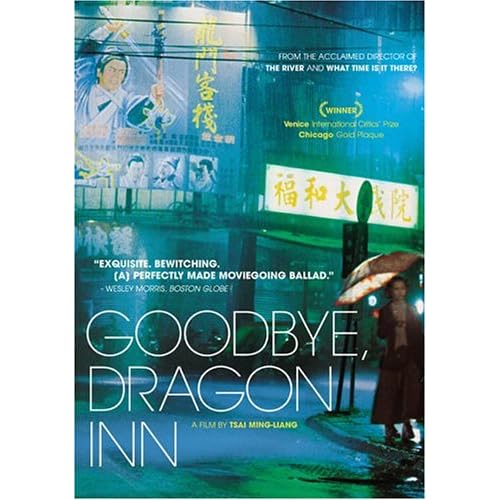
10.GOODBYE, DRAGON INN (2003, Tsai Ming-liang, Taiwan)
http://ecx.images-amazon.com/images/I/51WBCX7MWQL._SS500_.jpg
11.THE KITE (2002, Aleksai Muradov, Russia)
12.THE LEFT-HANDED WOMAN (1978, Peter Handke, West Germany)
13.THE LONG DAY CLOSES (1992, Terence Davies, UK)
14.NATHALIE GRANGER (1972, Marguerite Duras, France)
15.NO PLACE, NOWHERE (2004, Jose Luis Torres Leiva, Chile)
16.OURS DOESN’T WORK (2003, Nicolas Alvarez, Ivan Wolovik, Argentina)
17.QUINCE TREE OF THE SUN (1992, Victor Erice, Spain)
18.RAIN DOGS (2006, Ho Yuhang, Malaysia)
19.SOMETHING MORE THAN NIGHT (2003, Daniel Eisenberg, USA)
20.THE SUN (2005, Alexander Sokurov, Russia)
--I’m sorry many of the films in this poll are not available as DVD yet. But let’s blame it on the DVD companies who often overlook these wonderful gems.
--The title of this poll–“filming empty chair till there’s no warmth left” comes from what Fred Kelemen said. During the Fred Kelemen retrospective in Bangkok in November 2007, Kelemen gave many useful Q&A. Unfortunately, I don’t remember the exact words that Kelemen said during the Q&A. I just remembered some of his ideas, but after a few weeks, I guess some of his ideas that I tried to register in my memory have mixed with my own ideas. Now I’m not sure anymore how much of the ideas in my memory exactly comes from Kelemen, and how much comes from my own ideas. So I apologize in advance if I remember anything wrongly.
Filmsick wrote in Thai about one of Kelemen’s ideas that I like very much. It is about his method of editing. Kelemen said that in most films, the filmmaker may film a person sitting in a room, but after the person stands up and walks out of the room, the filmmaker will suddenly cut to another scene to follow that character. This kind of editing treats the room as if it doesn’t really exist. It only confirms the existence of the person, not the room. But if the camera doesn’t follow the person, if the filmmaker doesn’t immediately cut to another scene, if the filmmaker still films that empty room, or that empty chair, for a while until the atmosphere of the existence of human being really fades away, you will start to REALLY SEE THAT ROOM AS A PLACE, UNCONNECTED TO HUMAN BEINGS ANY MORE. Human beings will become only a tiny thing in the big universe. This method of filming/editing is also a way of tracing what human beings leave behind. Because when you stand up after sitting on a chair for a while, the chair will still contain your warmth, or some of your body temperature. Anyone who comes to sit on that chair in a few seconds will still feel the warmth on the chair you leave behind. Kelemen tries to capture this kind of thing in his films. Kelemen will continue filming the empty chair until there’s no warmth left, before he cuts to another scene.
I like Kelemen’s way of editing and his films very much, partly because somehow they make me more aware of any consequences of my decision, my speaking, or my action. Kelemen’s films seem to emphasize on the consequences of many little things the characters do. If our decision of some trivial things such as sitting or standing leaves unintentional but natural consequences, such as the warmth on the chair, no doubt our decision on other issues will leave bigger consequences. I think this aspect of Kelemen’s films may help improving the way of living of some audience, or help some audience to be a better person, without being didactic.
Another idea that I like very much in Kelemen’s films is the idea that he tries to MATERIALIZE EMPTINESS AND SILENCE, which is the opposite of what most filmmakers do. Most films don’t correspond to our real universe, because our real universe is exactly full of emptiness and silence. Human actions are only a tiny thing compared the emptiness and silence in our vast universe. Most films show continuous human actions, with maybe a few moments of silence in between those actions. But Kelemen’s films show long moments of emptiness and silence, with only a few moments of human actions in between. Thus, Kelemen’s films make us aware of the true proportion of our beings in the universe.
From what Kelemen said in the Q&A, his films make silence speak, show the real presence of silence, or make us hear the silence. Silence in Kelemen’s films is not just the absence of sound, is not just a period of time between one sound and another sound. Silence in Kelemen’s films is a sound in itself. His films give life to silence, give more space to silence. KELEMEN’S FILMS MAKE SILENCE AND EMPTINESS HAPPEN.
--Kelemen gave an interview to Kong Rithdee for the Bangkok Post newspaper in November 2007. This is a part of the interview:
“Kong Rithdee: Your films also use a lot of long takes, without cuts. Do you think that the longer a take is, the more real, the closer to the concept of time it becomes?
Fred Kelemen:The longer the take is doesn't always mean that it becomes more real. Sometimes the longer the take, the more boring it becomes. The length of a take is a question of tension. I try to keep scenes going as long as the tension is there, and cut the moment the tension fades. Even if a scene is long and almost nothing happens it doesn't mean that it's empty.
When you observe something for a long time, you start to understand more, and then it's more than just getting information. To use an image to give information is easy. Today everybody uses fast-cutting video clips, and you can get information on the visual level, but that's not important for film.
Maybe it's important for TV news, where you have info but not knowledge. But if you want knowledge, you need to go deep into it. You need time, when you observe something a little longer, then it goes beyond information and it starts to become metaphysical. You can go behind the skin or go through the eyes and you see something else. Maybe you catch a secret of the moment by doing that.
KR: Time as a cinematic concept?
FK: The concept of time in my films is much more influenced by music than by cinema. When I was young, I heard the music by Hungarian composer Bela Bartok, and I was deeply moved by the way the sound closed in and created a new variation and forced into itself and came back again. This idea of the flow of time, which is also present in traditional Indian music, was something I tried in my very first film in film school.
KR: But isn't Bartok's music very jolting, very rhythmic, like fast-cut editing?
FK: Not always. In some works by Bartok, and the early works of Schoenberg and the minimalism of Morton Feldman, time flows and the theme and melody are falling into each other. There's an incredible flow in it. I think I have a strong influence from music, maybe more so than from cinema.
KR: Are audiences today less patient when it comes to appreciating the passage of time?
FK: Yes, because life is very fast, because everybody is under commercial pressure. Time is money. In our society - mine and yours - the more time you spend, the less money you make. People are chasing material satisfaction and they lose the mental satisfaction. If we rush through everything we don't see anything any more.
We're reminded that time is passing away because we're mortal. If we could live forever, time would mean nothing. But we have an end, and the fact that we'll die makes the presence of time uncomfortable.
Mainstream commercial cinema tries to eliminate time because they know that time is uncomfortable. In commercial films, you have no presence of time, you only have the presence of action, which is quite empty. You have action, fast cuts, loud noise, it's more like an attraction park. All this is just to make people forget that they are alive, that they're mortal.
This kind of cinema is killing our time. But the other kind of cinema tries to preserve time by showing longer sequences. This kind of cinema gives us time. So for me, we should go to cinema to get time, not to kill time.
KR: And to remember, rather than to forget?
FK: Absolutely. ”
--As for THE LEFT-HANDED WOMAN, which is included in my eighth poll, I want to say that I like what TIME OUT FILM GUIDE said about this film very much.
This is the description of THE LEFT-HANDED WOMAN in TIME OUT FILM GUIDE:
http://www.timeout.com/film/newyork/reviews/80257/The_Left-Handed_Woman.html
“A train shatters the stillness of a Paris suburb, leaves a puddle on the station platform quivering with some unsolicited, mysterious, moving energy. This Romantic metaphor is at the very centre of Handke's grave, laconic film, produced by Wim Wenders, which begins where The American Friend left off: in the ringing void of Roissy airport. Here, the Woman (Edith Clever, superb in the role) meets her husband (Ganz) and, for no apparent reason, rejects him in favour of a solitary voyage through her own private void. In her house, with her child, the film records a double flight of escape and exploration, her rediscovery of the world, her relocation of body, home and landscape. This emotional labour makes its own economy: silence, an edge of solemnity, an overwhelming painterly grace. Self-effacement is made the paradoxical means of self-discovery, and the film becomes a hymn to a woman's liberating private growth, a moving, deceptively fragile contemplation of a world almost beyond words”
--Suggested Readings:
1.CONTEMPLATIVE BLOGATHON
http://unspokencinema.blogspot.com/
2.CINEMA SUBLIME: CONSIDERING CONTEMPLATIVE’S CINEMA TO THE INFINITE, written by Pilgrim Akimbo
http://pilgrimakimbo.blogspot.com/2007/01/cinema-sublime-considering.html
3.An interview with Sasithorn Ariyavicha
http://www.criticine.com/interview_article.php?id=28
4.An article on Faozan Rizal by Nathan Andersen
http://www.sensesofcinema.com/contents/06/38/rizal.html
5.An article on THE LEFT-HANDED WOMAN in the book NEW GERMAN FILM: THE DISPLACED IMAGE (1983) by Timothy Corrigan. The book is published by Indiana University Press.
This is an excerpt from Timothy Corrigan’s article:
“In this resistance to discourse, Marianne becomes almost pure image, a negation of social languages. It is more than twenty minutes into the film before this central character utters her first word, and for the remainder of the film she says extremely very little, a passive listener in most of her conversations with others. After her husband accuses her of mysticism, she regards herself in the mirror and says, “Say whatever you want; the more you say the freer I’ll be of you.” This confrontation is, on the one hand, directed at her absent husband and his attempt to bully and manipulate her with language. On the other hand, it is aimed at her own divided self as an image produced by that patriarchal discourse and as an image independent of those words, more distinguished in its difference, the more those words attempt and fail to claim that image.”
6.An article on NATHALIE GRANGER in the book NEW NOVEL, NEW WAVE, NEW POLITICS: FICTION AND THE REPRESENTATION OF HISTORY IN POSTWAR FRANCE (1998), written by Lynn A. Higgins. You can buy the book from amazon.com
http://www.amazon.com/New-Novel-Wave-Politics-Representation/dp/0803273096/ref=sr_1_7/104-0496657-8291933?ie=UTF8&s=books&qid=1190733752&sr=1-7
This is an excerpt from the book:
“The utter silence of the scene is also a particular feminine mode for the Duras of 1972. As she put it in an interview at that time, women’s writing is always translated into language from a nondiscursive darkness. Silence in NATHALIE GRANGER is a strong force, not simply an absence of speech or noise. “Men prevent the silence from being heard,” says Duras. Duras’s post-1968 literary efforts, particularly DESTROY, SHE SAID (1969), are informed by an angry and profoundly pessimistic vision of the bankruptcy of all language. This was presumably what turned her away from novel to film and, within film, her emphasis on nonverbal communication (e.g., Nathalie’s piano theme, which haunts each of the characters in turn, including the spectator). Film itself, erasing itself as it proceeds, offers both a method and an emblem for the destruction of language.”
--Other slow films, or strongly atmospheric films I like very much include
(Some of these films may not be contemplative.)
21.AND THE MOON DANCES (1995, Garin Nugroho, Indonesia)
22.BLIND SPOT (2002, Hanna Antonina Wojcik Slak, Slovenia)
23.BLUE CHA CHA (2005, Cheng Wen-tang, Taiwan)
24.BRIDE OF SILENCE (2005, Doan Minh Phuong + Doan Thanh Nghia, Vietnam)
25.BROTHER (GEGE) ( 2001, Yan Yan Mak, Hong Kong)
26.CHANGES IN THE VILLAGE (GAMPERALIYA) (1965, Lester James Peries, Sri Lanka)
http://www.imdb.com/title/tt0059211/
27.CHASING BUTTERFLIES (1992, Otar Iosseliani, France)
http://www.imdb.com/title/tt0103943/
28.COLD HOMELAND (1995, Volker Koepp, Germany)
29.DAY OF THE FULL MOON (1998, Karen Shakhnazarov, Russia)
http://www.imdb.com/title/tt0148059/
30.DEATH OF A TEA MASTER (SEN NO RIKYU) ( 1989, Kei Kumai, Japan)
31.DREAMTRIPS (1999, Kal Ng, Hong Kong)
http://www.imdb.com/title/tt0214645/
32.GATE OF HELL (1953, Teinosuke Kinugasa, Japan)
33.HOLE IN THE SKY (2001, Kazuyoshi Kumakiri, Japan)
http://www.imdb.com/title/tt0281214/
34.ILE DE BEAUTE (1996, Dominique Gonzales-Foerster, Ange Leccia, France)
http://www.imdb.com/title/tt0319925/
35.KOKKURI (1997, Takahisa Zeze, Japan)
36.LITTLE MEN (2003, Nariman Turebayev, Kazakhstan)
37.MOTHERLAND HOTEL (1986, Omer Kavur, Turkey)
Noel Vera wrote about the film here:
http://criticafterdark.blogspot.com/2007/05/day-6-turkish-cinema-sequel.html
38.NIGHTSHADE (1972, Niklaus Schilling, West Germany)
http://www.imdb.com/title/tt0067473/
39.OUT OF TIME (1995, Andreas Kleinert, Germany)
40.THE PASSENGER (2005, Eric Caravaca, France)
http://www.variety.com/review/VE1117928319.html?categoryid=31&cs=1&p=0
41.PLEASANT DAYS (2002, Kornel Mundruczo, Hungary)
42.THE PLIGHT (2002, R. Sarath, India)
43.SANKARA (2006, Prasanna Jayakody, Sri Lanka)
44.SCHULTZE GETS THE BLUES (2003, Michael Schorr, Germany)
45.SOCCER AS NEVER BEFORE (1971, Hellmuth Costard, West Germany)
46.SPRINGTIME IN A SMALL TOWN (2002, Tian Zhuangzhuang, China)
47.THE STING OF DEATH (1990, Kohei Oguri, Japan)
48.THIRST (2003, Tawfik Abu Wael, Israel)
49.ULTRANOVA (2005, Bouli Lanners, Belgium)
http://www.imdb.com/title/tt0438531/
50.WORLD MASTER (1994, Zoran Solomun, Germany)

My eighth poll is inspired by CONTEMPLATIVE BLOGATHON 2, which is being hosted by Harrytuttle at http://unspokencinema.blogspot.com/ . I think CONTEMPLATIVE BLOGATHON is a real food for thought. It is very useful for me. Though I feel sorry I can’t write anything meaningful to contribute to the blogathon, I still feel very inspired by it, so I think I should make a poll which mostly consists of contemplative films and some slow films which may not be contemplative.
My eighth poll is also inspired by my forgetfulness. I forgot to include BIRTH OF THE SEANEMA in my seventh poll of favorite recent black-and-white films. How could I forget this film which is one of my most favorite films of all time? So I decided to create a poll for BIRTH OF THE SEANEMA, which is one of the slowest films I have ever seen.
I LOVE THESE SLOW FILMS VERY MUCH. WHICH FILM DO YOU LIKE?
1.ANGEL’S FALL (2005, Semih Kaplanoglu, Turkey)
2.ARIES: A POEM FOR KATIA (2004, Faozan Rizal, Indonesia)
3.AUTOHYSTORIA (2007, Raya Martin, Philippines)
4.LA BELLE NOISEUSE (1991, Jacques Rivette, France)
5.BIRTH OF THE SEANEMA (2004, Sasithorn Ariyavicha, Thailand)
6.BLISSFULLY YOURS (2002, Apichatpong Weerasethakul, Thailand)
7.DAMNATION (1988, Bela Tarr, Hungary)
8.DYING AT A HOSPITAL (1993, Jun Ichikawa, Japan)
9.FATE (1994, Fred Kelemen, Germany)
10.GOODBYE, DRAGON INN (2003, Tsai Ming-liang, Taiwan)
http://ecx.images-amazon.com/images/I/51WBCX7MWQL._SS500_.jpg
11.THE KITE (2002, Aleksai Muradov, Russia)
12.THE LEFT-HANDED WOMAN (1978, Peter Handke, West Germany)
13.THE LONG DAY CLOSES (1992, Terence Davies, UK)
14.NATHALIE GRANGER (1972, Marguerite Duras, France)
15.NO PLACE, NOWHERE (2004, Jose Luis Torres Leiva, Chile)
16.OURS DOESN’T WORK (2003, Nicolas Alvarez, Ivan Wolovik, Argentina)
17.QUINCE TREE OF THE SUN (1992, Victor Erice, Spain)
18.RAIN DOGS (2006, Ho Yuhang, Malaysia)
19.SOMETHING MORE THAN NIGHT (2003, Daniel Eisenberg, USA)
20.THE SUN (2005, Alexander Sokurov, Russia)
--I’m sorry many of the films in this poll are not available as DVD yet. But let’s blame it on the DVD companies who often overlook these wonderful gems.
--The title of this poll–“filming empty chair till there’s no warmth left” comes from what Fred Kelemen said. During the Fred Kelemen retrospective in Bangkok in November 2007, Kelemen gave many useful Q&A. Unfortunately, I don’t remember the exact words that Kelemen said during the Q&A. I just remembered some of his ideas, but after a few weeks, I guess some of his ideas that I tried to register in my memory have mixed with my own ideas. Now I’m not sure anymore how much of the ideas in my memory exactly comes from Kelemen, and how much comes from my own ideas. So I apologize in advance if I remember anything wrongly.
Filmsick wrote in Thai about one of Kelemen’s ideas that I like very much. It is about his method of editing. Kelemen said that in most films, the filmmaker may film a person sitting in a room, but after the person stands up and walks out of the room, the filmmaker will suddenly cut to another scene to follow that character. This kind of editing treats the room as if it doesn’t really exist. It only confirms the existence of the person, not the room. But if the camera doesn’t follow the person, if the filmmaker doesn’t immediately cut to another scene, if the filmmaker still films that empty room, or that empty chair, for a while until the atmosphere of the existence of human being really fades away, you will start to REALLY SEE THAT ROOM AS A PLACE, UNCONNECTED TO HUMAN BEINGS ANY MORE. Human beings will become only a tiny thing in the big universe. This method of filming/editing is also a way of tracing what human beings leave behind. Because when you stand up after sitting on a chair for a while, the chair will still contain your warmth, or some of your body temperature. Anyone who comes to sit on that chair in a few seconds will still feel the warmth on the chair you leave behind. Kelemen tries to capture this kind of thing in his films. Kelemen will continue filming the empty chair until there’s no warmth left, before he cuts to another scene.
I like Kelemen’s way of editing and his films very much, partly because somehow they make me more aware of any consequences of my decision, my speaking, or my action. Kelemen’s films seem to emphasize on the consequences of many little things the characters do. If our decision of some trivial things such as sitting or standing leaves unintentional but natural consequences, such as the warmth on the chair, no doubt our decision on other issues will leave bigger consequences. I think this aspect of Kelemen’s films may help improving the way of living of some audience, or help some audience to be a better person, without being didactic.
Another idea that I like very much in Kelemen’s films is the idea that he tries to MATERIALIZE EMPTINESS AND SILENCE, which is the opposite of what most filmmakers do. Most films don’t correspond to our real universe, because our real universe is exactly full of emptiness and silence. Human actions are only a tiny thing compared the emptiness and silence in our vast universe. Most films show continuous human actions, with maybe a few moments of silence in between those actions. But Kelemen’s films show long moments of emptiness and silence, with only a few moments of human actions in between. Thus, Kelemen’s films make us aware of the true proportion of our beings in the universe.
From what Kelemen said in the Q&A, his films make silence speak, show the real presence of silence, or make us hear the silence. Silence in Kelemen’s films is not just the absence of sound, is not just a period of time between one sound and another sound. Silence in Kelemen’s films is a sound in itself. His films give life to silence, give more space to silence. KELEMEN’S FILMS MAKE SILENCE AND EMPTINESS HAPPEN.
--Kelemen gave an interview to Kong Rithdee for the Bangkok Post newspaper in November 2007. This is a part of the interview:
“Kong Rithdee: Your films also use a lot of long takes, without cuts. Do you think that the longer a take is, the more real, the closer to the concept of time it becomes?
Fred Kelemen:The longer the take is doesn't always mean that it becomes more real. Sometimes the longer the take, the more boring it becomes. The length of a take is a question of tension. I try to keep scenes going as long as the tension is there, and cut the moment the tension fades. Even if a scene is long and almost nothing happens it doesn't mean that it's empty.
When you observe something for a long time, you start to understand more, and then it's more than just getting information. To use an image to give information is easy. Today everybody uses fast-cutting video clips, and you can get information on the visual level, but that's not important for film.
Maybe it's important for TV news, where you have info but not knowledge. But if you want knowledge, you need to go deep into it. You need time, when you observe something a little longer, then it goes beyond information and it starts to become metaphysical. You can go behind the skin or go through the eyes and you see something else. Maybe you catch a secret of the moment by doing that.
KR: Time as a cinematic concept?
FK: The concept of time in my films is much more influenced by music than by cinema. When I was young, I heard the music by Hungarian composer Bela Bartok, and I was deeply moved by the way the sound closed in and created a new variation and forced into itself and came back again. This idea of the flow of time, which is also present in traditional Indian music, was something I tried in my very first film in film school.
KR: But isn't Bartok's music very jolting, very rhythmic, like fast-cut editing?
FK: Not always. In some works by Bartok, and the early works of Schoenberg and the minimalism of Morton Feldman, time flows and the theme and melody are falling into each other. There's an incredible flow in it. I think I have a strong influence from music, maybe more so than from cinema.
KR: Are audiences today less patient when it comes to appreciating the passage of time?
FK: Yes, because life is very fast, because everybody is under commercial pressure. Time is money. In our society - mine and yours - the more time you spend, the less money you make. People are chasing material satisfaction and they lose the mental satisfaction. If we rush through everything we don't see anything any more.
We're reminded that time is passing away because we're mortal. If we could live forever, time would mean nothing. But we have an end, and the fact that we'll die makes the presence of time uncomfortable.
Mainstream commercial cinema tries to eliminate time because they know that time is uncomfortable. In commercial films, you have no presence of time, you only have the presence of action, which is quite empty. You have action, fast cuts, loud noise, it's more like an attraction park. All this is just to make people forget that they are alive, that they're mortal.
This kind of cinema is killing our time. But the other kind of cinema tries to preserve time by showing longer sequences. This kind of cinema gives us time. So for me, we should go to cinema to get time, not to kill time.
KR: And to remember, rather than to forget?
FK: Absolutely. ”
--As for THE LEFT-HANDED WOMAN, which is included in my eighth poll, I want to say that I like what TIME OUT FILM GUIDE said about this film very much.
This is the description of THE LEFT-HANDED WOMAN in TIME OUT FILM GUIDE:
http://www.timeout.com/film/newyork/reviews/80257/The_Left-Handed_Woman.html
“A train shatters the stillness of a Paris suburb, leaves a puddle on the station platform quivering with some unsolicited, mysterious, moving energy. This Romantic metaphor is at the very centre of Handke's grave, laconic film, produced by Wim Wenders, which begins where The American Friend left off: in the ringing void of Roissy airport. Here, the Woman (Edith Clever, superb in the role) meets her husband (Ganz) and, for no apparent reason, rejects him in favour of a solitary voyage through her own private void. In her house, with her child, the film records a double flight of escape and exploration, her rediscovery of the world, her relocation of body, home and landscape. This emotional labour makes its own economy: silence, an edge of solemnity, an overwhelming painterly grace. Self-effacement is made the paradoxical means of self-discovery, and the film becomes a hymn to a woman's liberating private growth, a moving, deceptively fragile contemplation of a world almost beyond words”
--Suggested Readings:
1.CONTEMPLATIVE BLOGATHON
http://unspokencinema.blogspot.com/
2.CINEMA SUBLIME: CONSIDERING CONTEMPLATIVE’S CINEMA TO THE INFINITE, written by Pilgrim Akimbo
http://pilgrimakimbo.blogspot.com/2007/01/cinema-sublime-considering.html
3.An interview with Sasithorn Ariyavicha
http://www.criticine.com/interview_article.php?id=28
4.An article on Faozan Rizal by Nathan Andersen
http://www.sensesofcinema.com/contents/06/38/rizal.html
5.An article on THE LEFT-HANDED WOMAN in the book NEW GERMAN FILM: THE DISPLACED IMAGE (1983) by Timothy Corrigan. The book is published by Indiana University Press.
This is an excerpt from Timothy Corrigan’s article:
“In this resistance to discourse, Marianne becomes almost pure image, a negation of social languages. It is more than twenty minutes into the film before this central character utters her first word, and for the remainder of the film she says extremely very little, a passive listener in most of her conversations with others. After her husband accuses her of mysticism, she regards herself in the mirror and says, “Say whatever you want; the more you say the freer I’ll be of you.” This confrontation is, on the one hand, directed at her absent husband and his attempt to bully and manipulate her with language. On the other hand, it is aimed at her own divided self as an image produced by that patriarchal discourse and as an image independent of those words, more distinguished in its difference, the more those words attempt and fail to claim that image.”
6.An article on NATHALIE GRANGER in the book NEW NOVEL, NEW WAVE, NEW POLITICS: FICTION AND THE REPRESENTATION OF HISTORY IN POSTWAR FRANCE (1998), written by Lynn A. Higgins. You can buy the book from amazon.com
http://www.amazon.com/New-Novel-Wave-Politics-Representation/dp/0803273096/ref=sr_1_7/104-0496657-8291933?ie=UTF8&s=books&qid=1190733752&sr=1-7
This is an excerpt from the book:
“The utter silence of the scene is also a particular feminine mode for the Duras of 1972. As she put it in an interview at that time, women’s writing is always translated into language from a nondiscursive darkness. Silence in NATHALIE GRANGER is a strong force, not simply an absence of speech or noise. “Men prevent the silence from being heard,” says Duras. Duras’s post-1968 literary efforts, particularly DESTROY, SHE SAID (1969), are informed by an angry and profoundly pessimistic vision of the bankruptcy of all language. This was presumably what turned her away from novel to film and, within film, her emphasis on nonverbal communication (e.g., Nathalie’s piano theme, which haunts each of the characters in turn, including the spectator). Film itself, erasing itself as it proceeds, offers both a method and an emblem for the destruction of language.”
--Other slow films, or strongly atmospheric films I like very much include
(Some of these films may not be contemplative.)
21.AND THE MOON DANCES (1995, Garin Nugroho, Indonesia)
22.BLIND SPOT (2002, Hanna Antonina Wojcik Slak, Slovenia)
23.BLUE CHA CHA (2005, Cheng Wen-tang, Taiwan)
24.BRIDE OF SILENCE (2005, Doan Minh Phuong + Doan Thanh Nghia, Vietnam)
25.BROTHER (GEGE) ( 2001, Yan Yan Mak, Hong Kong)
26.CHANGES IN THE VILLAGE (GAMPERALIYA) (1965, Lester James Peries, Sri Lanka)
http://www.imdb.com/title/tt0059211/
27.CHASING BUTTERFLIES (1992, Otar Iosseliani, France)
http://www.imdb.com/title/tt0103943/
28.COLD HOMELAND (1995, Volker Koepp, Germany)
29.DAY OF THE FULL MOON (1998, Karen Shakhnazarov, Russia)
http://www.imdb.com/title/tt0148059/
30.DEATH OF A TEA MASTER (SEN NO RIKYU) ( 1989, Kei Kumai, Japan)
31.DREAMTRIPS (1999, Kal Ng, Hong Kong)
http://www.imdb.com/title/tt0214645/
32.GATE OF HELL (1953, Teinosuke Kinugasa, Japan)
33.HOLE IN THE SKY (2001, Kazuyoshi Kumakiri, Japan)
http://www.imdb.com/title/tt0281214/
34.ILE DE BEAUTE (1996, Dominique Gonzales-Foerster, Ange Leccia, France)
http://www.imdb.com/title/tt0319925/
35.KOKKURI (1997, Takahisa Zeze, Japan)
36.LITTLE MEN (2003, Nariman Turebayev, Kazakhstan)
37.MOTHERLAND HOTEL (1986, Omer Kavur, Turkey)
Noel Vera wrote about the film here:
http://criticafterdark.blogspot.com/2007/05/day-6-turkish-cinema-sequel.html
38.NIGHTSHADE (1972, Niklaus Schilling, West Germany)
http://www.imdb.com/title/tt0067473/
39.OUT OF TIME (1995, Andreas Kleinert, Germany)
40.THE PASSENGER (2005, Eric Caravaca, France)
http://www.variety.com/review/VE1117928319.html?categoryid=31&cs=1&p=0
41.PLEASANT DAYS (2002, Kornel Mundruczo, Hungary)
42.THE PLIGHT (2002, R. Sarath, India)
43.SANKARA (2006, Prasanna Jayakody, Sri Lanka)
44.SCHULTZE GETS THE BLUES (2003, Michael Schorr, Germany)
45.SOCCER AS NEVER BEFORE (1971, Hellmuth Costard, West Germany)
46.SPRINGTIME IN A SMALL TOWN (2002, Tian Zhuangzhuang, China)
47.THE STING OF DEATH (1990, Kohei Oguri, Japan)
48.THIRST (2003, Tawfik Abu Wael, Israel)
49.ULTRANOVA (2005, Bouli Lanners, Belgium)
http://www.imdb.com/title/tt0438531/
50.WORLD MASTER (1994, Zoran Solomun, Germany)
SATANTANGO WON THE MOST VOTES
Thanks to everyone who participated in my seventh poll: LIFE IN MONO. There are 16 votes for the poll, including my vote for MYSTERIOUS OBJECT AT NOON.
This is the result:
THESE FILMS HAVE SOME OR ALL PARTS IN BLACK-AND-WHITE. WHICH FILM DO YOU LIKE?
1. SATANTANGO (1994, Bela Tarr) got 5 votes or 31 %
2. BULLET BALLET (1998, Shinya Tsukamoto)
+ PI (1997, Darren Aronofsky)
+ REGULAR LOVERS (2005, Philippe Garrel)
Each of them got 4 votes or 25 %
5. MYSTERIOUS OBJECT AT NOON (2000, Apichatpong Weerasethakul)
+ THE SADDEST MUSIC IN THE WORLD (2003, Guy Maddin)
Each of them got 3 votes or 18 %
7.BEGOTTEN (1991, E. Elias Merhige)
+ FALLEN (2005, Fred Kelemen)
+ PHANTOM LOVE (2007, Nina Menkes)
+ TREASURE ISLAND (1999, Scott King)
Each of them got 2 votes or 12 %
11. THE HOURS AND TIMES (1991, Christopher Munch)
+ INSTITUTE BENJAMENTA (1995, Brothers Quay)
+ NO PLACE TO GO (2000, Oskar Roehler)
+ PALMS (1993, Artur Aristakisyan)
+ PLEASANTVILLE (1998, Gary Ross)
+ RIGHT NOW (2004, Benoit Jacquot)
Each of them got 1 vote or 6 %
17. CRY IN SILENCE (2006, J. G. Biggs)
+ HEREMIAS (2006, Lav Diaz)
+ HUNT ANGELS (2006, Alec Morgan)
+ LOOK OF LOVE (2006, Yoshiharu Ueoka)
Each of them got zero vote.
I’m very glad many people love SATANTANGO. I like this film very much. I just watched it on December 31, 2007. I watched REGULAR LOVERS on January 1, 2008. It’s hard for me to say which film I prefer between these two. There’s no need to compare them, anyway. I think SATANTANGO shows me the power of CINEMA and the power of STYLISTIC CHOICES, whereas REGULAR LOVERS shows me the power of LIFE. I much enjoyed REGULAR LOVERS while I was watching it, but the film doesn’t stick in my mind as strongly as SATANTANGO. Comparing to other films by Philippe Garrel, I think I like REGULAR LOVERS less than THE BIRTH OF LOVE and THE PHANTOM HEART. Maybe it is because the protagonists in REGULAR LOVERS haven’t experienced many things in life yet. Comparing to other films by Bela Tarr, I prefer SATANTANGO to DAMNATION, WERCKMEISTER HARMONIES, and THE MAN FROM LONDON.
I am gladly surprised that BULLET BALLET got many votes. I like this film very much, but I haven’t heard many people talk about this film.
Judging on cinematography alone, I like INSTITUTE BENJAMENTA the most.
This is the result:
THESE FILMS HAVE SOME OR ALL PARTS IN BLACK-AND-WHITE. WHICH FILM DO YOU LIKE?
1. SATANTANGO (1994, Bela Tarr) got 5 votes or 31 %
2. BULLET BALLET (1998, Shinya Tsukamoto)
+ PI (1997, Darren Aronofsky)
+ REGULAR LOVERS (2005, Philippe Garrel)
Each of them got 4 votes or 25 %
5. MYSTERIOUS OBJECT AT NOON (2000, Apichatpong Weerasethakul)
+ THE SADDEST MUSIC IN THE WORLD (2003, Guy Maddin)
Each of them got 3 votes or 18 %
7.BEGOTTEN (1991, E. Elias Merhige)
+ FALLEN (2005, Fred Kelemen)
+ PHANTOM LOVE (2007, Nina Menkes)
+ TREASURE ISLAND (1999, Scott King)
Each of them got 2 votes or 12 %
11. THE HOURS AND TIMES (1991, Christopher Munch)
+ INSTITUTE BENJAMENTA (1995, Brothers Quay)
+ NO PLACE TO GO (2000, Oskar Roehler)
+ PALMS (1993, Artur Aristakisyan)
+ PLEASANTVILLE (1998, Gary Ross)
+ RIGHT NOW (2004, Benoit Jacquot)
Each of them got 1 vote or 6 %
17. CRY IN SILENCE (2006, J. G. Biggs)
+ HEREMIAS (2006, Lav Diaz)
+ HUNT ANGELS (2006, Alec Morgan)
+ LOOK OF LOVE (2006, Yoshiharu Ueoka)
Each of them got zero vote.
I’m very glad many people love SATANTANGO. I like this film very much. I just watched it on December 31, 2007. I watched REGULAR LOVERS on January 1, 2008. It’s hard for me to say which film I prefer between these two. There’s no need to compare them, anyway. I think SATANTANGO shows me the power of CINEMA and the power of STYLISTIC CHOICES, whereas REGULAR LOVERS shows me the power of LIFE. I much enjoyed REGULAR LOVERS while I was watching it, but the film doesn’t stick in my mind as strongly as SATANTANGO. Comparing to other films by Philippe Garrel, I think I like REGULAR LOVERS less than THE BIRTH OF LOVE and THE PHANTOM HEART. Maybe it is because the protagonists in REGULAR LOVERS haven’t experienced many things in life yet. Comparing to other films by Bela Tarr, I prefer SATANTANGO to DAMNATION, WERCKMEISTER HARMONIES, and THE MAN FROM LONDON.
I am gladly surprised that BULLET BALLET got many votes. I like this film very much, but I haven’t heard many people talk about this film.
Judging on cinematography alone, I like INSTITUTE BENJAMENTA the most.
COLTON FORD AS A SINGER
This is my comment in Screenout webboard:
http://www.xq28.org/zaa/viewtopic.php?f=5&t=79&st=0&sk=t&sd=a&start=25
FAVORITE SONG -- THE WAY YOU LOVE ME by Colton Ford
http://www.youtube.com/watch?v=MFDkkhlIWi4
Thanks to my friend Parichaba who recommends me this singer.
I know many readers here know Colton Ford very well. Hahaha.
http://farm3.static.flickr.com/2039/2182241061_1e216ba8fa_o.jpg
http://farm3.static.flickr.com/2153/2182241059_a4e70c6a86_o.jpg
------------------------------------------------
This is my comment in Black Forest’s blog:
http://blackforests.blogspot.com/2008/01/top-10-films-that-put-me-to-sleep-in.html
พวกเราเหล่าดรุณีไปดู NIGHT AT THE MUSEUM ด้วยกันนี่นา เราก็ง่วงตอนนั้นด้วยเหมือนกัน จำได้ว่าช่วงนั้นมักจะนัดเจอกันเป็นประจำและแดกกันสนั่นมากๆ
http://www.xq28.org/zaa/viewtopic.php?f=5&t=79&st=0&sk=t&sd=a&start=25
FAVORITE SONG -- THE WAY YOU LOVE ME by Colton Ford
http://www.youtube.com/watch?v=MFDkkhlIWi4
Thanks to my friend Parichaba who recommends me this singer.
I know many readers here know Colton Ford very well. Hahaha.
http://farm3.static.flickr.com/2039/2182241061_1e216ba8fa_o.jpg
http://farm3.static.flickr.com/2153/2182241059_a4e70c6a86_o.jpg
------------------------------------------------
This is my comment in Black Forest’s blog:
http://blackforests.blogspot.com/2008/01/top-10-films-that-put-me-to-sleep-in.html
พวกเราเหล่าดรุณีไปดู NIGHT AT THE MUSEUM ด้วยกันนี่นา เราก็ง่วงตอนนั้นด้วยเหมือนกัน จำได้ว่าช่วงนั้นมักจะนัดเจอกันเป็นประจำและแดกกันสนั่นมากๆ


Tuesday, January 08, 2008
NOT FORGOTTEN
FAVORITE SONG
GIVE A LIL’ LOVE (2007 REMIX) – Bob Sinclair
http://www.youtube.com/watch?v=eghIf2IU_Pc
Thanks to Parichaba who recommend me this song.
----------------------------------------
This is my comment in Twilight Virus’ blog:
http://twilightvirus.blogspot.com/2007/12/blog-post_30.html
เมื่อเร็วๆนี้ไปลองค้นอันดับหนังของตัวเองในปี 1997 พบว่ามีหนังเรื่องนึงติดอันดับสูง ชื่อเรื่องว่า STATION แต่นึกไม่ออกว่ามันคือเรื่องอะไรยังไงของชาติไหนดูที่ไหน หาใน IMDB ก็เดาไม่ออกว่ามันเป็น STATION ไหนกันแน่ ยิ่งถ้าหากเป็นหนังญี่ปุ่น ข้อมูลก็อาจจะไม่มีใน IMDB ด้วย
ส่วนหนังที่ดูในโรงหนังในกรุงเทพเมื่อราว 10 ปีก่อน แต่แทบไม่เคยได้ยินคนกล่าวถึงอีกเลย ก็มีเช่น
There are some films I saw in some theaters in Bangkok around 10-12 years ago, but I have rarely heard about them since. No one talks about these films any more during the past 10 years. It seems as if these films never exists.
FILMS THAT SEEM TO FADE AWAY FROM THE MEMORY OF BANGKOKIANS DURING THE PAST 12 YEARS
1.THE ADVENTURE OF MRS. PARK (1996, Kim Tae-gyun)
Kim Tae-gyun also directs VOLCANO HIGH (2001, C+)
2.ANTARTIDA (1995, Manuel Huerga, Spain, A+)
3.THE BEWITCHING BRAID (1996, Yuanyuan Cai, Macau, A+)
4.DIARY OF A MAD MAN (LE JOURNAL D’UN FOU) (1963, Roger Coggio)
5.HEARTH FIRES (LES FEUX DE LA CHANDELEUR) (1972, Serge Korber, A+)
Starring Annie Girardot and Jean Rochefort.
6.LA MODIFICATION (1970, Michel Worms, France, A+)
From the novel of Michel Butor. Starring Maurice Ronet and Emmanuelle Riva.
7.RAULIENS REVIER (1995, Alice Agneskirchner, Germany)
I saw this film, but I can’t remember anything in it now.
8.RISING TO THE BAIT (DER BROCKEN) (1992, Vadim Glowna, Germany)
9.RUBY AND RATA (1990, Gaylene Preston, New Zealand, A-)
10.YESTERDAY’S TOMORROW (1978, Wolfgang Staudte, West Germany, A+)
GIVE A LIL’ LOVE (2007 REMIX) – Bob Sinclair
http://www.youtube.com/watch?v=eghIf2IU_Pc
Thanks to Parichaba who recommend me this song.
----------------------------------------
This is my comment in Twilight Virus’ blog:
http://twilightvirus.blogspot.com/2007/12/blog-post_30.html
เมื่อเร็วๆนี้ไปลองค้นอันดับหนังของตัวเองในปี 1997 พบว่ามีหนังเรื่องนึงติดอันดับสูง ชื่อเรื่องว่า STATION แต่นึกไม่ออกว่ามันคือเรื่องอะไรยังไงของชาติไหนดูที่ไหน หาใน IMDB ก็เดาไม่ออกว่ามันเป็น STATION ไหนกันแน่ ยิ่งถ้าหากเป็นหนังญี่ปุ่น ข้อมูลก็อาจจะไม่มีใน IMDB ด้วย
ส่วนหนังที่ดูในโรงหนังในกรุงเทพเมื่อราว 10 ปีก่อน แต่แทบไม่เคยได้ยินคนกล่าวถึงอีกเลย ก็มีเช่น
There are some films I saw in some theaters in Bangkok around 10-12 years ago, but I have rarely heard about them since. No one talks about these films any more during the past 10 years. It seems as if these films never exists.
FILMS THAT SEEM TO FADE AWAY FROM THE MEMORY OF BANGKOKIANS DURING THE PAST 12 YEARS
1.THE ADVENTURE OF MRS. PARK (1996, Kim Tae-gyun)
Kim Tae-gyun also directs VOLCANO HIGH (2001, C+)
2.ANTARTIDA (1995, Manuel Huerga, Spain, A+)
3.THE BEWITCHING BRAID (1996, Yuanyuan Cai, Macau, A+)
4.DIARY OF A MAD MAN (LE JOURNAL D’UN FOU) (1963, Roger Coggio)
5.HEARTH FIRES (LES FEUX DE LA CHANDELEUR) (1972, Serge Korber, A+)
Starring Annie Girardot and Jean Rochefort.
6.LA MODIFICATION (1970, Michel Worms, France, A+)
From the novel of Michel Butor. Starring Maurice Ronet and Emmanuelle Riva.
7.RAULIENS REVIER (1995, Alice Agneskirchner, Germany)
I saw this film, but I can’t remember anything in it now.
8.RISING TO THE BAIT (DER BROCKEN) (1992, Vadim Glowna, Germany)
9.RUBY AND RATA (1990, Gaylene Preston, New Zealand, A-)
10.YESTERDAY’S TOMORROW (1978, Wolfgang Staudte, West Germany, A+)
MY FAVORITE THINGS IN 2007
This is my comment in www.onopen.com .
http://www.onopen.com/2008/02/2502
สิ่งที่ชื่นชอบที่สุดในปี 2007
เรียงตามลำดับความชอบส่วนตัว
ภาพยนตร์ที่ชื่นชอบที่สุดในปี 2007
1. CRY IN SILENCE (2006, J. G. Biggs)
หนังขาวดำจากฝรั่งเศสเรื่องนี้สร้างจากเรื่องจริงของหญิงสาวคนหนึ่งที่ถูกพ่อกระทำทารุณกรรมอย่างรุนแรง หนังเรื่องนี้ทำให้ดิฉันรู้สึกมีอารมณ์ร่วมอย่างมากๆ และเป็นหนึ่งในหนังที่ดิฉันชอบที่สุดในชีวิต เพราะมันเป็นหนึ่งในหนังไม่กี่เรื่องในโลกนี้ที่ทำให้ดิฉันรู้สึกว่ามัน "เข้าใจดิฉัน" จริงๆแล้วสิ่งที่นางเอกของหนังเรื่องนี้ประสบพบเจอไม่ได้ใกล้เคียงกับสิ่งที่ดิฉันเคยเจอในอดีตแต่อย่างใด แต่หนังเรื่องนี้สะท้อนความรู้สึกเจ็บปวดบางอย่างที่ดิฉันเข้าใจได้ และเมื่อดิฉันได้พบว่ามีบางสิ่งบางอย่างบนโลกนี้ (ซึ่งก็คือหนังเรื่องนี้) ที่สามารถเข้าถึงความรู้สึกส่วนลึกในใจของดิฉันอย่างที่แทบไม่มีหนังเรื่องใดเคยทำได้มาก่อน ดิฉันก็เลยรู้สึกเหมือนกับว่าหนังเรื่องนี้เปรียบประดุจดั่งหยดน้ำทิพย์จากสรวงสวรรค์ที่ช่วยปลอบประโลมให้ดิฉันอยากมีชีวิตอยู่ต่อไป
นอกจาก CRY IN SILENCE แล้ว หนังฝรั่งเศสที่ดิฉันชื่นชอบที่สุดที่ได้ดูในปี 2007 ยังรวมถึง
1.1 MON FILS A MOI (2006, Martial Fougeron)
1.2 THE MOTHER AND THE WHORE (1973, Jean Eustache)
1.3 LE COEUR FANTOME (1996, Philippe Garrel)
1.4 THE 10TH DISTRICT COURT: MOMENTS OF TRIAL (2004, Raymond Depardon)
1.5 DEMENTED (2006, Laurent Achard)
1.6 LA PURITAINE (1986, Jacques Doillon)
1.7 LA BELLE CAPTIVE (1983, Alain Robbe-Grillet)
1.8 LA CALIFORNIE (2006, Jacques Fieschi)
1.9 MY LIFE AND TIMES WITH ANTONIN ARTAUD (1993, Gerard Mordillat)
1.10 THE PASSENGER (2005, Eric Caravaca)
2. KALYI – AGE OF DARKNESS (1993, Fred Kelemen)
หนังเยอรมันเรื่องนี้นำเสนอภาพอันละลานตระการตาและการจัดแสงเงาที่น่าทึ่งอย่างมากๆ โดยที่ดิฉันไม่เข้าใจเลยแม้แต่น้อยว่าแต่ละวินาทีที่ปรากฏอยู่ในหนังเรื่องนี้มันหมายความว่าอะไร อย่างไรก็ดี ผู้กำกับหนังเรื่องนี้ได้ช่วยอธิบายไว้ว่าหนังเรื่องนี้สื่อถึง "กลียุค"
นอกจาก KALYI – AGE OF DARKNESS แล้ว หนังเยอรมันที่ดิฉันชื่นชอบที่สุดที่ได้ดูในปี 2007 ยังรวมถึง
2.1 FROST (1997, Fred Kelemen)
2.2 GHOSTS (2005, Christian Petzold)
2.3 FATE (1994, Fred Kelemen)
2.4 THE HUNGER YEARS: IN A LAND OF PLENTY (1980, Jutta Brueckner)
2.5 PINGPONG (2006, Matthias Ludhardt)
2.6 NIGHTFALL (1999, Fred Kelemen)
2.7 THE LIVES OF OTHERS (2006, Florian Henckel von Donnersmarck)
2.8 BORN IN '45 (1965, Juergen Boettcher)
2.9 REQUIEM (2006, Hans-Christian Schmid)
2.10 NO REGRETS (2001, Benjamin Quabeck)
3. PHANTOM LOVE (2007, Nina Menkes)
หนังขาวดำเรื่องนี้นำเสนอเรื่องราวของหญิงสาวคนหนึ่งที่ดูเหมือนจะพยายามปรับสมดุลของชีวิตตัวเอง ซึ่งรวมถึงการปรับสภาพจิตใจเพื่อรับมือกับปัญหาในครอบครัว, การทำงาน, ชีวิตรัก, รูปโฉม, ปัญหาสังคมทั้งใกล้ตัวและไกลตัว โดยที่หนังดูเหมือนจะนำเสนอสิ่งที่อยู่ในจิตใต้สำนึกของเธอเป็นหลัก หนังเรื่องนี้ทำให้ดิฉันรู้สึกตื่นตะลึงมากๆ ดิฉันรู้สึกราวกับว่าภาพบางภาพในหนังเรื่องนี้สร้างขึ้นด้วยการปลุกเสกทางเวทมนตร์ ไม่ใช่ด้วยกล้องถ่ายหนัง
PHANTOM LOVE เป็นผลงานของผู้กำกับหญิงที่สามารถถ่ายทอดความรู้สึกแบบผู้หญิงออกมาได้อย่างน่าหลงใหลมาก ทั้งนี้ นอกจาก PHANTOM LOVE แล้ว ผลงานของผู้กำกับหญิงเรื่องอื่นๆที่ดิฉันชื่นชอบที่สุดในปี 2007 ยังรวมถึง
3.1 BERLIN (10 NOV. 1974 – 28 JAN. 1975) – EXERCISES IN NINE PARTS: DREAMING UNDER WATER OF THINGS AFAR (1974-1975, Rebecca Horn)
3.2 SEEING SPACE AND HEARING SPACE (1974, Valie Export)
3.3 I'M NOT THE GIRL WHO MISSES MUCH (1986, Pipilotti Rist)
3.4 KUNG-FU MASTER (1987, Agnes Varda)
3.5 THE DEAD GIRL (2006, Karen Moncrieff)
3.6 ONCE UPON A TOMORROW (2006, Sandrine Veysset)
3.7 LIVING A BEAUTIFUL LIFE (2003, Corinna Schnitt)
3.8 KITCHEN (2005, Alice Winocour)
3.9 THE BALL OF WOOL (2006, Fatma Zohra Zamoum)
3.10 สมมุติสถาน (IMAGINED LANDSCAPE) (2007, วรรณนิศา เอี่ยมละออง)
4. VIDEO 50 (1978, Robert Wilson)
หนังเยอรมันเรื่องนี้ติดอันดับหนังที่พิสดาร พาลสะดิ้งที่สุดในใจดิฉันประจำปี 2007 หนังเรื่องนี้มีความยาว 51 นาที 40 วินาที และประกอบด้วยฉากต่างๆประมาณ 100 ฉาก โดยแต่ละฉากกินเวลาประมาณ 30 วินาที และแต่ละฉากแทบไม่มีอะไรเกี่ยวข้องกันเลย อย่างไรก็ดี ถึงแม้ฉาก 100 ฉากที่นำมาเรียงต่อๆกันในหนังเรื่องนี้แทบไม่สามารถเชื่อมโยงเข้าด้วยกันได้ตามหลักเหตุผล แต่ในทางอารมณ์ความรู้สึกแล้ว ดิฉันรู้สึกว่าการได้ดูฉาก 100 ฉากติดต่อกันในหนังเรื่องนี้ก่อให้เกิดเส้นอารมณ์ที่ต่อเนื่อง และเส้นอารมณ์ของดิฉันก็พุ่งขึ้นถึงขีดสุดในฉากที่เป็ดมาร้องก๊าบๆๆ
นอกจาก VIDEO 50 แล้ว หนังพิสดารที่ดิฉันชื่นชอบที่สุดที่ได้ดูในปี 2007 ยังรวมถึง
4.1 SUBURBS OF EMPTINESS (2003, Thomas Koener)
4.2 STADT IN FLAMMEN (1984, Schmelzdahin)
4.3 JIVAN, UP THERE (2002, Marc Comes)
4.4 NACHRICTEN VON DEN STAUFERN (1977, Alexander Kluge + Maximiliane Mainka)
4.5 TO CRY UNTIL EXHAUSTION (1972, Jochen Gerz)
4.6 ฟ้าผ่า (THUNDER) (2005, จุฬญาณนนท์ ศิริผล)
4.7 MALEREI DECKT ZU, KUNST DECKT AUF! (PAINTING COVERS, ART REVEALS) (1977, Richard Kriesche)
4.8 ที่นั่น, ที่นั่น (THERE, THERE) (2005, นวพล ธำรงรัตนฤทธิ์)
4.9 PERFORMANCE ART IS NO MORE THE ART OF PERFORMANCE THAN A WINE BOTTLE IS A BOTTLE OF WINE (2007, Thomas J. Berghuis)
4.10 SCAPE_TIME (2006, Telcosystems)
5. LOOK OF LOVE (2006, Yoshiharu Ueoka)
หนังญี่ปุ่นเรื่องนี้มีเนื้อหาเกี่ยวกับการผจญภัยของนักถ้ำมองโรคจิต, โสเภณีสาว และตัวละครอื่นๆท่ามกลางคืนอันชุลมุนวุ่นวาย และมีฉากพิลึกกึกกือมากมายอยู่ในหนัง นี่คือหนังที่ทำให้ดิฉันหัวเราะมากที่สุดในปีนี้
นอกจาก LOOK OF LOVE แล้ว หนังญี่ปุ่นที่ดิฉันชื่นชอบที่สุดที่ได้ดูในปี 2007 ยังรวมถึง
5.1 NIGHT TIME PICNIC (2006, Masahiko Nagasawa)
5.2 FIRST LOVE (HATSUKOI) (2006, Yukinari Hanawa)
5.3 TO WHOM IT MAY CONCERN (2007, Wakai Makiko)
5.4 FUNERAL PARADE OF ROSES (1969, Toshio Matsumoto)
5.5 WHEN A WOMAN ASCENDS THE STAIRS (1960, Mikio Naruse)
5.6 DOUBLE SUICIDE (1969, Masahiro Shinoda)
5.7 SHINDO (2007, Koji Hagiuda)
5.8 RAINBOW SONG (2006, Naoto Kumazawa)
5.9 MIDNIGHT SUN (2006, Norihiro Koizumi)
5.10 KITARO (2007, Katsuhide Motoki)
6. ความลักลั่นของงานรื่นเริง (THE BANGKOK BOURGEOIS PARTY, ปราปต์ บุนปาน, 2007)
หนังสั้นเรื่องนี้มีเนื้อหาเกี่ยวกับงานปาร์ตี้ของหนุ่มสาวชนชั้นกลางกลุ่มหนึ่งในกรุงเทพ ที่คนในงานพูดคุยกันเกี่ยวกับประเด็นปัญหาทางการเมืองมากมายหลายประเด็น อย่างไรก็ดี การสนทนาในงานเริ่มทวีความตึงเครียดขึ้นเรื่อยๆ และนำไปสู่เหตุการณ์รุนแรงในเวลาต่อมา
นี่คือหนังการเมืองที่ถูกใจดิฉันมากที่สุดในชีวิตเรื่องหนึ่ง สาเหตุหนึ่งเป็นเพราะว่าดิฉันไม่มีความรู้เรื่องการเมืองเลย ดังนั้นหนังการเมืองที่สื่อสารอย่างตรงไปตรงมาอย่างหนังเรื่องนี้จึงเป็นหนังที่ทำให้ดิฉันได้รับ "สาร" มากที่สุด และสารหลายอย่างในหนังเรื่องนี้ก็เป็นสารที่ตรงกับชีวิตประจำวันของดิฉันอย่างมากๆ หลายสิ่งหลายอย่างที่ตัวละครในหนังเรื่องนี้พูดคุยกัน ตรงกับสิ่งที่ดิฉันคิดกังวลอยู่ในใจในแต่ละวัน หรือตรงกับสิ่งที่เพื่อนๆดิฉันเคยพูดถึง การได้ดูหนังเรื่องนี้จึงเหมือนกับการได้พิจารณาดูตัวเองกับเพื่อนๆของตัวเอง และสิ่งที่สำคัญก็คือว่า หนังเรื่องนี้ได้ชี้ให้ดิฉันเห็นว่า ดิฉันอาจจะคิดผิดพลาดไปในจุดใดบ้าง, ดิฉันได้มองข้ามความเป็นจริงในจุดใดบ้าง และดิฉันควรจะใส่ใจกับคนกลุ่มใดในสังคมบ้าง หลังจากที่ดิฉันไม่เคยนึกถึงคนกลุ่มนั้นมาก่อน
นอกจาก "ความลักลั่นของงานรื่นเริง" แล้ว หนังที่นำเสนอประเด็นทางสังคมหรือการเมืองเรื่องอื่นๆที่ดิฉันชื่นชอบที่สุดในปี 2007 ยังรวมถึง
6.1 LETTER FROM THE SILENCE (2006, ปราปต์ บุนปาน)
6.2 COUP POUR COUP (1972, Marin Karmitz)
6.3 THE OLD GARDEN (2006, Im Sang-soo)
6.4 ADMIT (2007, นัฎฐพล ทิมเมือง)
6.5 ขจีภพ (THE ORGANISATION) (2007, ธนพล เชาวน์วานิชย์)
6.6 THREE DOLLARS (2005, Robert Connolly)
6.7 THE MURMURING COAST (2004, Margarida Cardoso)
6.8 COMEDY OF POWER (2006, Claude Chabrol)
6.9 TWO ACRES OF LAND (1953, Bimal Roy)
6.10 โรงเรียนชาวนา จากข้าวขวัญ...สู่ขวัญของชาวนาไทย (2007,
สุพงศ์ จิตต์เมือง)
7. HEREMIAS (2006, Lav Diaz)
หนังความยาว 9 ชั่วโมงจากฟิลิปปินส์เรื่องนี้มีเนื้อหาเกี่ยวกับพ่อค้าที่เร่ขายของตามท้องถนนในชนบท ชีวิตประจำวันของเขาค่อนข้างยากลำบาก แต่ชะตากรรมก็สร้างความยากลำบากให้เขามากยิ่งขึ้นเมื่อเกวียนที่ใช้บรรทุกสินค้าทั้งหมดของเขาถูกขโมยไป, เขาไม่ได้รับความช่วยเหลือจากตำรวจ และเขายังได้เรียนรู้ถึงความเลวร้ายของสังคมอย่างรุนแรงในช่วงท้ายเรื่อง หนังเรื่องนี้ทำให้ดิฉันรู้สึกทึ่งกับหลายๆช่วงของหนังที่ "ไม่มีเหตุการณ์สำคัญอะไรเกิดขึ้นเลย" แต่หนังกลับสามารถสร้างอารมณ์ร่วมอย่างรุนแรงระหว่างผู้ชมกับตัวละครในเรื่อง และหนังเรื่องนี้ยังช่วยตอกย้ำความเชื่อของดิฉันที่ว่า "โลกมนุษย์คือนรก" อีกด้วย
นอกจาก HEREMIAS ซึ่งเป็นหนังฟิลิปปินส์แล้ว ดิฉันยังประทับใจกับหนังอีกหลายๆเรื่องในเอเชียตะวันออกเฉียงใต้ในปี 2007 ซึ่งรวมถึงหนังของประเทศไทย โดยหนังเอเชียตะวันออกเฉียงใต้ที่ดิฉันชื่นชอบที่สุดในปี 2007 รวมถึง
7.1 AUTOHYSTORIA (2007, Raya Martin, Philippines)
7.2 บ้านผีสิง (THE HOUSE) (2007, มณฑล อารยางกูร, Thailand)
7.3 LOVE CONQUERS ALL (2006, Tan Chui Mui, Malaysia)
7.4 RAIN DOGS (2006, Ho Yuhang, Malaysia)
7.5 VILLAGE PEOPLE RADIO SHOW (2007, Amir Muhammad, Malaysia)
7.6 MANORO (2006, Brillante Mendoza, Philippines)
7.7 หนีนรกโพธิ์พระยา 2526 (ESCAPE FROM POPRAYA 2526) (2007, ไพสิฐ พันธุ์พฤกษชาติ)
7.8 TEACHING A FISH THE ALPHABET (ABRIDGED) (2006, Khairuddin Hori, Singapore)
7.9 THE BET COLLECTOR (2006, Jeffrey Jeturian, Philippines)
7.10 LONDRES-LONDON (2007, Eva Tang, Singapore)
8. PALMS (1993, Artour Aristakisian)
หนังสารคดีจากรัสเซียเรื่องนี้นำเสนอภาพชีวิตของคนจนหลายๆคน ชีวิตของพวกเขาแร้นแค้นอย่างแสนสาหัส และหลายๆคนก็ดูเหมือนจะสติไม่ค่อยดีสักเท่าไหร่ อย่างไรก็ดี หนังเรื่องนี้ไม่ได้เหมือนกับสารคดีทางโทรทัศน์ เพราะ "ภาพ" และ "บรรยากาศ" ของหนังเรื่องนี้ก่อให้เกิดความรู้สึกที่สุดยอดมากๆ ในขณะที่ "เสียงบรรยาย" ของหนังเรื่องนี้ก็ก่อให้เกิดความรู้สึกที่พิสดารสุดๆ
นอกจาก PALMS แล้ว หนังเกี่ยวกับยุโรปตะวันออกที่ดิฉันชื่นชอบที่สุดที่ได้ดูในปี 2007 ยังรวมถึง
8.1 VIDEOGRAM OF A REVOLUTION (1993, Harun Farocki, Andrei Ujica, Romania)
8.2 FROM THE EAST (1993, Chantal Akerman)
8.3 THE PARTY AND THE GUESTS (1966, Jan Nemec, Czechoslovakia)
8.4 SAVIOUR'S SQUARE (2006, Joanna Kos-Krauze, Krzysztof Krauze, Poland)
8.5 4 MONTHS, 3 WEEKS AND 2 DAYS (2007, Cristian Mungiu, Romania)
8.6 THE THIRD PART OF THE NIGHT (1971, Andrzej Zulawski)
8.7 TAXIDERMIA (2006, Gyorgy Palfi, Hungary)
8.8 FALLEN (2005, Fred Kelemen, Latvia)
8.9 WHITE PALMS (2006, Szabolcs Hajdu, Hungary)
8.10 THE MOSQUITO PROBLEM AND OTHER STORIES (2007, Andrey Paounov, Bulgaria)
9. EGG (2007, Semih Kaplanoglu)
หนังตุรกีเรื่องนี้เล่าเรื่องของกวีชายคนหนึ่งที่กลับไปเยือนบ้านเกิดเพื่อจัดงานศพของแม่ และได้พบกับหญิงสาวคนหนึ่งที่เคยทำงานในบ้านของแม่ของเขา หนังเรื่องนี้เป็นหนังที่มีมนต์สะกดอย่างประหลาดต่อดิฉัน ดิฉันรู้สึกว่าตัวเองถูกดึงดูดอย่างรุนแรงด้วยหนังเรื่องนี้และด้วยตัวละครในหนัง ดิฉันรู้สึกหลงรักและผูกพันกับตัวละครในหนังเรื่องนี้อย่างสุดๆจนถอนตัวไม่ขึ้น จริงๆแล้วหนังเรื่องนี้แทบไม่มีเนื้อเรื่องอะไรมาก และแทบไม่มีเหตุการณ์สำคัญอะไรเกิดขึ้น แต่ขณะที่ดิฉันดูหนังเรื่องนี้ ดิฉันกลับรู้สึกหวาดกลัวตลอดเวลาว่าจะต้องเกิดเหตุการณ์ชั่วๆหรือเลวร้ายอย่างรุนแรง แต่ก็ปรากฏว่าไม่มีเหตุการณ์ชั่วๆแบบที่ดิฉันคาดคิดไว้เกิดขึ้นในหนังแต่อย่างใด ซึ่งนั่นก็ทำให้ดิฉันชอบหนังเรื่องนี้มากยิ่งขึ้น เพราะมันไม่ได้เป็นไปตามที่ดิฉันคาดไว้ แต่ในขณะเดียวกัน มันก็กระตุ้นให้ดิฉันเกิดจินตนาการต่างๆนานาอย่างมากมายในขณะที่ได้ดู
อีกจุดที่ชอบมากในหนังเรื่องนี้ก็คือการที่หนังเรื่องนี้ไม่ได้เร้าอารมณ์มากเกินไปและไม่ได้ให้อารมณ์ฟูมฟายมากเกินไป นอกจากนี้ ดิฉันยังชอบการแสดงของ Nejat Isler ในบทพระเอกของเรื่องนี้มาก ดิฉันรู้สึกว่าเขาแสดงอารมณ์ความรู้สึกออกมาในระดับพอเหมาะพอควร ไม่มากเกินไปเหมือนพระเอกในหนังหลายๆเรื่อง แต่ในขณะเดียวกัน การแสดงของเขาก็ทำให้ดิฉันรู้สึกว่าตัวละครชายตัวนี้เป็นตัวละครที่มีอะไรน่าค้นหามากๆ
นอกจาก Nejat Isler ใน EGG แล้ว นักแสดงชายคนอื่นๆที่ดิฉันชื่นชอบที่สุดในปี 2007 รวมถึง
9.1 Pierre Arditi ใน SMOKING/NO SMOKING (1993, Alain Resnais, France)
9.2 Lou Castel ใน INTERVIEW (2003, Jeanne Faust, Germany)
9.3 วสันต์ สิทธิเขตต์ ใน HOW TO MAKE A GOOD ART FOR GET WIN AWARD (วสันต์ สิทธิเขตต์, Thailand)
9.4 Nuno Lopes ใน ALICE (2005, Marco Martins, Portugal)
9.5 Mathieu Amalric ใน AMOUR D'ENFANCE (2001, Yves Caumon, France)
9.6 German Palacios ใน POSSIBLE LIVES (2006, Sandra Gugliotta, Argentina)
9.7 Michael Shannon ใน BUG (2006, William Friedkin, USA)
9.8 Ben Lee ใน THE RAGE IN PLACID LAKE (2003, Tony McNamara, Australia)
9.9 Gao Meng-jie ใน THE BEST OF TIMES (2001, Chang Tso-chi, Taiwan)
9.10 August Diehl ใน THE NINTH DAY (2004, Volker Schlondorff, Germany)
10. CROSS-REFERENCE, 35:27:02N/139:39:36E (2005-2007, Craig Walsh)
งานชิ้นนี้เป็น video installation ที่ชอบที่สุดในปี 2007 โดยจัดแสดงที่หอศิลปวิทยนิทรรศน์ จุฬาลงกรณ์มหาวิทยาลัย ผู้ที่มาชมงานชิ้นนี้จะได้เห็นจอภาพหลายจอ โดยบางจอเป็นภาพที่บันทึก "ผู้มาชมงานในครั้งก่อนๆ" และบางจอก็เป็นภาพที่บันทึก "ผู้ที่มาชมงาน ณ วินาทีนั้น" และบางจอก็เป็นการซ้อนภาพผู้มาชมงานในแต่ละครั้งเข้าด้วยกัน ดังนั้นผู้ที่มาชมงานชิ้นนี้จะได้เห็นตัวเองปรากฏอยู่ตามจอภาพต่างๆและได้เห็นผู้ที่มาชมงานในครั้งก่อนๆหน้านี้ปรากฏอยู่ร่วมกับตัวเองบนจอด้วย ด้วยเหตุนี้ ผู้ที่มาชมงานนี้จึงเท่ากับเป็น "ส่วนหนึ่งของงาน" หรือเป็น "นักแสดง" ไปโดยปริยาย และดิฉันก็รู้สึกสนุกสนานเป็นยิ่งนักกับการเป็นทั้งนักแสดง, ผู้ชม "ผู้ชมคนอื่นๆ" และ ผู้ชม "ตัวเองในฐานะนักแสดง" ในขณะที่ชมงานชิ้นนี้มากๆ
นอกจาก CROSS-REFERENCE, 35:27:02N/139:39:36E แล้ว งาน video installation ที่ดิฉันชื่นชอบที่สุดที่ได้ดูในปี 2007 รวมถึง
10.1 I'M SORRY (2007, นรเศรษฐ์ ไวศยกุล)
10.2 SILENCE OF THE OTHER END (2007, Arunkumar HG)
10.3 NEVER CONGREGATE, NEVER DISREGARD (2007, อริญชย์ รุ่งแจ้ง)
10.4 MODE OF MORAL BEING (1996, กมล เผ่าสวัสดิ์)
10.5 IN A BLUR OF DESIRE (2007, อารยา ราษฎร์จำเริญสุข)
10.6 WHO WISHES TO REPRESENT AN ANGEL, MAKES A BEAST (2007, Christine Laquet)
10.7 BEING FOR 15 MINUTES (2007, Edward Squire)
10.8 NAVINS OF BOLLYWOOD (2006, Navin Rawanchaikul, Naren Mojidra)
10.9 YOU ONLY LIVE TWICE (2007, Tintin Cooper)
10.10 THE INSTALLATION SERIES OF UNTITLED 2007 (2007, Sarawut Chutiwongpeti)
การแสดงบนเวทีที่ชื่นชอบที่สุดในปี 2007
1.คนบ้ากับสุดสาคร
ผลงานการกำกับของ สนธยา สุชฎา
2.Ten...10th ตาดู หูฟัง, I'm a flower
ผลงานของ วรรณศักดิ์ ศิริหล้า
3.เมื่อผมหลับในคืนปฏิวัติ (WHEN I SLEPT OVER THE NIGHT OF THE REVOLUTION)
ผลงานของ เครือข่ายหน้ากากเปลือย, กำกับโดย นินาท บุญโพธิ์ทอง
4.DEAD 1+
ผลงานของ Ko & Edge Co.
5.VAGINA MONOLOGUES
กำกับโดย พันพัสสา ธูปเทียน
6.ติดกับ (BLACKBIRD)
ผลงานของ Drama 69, กำกับโดย ศศิธร พานิชนก
7.ยามพลบ 2
ผลงานของ กลุ่มละคร B-Floor Theatre, กำกับโดย จารุนันท์ พันธชาติ
8.HIGH SCHOOL BASEBALL
ผลงานการแสดงของ Honda โดยเป็นส่วนหนึ่งในการแสดงละครใบ้ชุด PANTOMIME IN BANGKOK 10/2
9.WASTELAND
ผลงานของ Cie Kafig, choreographed by Mourad Merzouki
10.นางแบบ แอบอยาก (THE TRAGEDY OF BELLIES)
ผลงานของ ชมรมละครอักษรจุฬา, กำกับโดย ชวัตถ์วิช เมืองแก้ว
สิ่งอื่นๆที่ชื่นชอบที่สุดในปี 2007
1. ผลงานศิลปะชุด "สิ่งที่ฉันเห็น ความรู้สึกที่เขาเป็น สิ่งที่เขาต้องทำ" ของพรพรรณ เกียรติภาคภูมิ ซึ่งเป็นส่วนหนึ่งของนิทรรศการ ศิลปะจินตทัศน์นิพนธ์ "OPEN MIND" ของนิสิตคณะศิลปกรรมศาสตร์ มหาวิทยาลัยศรีนครินทรวิโรฒ ประสานมิตร ซึ่งจัดแสดงที่ HOF ART GALLERY
2. ผลงานภาพถ่ายชุด HORROR IN THE PINK (2001) ของ มานิต ศรีวานิชภูมิ ซึ่งจัดแสดงที่ BANGKOK UNIVERSITY GALLERY
3. MEMBRANES AND MARGINS (2007) ซึ่งเป็นผลงานวอลเปเปอร์ของ Prajakta Potnis Pommany และเป็นส่วนหนึ่งของนิทรรศการ HERE THERE NOW ที่ GALLERY SOULFLOWER
4. ผลงานสิ่งถักทอที่มีชื่อว่า I BELIEVE IN FAIRIES (2000) ของ Jean-Michel Othoniel ซึ่งเป็นส่วนหนึ่งของนิทรรศการศิลปะสิ่งถักทอ "METISSAGES" ที่ศูนย์ศิลปะพิพิธภัณฑ์ บ้านไทย จิม ทอมป์สัน
5.งาน installation ของ Khiew Huey Chien ในนิทรรศการ PRANA: ART LIGHT SPACE ซึ่งจัดที่ หอศิลปวิทยนิทรรศน์ จุฬาลงกรณ์มหาวิทยาลัย
6.วิดีโอบันทึกภาพการแสดงผลงานของฤกษ์ฤทธิ์ ตีระวนิช ซึ่งนำมาจัดแสดงในงาน SILPATHORN AWARDS ที่ THE QUEEN'S GALLERY
7.ผลงานภาพถ่ายชุด FADING MEMORIES ของ Sybille Bergemann ซึ่งเป็นส่วนหนึ่งของนิทรรศการ DEUTSCHLANDBILDER ที่สถาบันเกอเธ่ ประเทศไทย
8.ผลงานภาพถ่ายชุด NIRVANA/PARADISE: REALITY/ILLUSION ของมนตรี เติมสมบัติ ซึ่งจัดแสดงที่ KATHMANDU GALLERY
9.ภาพสีน้ำมัน "ชีวิต (ความฝัน)" หรือ "THAT'S LIFE" ของ ศิรัส อุบลแย้ม ซึ่งเป็นส่วนหนึ่งของนิทรรศการจิตรกรรมบัวหลวง ครั้งที่ 29 พ.ศ. 2550 ที่ THE QUEEN'S GALLERY
10. DRIFT ซึ่งเป็นผลงานศิลปะแนวจัดวางเฉพาะที่ ของสถิตย์ ศัสตรศาสตร์ ที่โรงแรมโรส
หมายเหตุ:
1. ชมภาพ MEMBRANES AND MARGINS ได้ที่
http://farm3.static.flickr.com/2145/1776154099_8567c388e5_b.jpg
2.ชมภาพของ CROSS REFERENCE ได้ที่
http://www.craigwalsh.net/plugins/p1803_cw_project_gallery/mmobjects/266.jpg
http://www.onopen.com/2008/02/2502
สิ่งที่ชื่นชอบที่สุดในปี 2007
เรียงตามลำดับความชอบส่วนตัว
ภาพยนตร์ที่ชื่นชอบที่สุดในปี 2007
1. CRY IN SILENCE (2006, J. G. Biggs)
หนังขาวดำจากฝรั่งเศสเรื่องนี้สร้างจากเรื่องจริงของหญิงสาวคนหนึ่งที่ถูกพ่อกระทำทารุณกรรมอย่างรุนแรง หนังเรื่องนี้ทำให้ดิฉันรู้สึกมีอารมณ์ร่วมอย่างมากๆ และเป็นหนึ่งในหนังที่ดิฉันชอบที่สุดในชีวิต เพราะมันเป็นหนึ่งในหนังไม่กี่เรื่องในโลกนี้ที่ทำให้ดิฉันรู้สึกว่ามัน "เข้าใจดิฉัน" จริงๆแล้วสิ่งที่นางเอกของหนังเรื่องนี้ประสบพบเจอไม่ได้ใกล้เคียงกับสิ่งที่ดิฉันเคยเจอในอดีตแต่อย่างใด แต่หนังเรื่องนี้สะท้อนความรู้สึกเจ็บปวดบางอย่างที่ดิฉันเข้าใจได้ และเมื่อดิฉันได้พบว่ามีบางสิ่งบางอย่างบนโลกนี้ (ซึ่งก็คือหนังเรื่องนี้) ที่สามารถเข้าถึงความรู้สึกส่วนลึกในใจของดิฉันอย่างที่แทบไม่มีหนังเรื่องใดเคยทำได้มาก่อน ดิฉันก็เลยรู้สึกเหมือนกับว่าหนังเรื่องนี้เปรียบประดุจดั่งหยดน้ำทิพย์จากสรวงสวรรค์ที่ช่วยปลอบประโลมให้ดิฉันอยากมีชีวิตอยู่ต่อไป
นอกจาก CRY IN SILENCE แล้ว หนังฝรั่งเศสที่ดิฉันชื่นชอบที่สุดที่ได้ดูในปี 2007 ยังรวมถึง
1.1 MON FILS A MOI (2006, Martial Fougeron)
1.2 THE MOTHER AND THE WHORE (1973, Jean Eustache)
1.3 LE COEUR FANTOME (1996, Philippe Garrel)
1.4 THE 10TH DISTRICT COURT: MOMENTS OF TRIAL (2004, Raymond Depardon)
1.5 DEMENTED (2006, Laurent Achard)
1.6 LA PURITAINE (1986, Jacques Doillon)
1.7 LA BELLE CAPTIVE (1983, Alain Robbe-Grillet)
1.8 LA CALIFORNIE (2006, Jacques Fieschi)
1.9 MY LIFE AND TIMES WITH ANTONIN ARTAUD (1993, Gerard Mordillat)
1.10 THE PASSENGER (2005, Eric Caravaca)
2. KALYI – AGE OF DARKNESS (1993, Fred Kelemen)
หนังเยอรมันเรื่องนี้นำเสนอภาพอันละลานตระการตาและการจัดแสงเงาที่น่าทึ่งอย่างมากๆ โดยที่ดิฉันไม่เข้าใจเลยแม้แต่น้อยว่าแต่ละวินาทีที่ปรากฏอยู่ในหนังเรื่องนี้มันหมายความว่าอะไร อย่างไรก็ดี ผู้กำกับหนังเรื่องนี้ได้ช่วยอธิบายไว้ว่าหนังเรื่องนี้สื่อถึง "กลียุค"
นอกจาก KALYI – AGE OF DARKNESS แล้ว หนังเยอรมันที่ดิฉันชื่นชอบที่สุดที่ได้ดูในปี 2007 ยังรวมถึง
2.1 FROST (1997, Fred Kelemen)
2.2 GHOSTS (2005, Christian Petzold)
2.3 FATE (1994, Fred Kelemen)
2.4 THE HUNGER YEARS: IN A LAND OF PLENTY (1980, Jutta Brueckner)
2.5 PINGPONG (2006, Matthias Ludhardt)
2.6 NIGHTFALL (1999, Fred Kelemen)
2.7 THE LIVES OF OTHERS (2006, Florian Henckel von Donnersmarck)
2.8 BORN IN '45 (1965, Juergen Boettcher)
2.9 REQUIEM (2006, Hans-Christian Schmid)
2.10 NO REGRETS (2001, Benjamin Quabeck)
3. PHANTOM LOVE (2007, Nina Menkes)
หนังขาวดำเรื่องนี้นำเสนอเรื่องราวของหญิงสาวคนหนึ่งที่ดูเหมือนจะพยายามปรับสมดุลของชีวิตตัวเอง ซึ่งรวมถึงการปรับสภาพจิตใจเพื่อรับมือกับปัญหาในครอบครัว, การทำงาน, ชีวิตรัก, รูปโฉม, ปัญหาสังคมทั้งใกล้ตัวและไกลตัว โดยที่หนังดูเหมือนจะนำเสนอสิ่งที่อยู่ในจิตใต้สำนึกของเธอเป็นหลัก หนังเรื่องนี้ทำให้ดิฉันรู้สึกตื่นตะลึงมากๆ ดิฉันรู้สึกราวกับว่าภาพบางภาพในหนังเรื่องนี้สร้างขึ้นด้วยการปลุกเสกทางเวทมนตร์ ไม่ใช่ด้วยกล้องถ่ายหนัง
PHANTOM LOVE เป็นผลงานของผู้กำกับหญิงที่สามารถถ่ายทอดความรู้สึกแบบผู้หญิงออกมาได้อย่างน่าหลงใหลมาก ทั้งนี้ นอกจาก PHANTOM LOVE แล้ว ผลงานของผู้กำกับหญิงเรื่องอื่นๆที่ดิฉันชื่นชอบที่สุดในปี 2007 ยังรวมถึง
3.1 BERLIN (10 NOV. 1974 – 28 JAN. 1975) – EXERCISES IN NINE PARTS: DREAMING UNDER WATER OF THINGS AFAR (1974-1975, Rebecca Horn)
3.2 SEEING SPACE AND HEARING SPACE (1974, Valie Export)
3.3 I'M NOT THE GIRL WHO MISSES MUCH (1986, Pipilotti Rist)
3.4 KUNG-FU MASTER (1987, Agnes Varda)
3.5 THE DEAD GIRL (2006, Karen Moncrieff)
3.6 ONCE UPON A TOMORROW (2006, Sandrine Veysset)
3.7 LIVING A BEAUTIFUL LIFE (2003, Corinna Schnitt)
3.8 KITCHEN (2005, Alice Winocour)
3.9 THE BALL OF WOOL (2006, Fatma Zohra Zamoum)
3.10 สมมุติสถาน (IMAGINED LANDSCAPE) (2007, วรรณนิศา เอี่ยมละออง)
4. VIDEO 50 (1978, Robert Wilson)
หนังเยอรมันเรื่องนี้ติดอันดับหนังที่พิสดาร พาลสะดิ้งที่สุดในใจดิฉันประจำปี 2007 หนังเรื่องนี้มีความยาว 51 นาที 40 วินาที และประกอบด้วยฉากต่างๆประมาณ 100 ฉาก โดยแต่ละฉากกินเวลาประมาณ 30 วินาที และแต่ละฉากแทบไม่มีอะไรเกี่ยวข้องกันเลย อย่างไรก็ดี ถึงแม้ฉาก 100 ฉากที่นำมาเรียงต่อๆกันในหนังเรื่องนี้แทบไม่สามารถเชื่อมโยงเข้าด้วยกันได้ตามหลักเหตุผล แต่ในทางอารมณ์ความรู้สึกแล้ว ดิฉันรู้สึกว่าการได้ดูฉาก 100 ฉากติดต่อกันในหนังเรื่องนี้ก่อให้เกิดเส้นอารมณ์ที่ต่อเนื่อง และเส้นอารมณ์ของดิฉันก็พุ่งขึ้นถึงขีดสุดในฉากที่เป็ดมาร้องก๊าบๆๆ
นอกจาก VIDEO 50 แล้ว หนังพิสดารที่ดิฉันชื่นชอบที่สุดที่ได้ดูในปี 2007 ยังรวมถึง
4.1 SUBURBS OF EMPTINESS (2003, Thomas Koener)
4.2 STADT IN FLAMMEN (1984, Schmelzdahin)
4.3 JIVAN, UP THERE (2002, Marc Comes)
4.4 NACHRICTEN VON DEN STAUFERN (1977, Alexander Kluge + Maximiliane Mainka)
4.5 TO CRY UNTIL EXHAUSTION (1972, Jochen Gerz)
4.6 ฟ้าผ่า (THUNDER) (2005, จุฬญาณนนท์ ศิริผล)
4.7 MALEREI DECKT ZU, KUNST DECKT AUF! (PAINTING COVERS, ART REVEALS) (1977, Richard Kriesche)
4.8 ที่นั่น, ที่นั่น (THERE, THERE) (2005, นวพล ธำรงรัตนฤทธิ์)
4.9 PERFORMANCE ART IS NO MORE THE ART OF PERFORMANCE THAN A WINE BOTTLE IS A BOTTLE OF WINE (2007, Thomas J. Berghuis)
4.10 SCAPE_TIME (2006, Telcosystems)
5. LOOK OF LOVE (2006, Yoshiharu Ueoka)
หนังญี่ปุ่นเรื่องนี้มีเนื้อหาเกี่ยวกับการผจญภัยของนักถ้ำมองโรคจิต, โสเภณีสาว และตัวละครอื่นๆท่ามกลางคืนอันชุลมุนวุ่นวาย และมีฉากพิลึกกึกกือมากมายอยู่ในหนัง นี่คือหนังที่ทำให้ดิฉันหัวเราะมากที่สุดในปีนี้
นอกจาก LOOK OF LOVE แล้ว หนังญี่ปุ่นที่ดิฉันชื่นชอบที่สุดที่ได้ดูในปี 2007 ยังรวมถึง
5.1 NIGHT TIME PICNIC (2006, Masahiko Nagasawa)
5.2 FIRST LOVE (HATSUKOI) (2006, Yukinari Hanawa)
5.3 TO WHOM IT MAY CONCERN (2007, Wakai Makiko)
5.4 FUNERAL PARADE OF ROSES (1969, Toshio Matsumoto)
5.5 WHEN A WOMAN ASCENDS THE STAIRS (1960, Mikio Naruse)
5.6 DOUBLE SUICIDE (1969, Masahiro Shinoda)
5.7 SHINDO (2007, Koji Hagiuda)
5.8 RAINBOW SONG (2006, Naoto Kumazawa)
5.9 MIDNIGHT SUN (2006, Norihiro Koizumi)
5.10 KITARO (2007, Katsuhide Motoki)
6. ความลักลั่นของงานรื่นเริง (THE BANGKOK BOURGEOIS PARTY, ปราปต์ บุนปาน, 2007)
หนังสั้นเรื่องนี้มีเนื้อหาเกี่ยวกับงานปาร์ตี้ของหนุ่มสาวชนชั้นกลางกลุ่มหนึ่งในกรุงเทพ ที่คนในงานพูดคุยกันเกี่ยวกับประเด็นปัญหาทางการเมืองมากมายหลายประเด็น อย่างไรก็ดี การสนทนาในงานเริ่มทวีความตึงเครียดขึ้นเรื่อยๆ และนำไปสู่เหตุการณ์รุนแรงในเวลาต่อมา
นี่คือหนังการเมืองที่ถูกใจดิฉันมากที่สุดในชีวิตเรื่องหนึ่ง สาเหตุหนึ่งเป็นเพราะว่าดิฉันไม่มีความรู้เรื่องการเมืองเลย ดังนั้นหนังการเมืองที่สื่อสารอย่างตรงไปตรงมาอย่างหนังเรื่องนี้จึงเป็นหนังที่ทำให้ดิฉันได้รับ "สาร" มากที่สุด และสารหลายอย่างในหนังเรื่องนี้ก็เป็นสารที่ตรงกับชีวิตประจำวันของดิฉันอย่างมากๆ หลายสิ่งหลายอย่างที่ตัวละครในหนังเรื่องนี้พูดคุยกัน ตรงกับสิ่งที่ดิฉันคิดกังวลอยู่ในใจในแต่ละวัน หรือตรงกับสิ่งที่เพื่อนๆดิฉันเคยพูดถึง การได้ดูหนังเรื่องนี้จึงเหมือนกับการได้พิจารณาดูตัวเองกับเพื่อนๆของตัวเอง และสิ่งที่สำคัญก็คือว่า หนังเรื่องนี้ได้ชี้ให้ดิฉันเห็นว่า ดิฉันอาจจะคิดผิดพลาดไปในจุดใดบ้าง, ดิฉันได้มองข้ามความเป็นจริงในจุดใดบ้าง และดิฉันควรจะใส่ใจกับคนกลุ่มใดในสังคมบ้าง หลังจากที่ดิฉันไม่เคยนึกถึงคนกลุ่มนั้นมาก่อน
นอกจาก "ความลักลั่นของงานรื่นเริง" แล้ว หนังที่นำเสนอประเด็นทางสังคมหรือการเมืองเรื่องอื่นๆที่ดิฉันชื่นชอบที่สุดในปี 2007 ยังรวมถึง
6.1 LETTER FROM THE SILENCE (2006, ปราปต์ บุนปาน)
6.2 COUP POUR COUP (1972, Marin Karmitz)
6.3 THE OLD GARDEN (2006, Im Sang-soo)
6.4 ADMIT (2007, นัฎฐพล ทิมเมือง)
6.5 ขจีภพ (THE ORGANISATION) (2007, ธนพล เชาวน์วานิชย์)
6.6 THREE DOLLARS (2005, Robert Connolly)
6.7 THE MURMURING COAST (2004, Margarida Cardoso)
6.8 COMEDY OF POWER (2006, Claude Chabrol)
6.9 TWO ACRES OF LAND (1953, Bimal Roy)
6.10 โรงเรียนชาวนา จากข้าวขวัญ...สู่ขวัญของชาวนาไทย (2007,
สุพงศ์ จิตต์เมือง)
7. HEREMIAS (2006, Lav Diaz)
หนังความยาว 9 ชั่วโมงจากฟิลิปปินส์เรื่องนี้มีเนื้อหาเกี่ยวกับพ่อค้าที่เร่ขายของตามท้องถนนในชนบท ชีวิตประจำวันของเขาค่อนข้างยากลำบาก แต่ชะตากรรมก็สร้างความยากลำบากให้เขามากยิ่งขึ้นเมื่อเกวียนที่ใช้บรรทุกสินค้าทั้งหมดของเขาถูกขโมยไป, เขาไม่ได้รับความช่วยเหลือจากตำรวจ และเขายังได้เรียนรู้ถึงความเลวร้ายของสังคมอย่างรุนแรงในช่วงท้ายเรื่อง หนังเรื่องนี้ทำให้ดิฉันรู้สึกทึ่งกับหลายๆช่วงของหนังที่ "ไม่มีเหตุการณ์สำคัญอะไรเกิดขึ้นเลย" แต่หนังกลับสามารถสร้างอารมณ์ร่วมอย่างรุนแรงระหว่างผู้ชมกับตัวละครในเรื่อง และหนังเรื่องนี้ยังช่วยตอกย้ำความเชื่อของดิฉันที่ว่า "โลกมนุษย์คือนรก" อีกด้วย
นอกจาก HEREMIAS ซึ่งเป็นหนังฟิลิปปินส์แล้ว ดิฉันยังประทับใจกับหนังอีกหลายๆเรื่องในเอเชียตะวันออกเฉียงใต้ในปี 2007 ซึ่งรวมถึงหนังของประเทศไทย โดยหนังเอเชียตะวันออกเฉียงใต้ที่ดิฉันชื่นชอบที่สุดในปี 2007 รวมถึง
7.1 AUTOHYSTORIA (2007, Raya Martin, Philippines)
7.2 บ้านผีสิง (THE HOUSE) (2007, มณฑล อารยางกูร, Thailand)
7.3 LOVE CONQUERS ALL (2006, Tan Chui Mui, Malaysia)
7.4 RAIN DOGS (2006, Ho Yuhang, Malaysia)
7.5 VILLAGE PEOPLE RADIO SHOW (2007, Amir Muhammad, Malaysia)
7.6 MANORO (2006, Brillante Mendoza, Philippines)
7.7 หนีนรกโพธิ์พระยา 2526 (ESCAPE FROM POPRAYA 2526) (2007, ไพสิฐ พันธุ์พฤกษชาติ)
7.8 TEACHING A FISH THE ALPHABET (ABRIDGED) (2006, Khairuddin Hori, Singapore)
7.9 THE BET COLLECTOR (2006, Jeffrey Jeturian, Philippines)
7.10 LONDRES-LONDON (2007, Eva Tang, Singapore)
8. PALMS (1993, Artour Aristakisian)
หนังสารคดีจากรัสเซียเรื่องนี้นำเสนอภาพชีวิตของคนจนหลายๆคน ชีวิตของพวกเขาแร้นแค้นอย่างแสนสาหัส และหลายๆคนก็ดูเหมือนจะสติไม่ค่อยดีสักเท่าไหร่ อย่างไรก็ดี หนังเรื่องนี้ไม่ได้เหมือนกับสารคดีทางโทรทัศน์ เพราะ "ภาพ" และ "บรรยากาศ" ของหนังเรื่องนี้ก่อให้เกิดความรู้สึกที่สุดยอดมากๆ ในขณะที่ "เสียงบรรยาย" ของหนังเรื่องนี้ก็ก่อให้เกิดความรู้สึกที่พิสดารสุดๆ
นอกจาก PALMS แล้ว หนังเกี่ยวกับยุโรปตะวันออกที่ดิฉันชื่นชอบที่สุดที่ได้ดูในปี 2007 ยังรวมถึง
8.1 VIDEOGRAM OF A REVOLUTION (1993, Harun Farocki, Andrei Ujica, Romania)
8.2 FROM THE EAST (1993, Chantal Akerman)
8.3 THE PARTY AND THE GUESTS (1966, Jan Nemec, Czechoslovakia)
8.4 SAVIOUR'S SQUARE (2006, Joanna Kos-Krauze, Krzysztof Krauze, Poland)
8.5 4 MONTHS, 3 WEEKS AND 2 DAYS (2007, Cristian Mungiu, Romania)
8.6 THE THIRD PART OF THE NIGHT (1971, Andrzej Zulawski)
8.7 TAXIDERMIA (2006, Gyorgy Palfi, Hungary)
8.8 FALLEN (2005, Fred Kelemen, Latvia)
8.9 WHITE PALMS (2006, Szabolcs Hajdu, Hungary)
8.10 THE MOSQUITO PROBLEM AND OTHER STORIES (2007, Andrey Paounov, Bulgaria)
9. EGG (2007, Semih Kaplanoglu)
หนังตุรกีเรื่องนี้เล่าเรื่องของกวีชายคนหนึ่งที่กลับไปเยือนบ้านเกิดเพื่อจัดงานศพของแม่ และได้พบกับหญิงสาวคนหนึ่งที่เคยทำงานในบ้านของแม่ของเขา หนังเรื่องนี้เป็นหนังที่มีมนต์สะกดอย่างประหลาดต่อดิฉัน ดิฉันรู้สึกว่าตัวเองถูกดึงดูดอย่างรุนแรงด้วยหนังเรื่องนี้และด้วยตัวละครในหนัง ดิฉันรู้สึกหลงรักและผูกพันกับตัวละครในหนังเรื่องนี้อย่างสุดๆจนถอนตัวไม่ขึ้น จริงๆแล้วหนังเรื่องนี้แทบไม่มีเนื้อเรื่องอะไรมาก และแทบไม่มีเหตุการณ์สำคัญอะไรเกิดขึ้น แต่ขณะที่ดิฉันดูหนังเรื่องนี้ ดิฉันกลับรู้สึกหวาดกลัวตลอดเวลาว่าจะต้องเกิดเหตุการณ์ชั่วๆหรือเลวร้ายอย่างรุนแรง แต่ก็ปรากฏว่าไม่มีเหตุการณ์ชั่วๆแบบที่ดิฉันคาดคิดไว้เกิดขึ้นในหนังแต่อย่างใด ซึ่งนั่นก็ทำให้ดิฉันชอบหนังเรื่องนี้มากยิ่งขึ้น เพราะมันไม่ได้เป็นไปตามที่ดิฉันคาดไว้ แต่ในขณะเดียวกัน มันก็กระตุ้นให้ดิฉันเกิดจินตนาการต่างๆนานาอย่างมากมายในขณะที่ได้ดู
อีกจุดที่ชอบมากในหนังเรื่องนี้ก็คือการที่หนังเรื่องนี้ไม่ได้เร้าอารมณ์มากเกินไปและไม่ได้ให้อารมณ์ฟูมฟายมากเกินไป นอกจากนี้ ดิฉันยังชอบการแสดงของ Nejat Isler ในบทพระเอกของเรื่องนี้มาก ดิฉันรู้สึกว่าเขาแสดงอารมณ์ความรู้สึกออกมาในระดับพอเหมาะพอควร ไม่มากเกินไปเหมือนพระเอกในหนังหลายๆเรื่อง แต่ในขณะเดียวกัน การแสดงของเขาก็ทำให้ดิฉันรู้สึกว่าตัวละครชายตัวนี้เป็นตัวละครที่มีอะไรน่าค้นหามากๆ
นอกจาก Nejat Isler ใน EGG แล้ว นักแสดงชายคนอื่นๆที่ดิฉันชื่นชอบที่สุดในปี 2007 รวมถึง
9.1 Pierre Arditi ใน SMOKING/NO SMOKING (1993, Alain Resnais, France)
9.2 Lou Castel ใน INTERVIEW (2003, Jeanne Faust, Germany)
9.3 วสันต์ สิทธิเขตต์ ใน HOW TO MAKE A GOOD ART FOR GET WIN AWARD (วสันต์ สิทธิเขตต์, Thailand)
9.4 Nuno Lopes ใน ALICE (2005, Marco Martins, Portugal)
9.5 Mathieu Amalric ใน AMOUR D'ENFANCE (2001, Yves Caumon, France)
9.6 German Palacios ใน POSSIBLE LIVES (2006, Sandra Gugliotta, Argentina)
9.7 Michael Shannon ใน BUG (2006, William Friedkin, USA)
9.8 Ben Lee ใน THE RAGE IN PLACID LAKE (2003, Tony McNamara, Australia)
9.9 Gao Meng-jie ใน THE BEST OF TIMES (2001, Chang Tso-chi, Taiwan)
9.10 August Diehl ใน THE NINTH DAY (2004, Volker Schlondorff, Germany)
10. CROSS-REFERENCE, 35:27:02N/139:39:36E (2005-2007, Craig Walsh)
งานชิ้นนี้เป็น video installation ที่ชอบที่สุดในปี 2007 โดยจัดแสดงที่หอศิลปวิทยนิทรรศน์ จุฬาลงกรณ์มหาวิทยาลัย ผู้ที่มาชมงานชิ้นนี้จะได้เห็นจอภาพหลายจอ โดยบางจอเป็นภาพที่บันทึก "ผู้มาชมงานในครั้งก่อนๆ" และบางจอก็เป็นภาพที่บันทึก "ผู้ที่มาชมงาน ณ วินาทีนั้น" และบางจอก็เป็นการซ้อนภาพผู้มาชมงานในแต่ละครั้งเข้าด้วยกัน ดังนั้นผู้ที่มาชมงานชิ้นนี้จะได้เห็นตัวเองปรากฏอยู่ตามจอภาพต่างๆและได้เห็นผู้ที่มาชมงานในครั้งก่อนๆหน้านี้ปรากฏอยู่ร่วมกับตัวเองบนจอด้วย ด้วยเหตุนี้ ผู้ที่มาชมงานนี้จึงเท่ากับเป็น "ส่วนหนึ่งของงาน" หรือเป็น "นักแสดง" ไปโดยปริยาย และดิฉันก็รู้สึกสนุกสนานเป็นยิ่งนักกับการเป็นทั้งนักแสดง, ผู้ชม "ผู้ชมคนอื่นๆ" และ ผู้ชม "ตัวเองในฐานะนักแสดง" ในขณะที่ชมงานชิ้นนี้มากๆ
นอกจาก CROSS-REFERENCE, 35:27:02N/139:39:36E แล้ว งาน video installation ที่ดิฉันชื่นชอบที่สุดที่ได้ดูในปี 2007 รวมถึง
10.1 I'M SORRY (2007, นรเศรษฐ์ ไวศยกุล)
10.2 SILENCE OF THE OTHER END (2007, Arunkumar HG)
10.3 NEVER CONGREGATE, NEVER DISREGARD (2007, อริญชย์ รุ่งแจ้ง)
10.4 MODE OF MORAL BEING (1996, กมล เผ่าสวัสดิ์)
10.5 IN A BLUR OF DESIRE (2007, อารยา ราษฎร์จำเริญสุข)
10.6 WHO WISHES TO REPRESENT AN ANGEL, MAKES A BEAST (2007, Christine Laquet)
10.7 BEING FOR 15 MINUTES (2007, Edward Squire)
10.8 NAVINS OF BOLLYWOOD (2006, Navin Rawanchaikul, Naren Mojidra)
10.9 YOU ONLY LIVE TWICE (2007, Tintin Cooper)
10.10 THE INSTALLATION SERIES OF UNTITLED 2007 (2007, Sarawut Chutiwongpeti)
การแสดงบนเวทีที่ชื่นชอบที่สุดในปี 2007
1.คนบ้ากับสุดสาคร
ผลงานการกำกับของ สนธยา สุชฎา
2.Ten...10th ตาดู หูฟัง, I'm a flower
ผลงานของ วรรณศักดิ์ ศิริหล้า
3.เมื่อผมหลับในคืนปฏิวัติ (WHEN I SLEPT OVER THE NIGHT OF THE REVOLUTION)
ผลงานของ เครือข่ายหน้ากากเปลือย, กำกับโดย นินาท บุญโพธิ์ทอง
4.DEAD 1+
ผลงานของ Ko & Edge Co.
5.VAGINA MONOLOGUES
กำกับโดย พันพัสสา ธูปเทียน
6.ติดกับ (BLACKBIRD)
ผลงานของ Drama 69, กำกับโดย ศศิธร พานิชนก
7.ยามพลบ 2
ผลงานของ กลุ่มละคร B-Floor Theatre, กำกับโดย จารุนันท์ พันธชาติ
8.HIGH SCHOOL BASEBALL
ผลงานการแสดงของ Honda โดยเป็นส่วนหนึ่งในการแสดงละครใบ้ชุด PANTOMIME IN BANGKOK 10/2
9.WASTELAND
ผลงานของ Cie Kafig, choreographed by Mourad Merzouki
10.นางแบบ แอบอยาก (THE TRAGEDY OF BELLIES)
ผลงานของ ชมรมละครอักษรจุฬา, กำกับโดย ชวัตถ์วิช เมืองแก้ว
สิ่งอื่นๆที่ชื่นชอบที่สุดในปี 2007
1. ผลงานศิลปะชุด "สิ่งที่ฉันเห็น ความรู้สึกที่เขาเป็น สิ่งที่เขาต้องทำ" ของพรพรรณ เกียรติภาคภูมิ ซึ่งเป็นส่วนหนึ่งของนิทรรศการ ศิลปะจินตทัศน์นิพนธ์ "OPEN MIND" ของนิสิตคณะศิลปกรรมศาสตร์ มหาวิทยาลัยศรีนครินทรวิโรฒ ประสานมิตร ซึ่งจัดแสดงที่ HOF ART GALLERY
2. ผลงานภาพถ่ายชุด HORROR IN THE PINK (2001) ของ มานิต ศรีวานิชภูมิ ซึ่งจัดแสดงที่ BANGKOK UNIVERSITY GALLERY
3. MEMBRANES AND MARGINS (2007) ซึ่งเป็นผลงานวอลเปเปอร์ของ Prajakta Potnis Pommany และเป็นส่วนหนึ่งของนิทรรศการ HERE THERE NOW ที่ GALLERY SOULFLOWER
4. ผลงานสิ่งถักทอที่มีชื่อว่า I BELIEVE IN FAIRIES (2000) ของ Jean-Michel Othoniel ซึ่งเป็นส่วนหนึ่งของนิทรรศการศิลปะสิ่งถักทอ "METISSAGES" ที่ศูนย์ศิลปะพิพิธภัณฑ์ บ้านไทย จิม ทอมป์สัน
5.งาน installation ของ Khiew Huey Chien ในนิทรรศการ PRANA: ART LIGHT SPACE ซึ่งจัดที่ หอศิลปวิทยนิทรรศน์ จุฬาลงกรณ์มหาวิทยาลัย
6.วิดีโอบันทึกภาพการแสดงผลงานของฤกษ์ฤทธิ์ ตีระวนิช ซึ่งนำมาจัดแสดงในงาน SILPATHORN AWARDS ที่ THE QUEEN'S GALLERY
7.ผลงานภาพถ่ายชุด FADING MEMORIES ของ Sybille Bergemann ซึ่งเป็นส่วนหนึ่งของนิทรรศการ DEUTSCHLANDBILDER ที่สถาบันเกอเธ่ ประเทศไทย
8.ผลงานภาพถ่ายชุด NIRVANA/PARADISE: REALITY/ILLUSION ของมนตรี เติมสมบัติ ซึ่งจัดแสดงที่ KATHMANDU GALLERY
9.ภาพสีน้ำมัน "ชีวิต (ความฝัน)" หรือ "THAT'S LIFE" ของ ศิรัส อุบลแย้ม ซึ่งเป็นส่วนหนึ่งของนิทรรศการจิตรกรรมบัวหลวง ครั้งที่ 29 พ.ศ. 2550 ที่ THE QUEEN'S GALLERY
10. DRIFT ซึ่งเป็นผลงานศิลปะแนวจัดวางเฉพาะที่ ของสถิตย์ ศัสตรศาสตร์ ที่โรงแรมโรส
หมายเหตุ:
1. ชมภาพ MEMBRANES AND MARGINS ได้ที่
http://farm3.static.flickr.com/2145/1776154099_8567c388e5_b.jpg

2.ชมภาพของ CROSS REFERENCE ได้ที่
http://www.craigwalsh.net/plugins/p1803_cw_project_gallery/mmobjects/266.jpg

Monday, January 07, 2008
LA PURITAINE (1986, Jacques Doillon, A+++++)
THINGS EXPERIENCED BETWEEN 10-31 DEC 2007
A.FILMS
1.LA PURITAINE (1986, Jacques Doillon, A+)
This is a film which fuses life and theater in a very interesting way. I don’t understand some parts of the film. It seems as if the girl used to be more conservative than her parents. Most films I saw portray conservative parents and free-spirited children, but this film is the opposite. Is it because in LA PURITAINE the girl belongs to the 1980’s generation and the parents belong to the 1960’s generation?
2.ONCE UPON A TOMORROW (2006, Sandrine Veysset, A+)
I saw it from a DVD I borrowed from someone.
3.RAINBOW SONG (2006, Naoto Kumazawa, A+)
4.ALICE’S HOUSE (2007, Chico Teixeira, Brazil, A+/A)
http://www.imdb.com/title/tt0984175/
I saw it from a DVD I borrowed from someone.
This film is in Robert Koehler’s favorite film list of 2007.
http://filmjourney.weblogger.com/
5.FEAST OF LOVE (2007, Robert Benton, A+/A)
I’m glad this film is in Andrew Sarris’ favorite film list of 2007. The reason why I don’t give this film A+ is because I don’t like something in the ending of this film. It’s the same thing which happens in the ending of PREMONITION (2007, Mennan Yapo, A)
http://www.observer.com/2008/juno-juno-juno-movie-delivered
http://ecx.images-amazon.com/images/I/51WZ21PMEyL._SS500_.jpg
6.I, ZOMBIE (1998, Andrew Parkinson, A+/A)
Many thanks to Filmsick who gave me this VCD. I think this film is very original. This film should be remade be Wong Kar-wai.
7.DAWN OF THE DEAD (1978, George A. Romero, A)
Many thanks to Filmsick who gave me this VCD.
8.COMEDY OF POWER (2006, Claude Chabrol, A)
Many thanks to Tete who gave me this DVD.
9.LOLA (2006, Javier Rebollo, A)
I saw it from a DVD I borrowed from someone.
10.A CHRISTMAS STORY (1983, Bob Clark, A)
11.A CHRISTMAS CAROL (1951, Brian Desmond-Hurst, A)
I like the atmosphere in some 1940’s films and some 1950’s films very much. Some scenes and special effects in this film reminds me of the ones in Jean Cocteau’s films. I prefer this film to SCROOGE (1970, Ronald Neame, A-)
http://ecx.images-amazon.com/images/I/51FQ137NSPL._SS500_.jpg
12.I AM LEGEND (2007, Francis Lawrence, A)
13.THE WARLORDS (2007, Peter Chan, A/A-)
14.ALIEN VS. PREDATOR 2 (2007, The Brothers Strausse, B+)
I think the film lacks suspense or excitement, but I like the political aspects of this film very much. I also like the fact that some groups of people who usually survive in normal horror films, such as babies, little children, and pregnant women, don’t survive in this film. I think this kind of thing can reflect the real horror of the world we are living in, and may also reflect the horror of some ongoing wars.
15.ELIZABETH: THE GOLDEN AGE (2007, Shekhar Kapur, B+)
I like the queen Mary Stuart in this film very much.
16.NATIONAL TREASURE: BOOK OF SECRETS (2007, Jon Turteltaub, B+)
I like the balancing platform in this film very much. It seems like a very exciting game.
17.THE GOLDEN COMPASS (2007, Chris Weitz, B)
18.THE GOLDEN CUP: THE LEGACY (2007, Tshering Wangyel, B-)
I also saw the ending of KIRIKOU AND THE SORCERESS (1998, Michel Ocelot, A+). I once watched this film at Alliance Francaise a few years ago, when it was shown by DVD. Unfortunately, there was a problem with the DVD player, and the ending of the film couldn’t be shown at that time.
B. STAGE SHOWS
1.MUSIC IS MY WEAPON (2007, Hamer Salwala, A)
2.CHRISTMAS STORY (2007, Shogo Tanikawa, A)
3.WAI AFRAID (2007, Suwandee Jakraworawut, A)
4.MISS ACDC 2007 (A-)
I don’t like the nationalistic theme of this year.
http://www.missacdc.com/gellary.html
I also saw a lot of short films in December, but I will wrote about them later.
ELIZABETH: THE GOLDEN AGE makes me feel curios about some queens in the past. So I try to find some pictures of them online.
LADY JANE GRAY (played by Helena Bonham Carter in LADY JANE (1986, Trevor Nunn))
http://ecx.images-amazon.com/images/I/51WBSCCB48L._SS500_.jpg
http://farm3.static.flickr.com/2340/2174757064_22bb9ec896_b.jpg
QUEEN MARY TUDOR (played by Kathy Burke in ELIZABETH)
http://farm3.static.flickr.com/2051/2174757048_2d09332b92_o.jpg
MARY OF GUISE (played by Fanny Ardant in ELIZABETH)
http://farm3.static.flickr.com/2197/2174757062_3e75969707_o.jpg
MARY STUART (played by Samantha Morton in ELIZABETH: THE GOLDEN AGE)
http://farm3.static.flickr.com/2249/2174757060_01ee054503_o.jpg
INFANTA ISABELLA CLARA EUGENIA of Spain (played by Aimee King in ELIZABETH: THE GOLDEN AGE)
http://farm3.static.flickr.com/2179/2174757040_aac7bf5b90_o.jpg
JUANA THE MAD QUEEN OF SPAIN (played by Pilar Lopez de Ayala in JUANA LA LOCA (2001, Vicente Aranda))
http://farm3.static.flickr.com/2372/2174757042_7540896e5a_b.jpg
---------------------------------------------------
This is my comment in SCREENOUT webboard:
http://www.xq28.org/zaa/viewtopic.php?f=5&t=79
ตอบคุณ J’ AR
ดิฉันไม่มีความรู้เรื่องหนังอินเดียค่ะ ได้ดูหนังอินเดียน้อยมากๆ เท่าที่เคยได้ดูหนังอินเดียก็เจอหนังเกย์แค่เรื่องเดียว ซึ่งก็คือ MY BROTHER NIKHIL (2005, Onir, A+) ที่มีเนื้อหาเกี่ยวกับโรคเอดส์ และดารานำชายสองคนก็หล่อน่ารักดี รวมทั้งเพลงประกอบก็ไพเราะเพราะพริ้งและติดหูมากๆ ดิฉันได้ดูหนังเรื่องนี้ในเทศกาลหนัง ไม่รู้เหมือนกันว่าจะหาดูได้อีกที่ไหน แต่คาดว่าอาจจะมีร้านดีวีดีแถวพาหุรัดที่มีหนังเรื่องนี้อยู่ก็ได้
ส่วนหนังอินเดียที่มีตัวประกอบเป็นเกย์นั้น เคยดูอยู่เรื่องเดียว ซึ่งก็คือ MANGO SOUFFLE (2002, Mahesh Dattani, B)
http://www.imdb.com/title/tt0355740/


A.FILMS
1.LA PURITAINE (1986, Jacques Doillon, A+)
This is a film which fuses life and theater in a very interesting way. I don’t understand some parts of the film. It seems as if the girl used to be more conservative than her parents. Most films I saw portray conservative parents and free-spirited children, but this film is the opposite. Is it because in LA PURITAINE the girl belongs to the 1980’s generation and the parents belong to the 1960’s generation?
2.ONCE UPON A TOMORROW (2006, Sandrine Veysset, A+)
I saw it from a DVD I borrowed from someone.
3.RAINBOW SONG (2006, Naoto Kumazawa, A+)
4.ALICE’S HOUSE (2007, Chico Teixeira, Brazil, A+/A)
http://www.imdb.com/title/tt0984175/
I saw it from a DVD I borrowed from someone.
This film is in Robert Koehler’s favorite film list of 2007.
http://filmjourney.weblogger.com/
5.FEAST OF LOVE (2007, Robert Benton, A+/A)
I’m glad this film is in Andrew Sarris’ favorite film list of 2007. The reason why I don’t give this film A+ is because I don’t like something in the ending of this film. It’s the same thing which happens in the ending of PREMONITION (2007, Mennan Yapo, A)
http://www.observer.com/2008/juno-juno-juno-movie-delivered
http://ecx.images-amazon.com/images/I/51WZ21PMEyL._SS500_.jpg
6.I, ZOMBIE (1998, Andrew Parkinson, A+/A)
Many thanks to Filmsick who gave me this VCD. I think this film is very original. This film should be remade be Wong Kar-wai.
7.DAWN OF THE DEAD (1978, George A. Romero, A)
Many thanks to Filmsick who gave me this VCD.
8.COMEDY OF POWER (2006, Claude Chabrol, A)
Many thanks to Tete who gave me this DVD.
9.LOLA (2006, Javier Rebollo, A)
I saw it from a DVD I borrowed from someone.
10.A CHRISTMAS STORY (1983, Bob Clark, A)
11.A CHRISTMAS CAROL (1951, Brian Desmond-Hurst, A)
I like the atmosphere in some 1940’s films and some 1950’s films very much. Some scenes and special effects in this film reminds me of the ones in Jean Cocteau’s films. I prefer this film to SCROOGE (1970, Ronald Neame, A-)
http://ecx.images-amazon.com/images/I/51FQ137NSPL._SS500_.jpg
12.I AM LEGEND (2007, Francis Lawrence, A)
13.THE WARLORDS (2007, Peter Chan, A/A-)
14.ALIEN VS. PREDATOR 2 (2007, The Brothers Strausse, B+)
I think the film lacks suspense or excitement, but I like the political aspects of this film very much. I also like the fact that some groups of people who usually survive in normal horror films, such as babies, little children, and pregnant women, don’t survive in this film. I think this kind of thing can reflect the real horror of the world we are living in, and may also reflect the horror of some ongoing wars.
15.ELIZABETH: THE GOLDEN AGE (2007, Shekhar Kapur, B+)
I like the queen Mary Stuart in this film very much.
16.NATIONAL TREASURE: BOOK OF SECRETS (2007, Jon Turteltaub, B+)
I like the balancing platform in this film very much. It seems like a very exciting game.
17.THE GOLDEN COMPASS (2007, Chris Weitz, B)
18.THE GOLDEN CUP: THE LEGACY (2007, Tshering Wangyel, B-)
I also saw the ending of KIRIKOU AND THE SORCERESS (1998, Michel Ocelot, A+). I once watched this film at Alliance Francaise a few years ago, when it was shown by DVD. Unfortunately, there was a problem with the DVD player, and the ending of the film couldn’t be shown at that time.
B. STAGE SHOWS
1.MUSIC IS MY WEAPON (2007, Hamer Salwala, A)
2.CHRISTMAS STORY (2007, Shogo Tanikawa, A)
3.WAI AFRAID (2007, Suwandee Jakraworawut, A)
4.MISS ACDC 2007 (A-)
I don’t like the nationalistic theme of this year.
http://www.missacdc.com/gellary.html
I also saw a lot of short films in December, but I will wrote about them later.
ELIZABETH: THE GOLDEN AGE makes me feel curios about some queens in the past. So I try to find some pictures of them online.
LADY JANE GRAY (played by Helena Bonham Carter in LADY JANE (1986, Trevor Nunn))
http://ecx.images-amazon.com/images/I/51WBSCCB48L._SS500_.jpg
http://farm3.static.flickr.com/2340/2174757064_22bb9ec896_b.jpg

QUEEN MARY TUDOR (played by Kathy Burke in ELIZABETH)
http://farm3.static.flickr.com/2051/2174757048_2d09332b92_o.jpg
MARY OF GUISE (played by Fanny Ardant in ELIZABETH)
http://farm3.static.flickr.com/2197/2174757062_3e75969707_o.jpg
MARY STUART (played by Samantha Morton in ELIZABETH: THE GOLDEN AGE)
http://farm3.static.flickr.com/2249/2174757060_01ee054503_o.jpg
INFANTA ISABELLA CLARA EUGENIA of Spain (played by Aimee King in ELIZABETH: THE GOLDEN AGE)
http://farm3.static.flickr.com/2179/2174757040_aac7bf5b90_o.jpg
JUANA THE MAD QUEEN OF SPAIN (played by Pilar Lopez de Ayala in JUANA LA LOCA (2001, Vicente Aranda))
http://farm3.static.flickr.com/2372/2174757042_7540896e5a_b.jpg
---------------------------------------------------
This is my comment in SCREENOUT webboard:
http://www.xq28.org/zaa/viewtopic.php?f=5&t=79
ตอบคุณ J’ AR
ดิฉันไม่มีความรู้เรื่องหนังอินเดียค่ะ ได้ดูหนังอินเดียน้อยมากๆ เท่าที่เคยได้ดูหนังอินเดียก็เจอหนังเกย์แค่เรื่องเดียว ซึ่งก็คือ MY BROTHER NIKHIL (2005, Onir, A+) ที่มีเนื้อหาเกี่ยวกับโรคเอดส์ และดารานำชายสองคนก็หล่อน่ารักดี รวมทั้งเพลงประกอบก็ไพเราะเพราะพริ้งและติดหูมากๆ ดิฉันได้ดูหนังเรื่องนี้ในเทศกาลหนัง ไม่รู้เหมือนกันว่าจะหาดูได้อีกที่ไหน แต่คาดว่าอาจจะมีร้านดีวีดีแถวพาหุรัดที่มีหนังเรื่องนี้อยู่ก็ได้
ส่วนหนังอินเดียที่มีตัวประกอบเป็นเกย์นั้น เคยดูอยู่เรื่องเดียว ซึ่งก็คือ MANGO SOUFFLE (2002, Mahesh Dattani, B)
http://www.imdb.com/title/tt0355740/






Saturday, January 05, 2008
ANOTHER DVD OF ANDRZEJ ZULAWSKI
This is my comment in Bioscope webboard:
http://www.bioscopemagazine.com/smf/index.php?topic=71.630
ตอบคุณ pc
--หนึ่งในเพลงของ OMD ที่ดิฉันชอบมากที่สุดคือเพลง ENOLA GAY ค่ะ
--ดิฉันเพิ่งรู้จาก twilight virus' blog ค่ะว่า หนังเรื่อง SCUM ของ Alan Clarke มีขายในไทยในรูปแบบวีซีดีลิขสิทธิ์ โดยใช้ชื่อเรื่องว่า "คนคุก นรกบนดิน" อ่านรายละเอียดเกี่ยวกับวีซีดีลิขสิทธิ์เรื่องนี้ได้ที่
http://twilightvirus.blogspot.com/2008/01/scum.html
--นอกจากนี้ ดิฉันยังเพิ่งทราบด้วยค่ะว่า มีดีวีดีหนังของ Andrzej Zulawski อีกเรื่องวางขายแล้วที่เมืองนอกในแบบพากย์อังกฤษ แต่ไม่มีซับไตเติลภาษาอังกฤษ โดยหนังเรื่องนี้คือเรื่อง THE MOST IMPORTANT THING IS TO LOVE (1975) ซึ่งนำแสดงโดย Romy Schneider
อ่านรายละเอียดเกี่ยวกับดีวีดีพากย์อังกฤษเรื่องนี้ได้ที่
http://www.dvdbeaver.com/film2/DVDReviews33/the_most_important_thing_love.htm
Images of THE MOST IMPORTANT THING IS TO LOVE from http://www.dvdbeaver.com/


http://www.bioscopemagazine.com/smf/index.php?topic=71.630
ตอบคุณ pc
--หนึ่งในเพลงของ OMD ที่ดิฉันชอบมากที่สุดคือเพลง ENOLA GAY ค่ะ
--ดิฉันเพิ่งรู้จาก twilight virus' blog ค่ะว่า หนังเรื่อง SCUM ของ Alan Clarke มีขายในไทยในรูปแบบวีซีดีลิขสิทธิ์ โดยใช้ชื่อเรื่องว่า "คนคุก นรกบนดิน" อ่านรายละเอียดเกี่ยวกับวีซีดีลิขสิทธิ์เรื่องนี้ได้ที่
http://twilightvirus.blogspot.com/2008/01/scum.html
--นอกจากนี้ ดิฉันยังเพิ่งทราบด้วยค่ะว่า มีดีวีดีหนังของ Andrzej Zulawski อีกเรื่องวางขายแล้วที่เมืองนอกในแบบพากย์อังกฤษ แต่ไม่มีซับไตเติลภาษาอังกฤษ โดยหนังเรื่องนี้คือเรื่อง THE MOST IMPORTANT THING IS TO LOVE (1975) ซึ่งนำแสดงโดย Romy Schneider
อ่านรายละเอียดเกี่ยวกับดีวีดีพากย์อังกฤษเรื่องนี้ได้ที่
http://www.dvdbeaver.com/film2/DVDReviews33/the_most_important_thing_love.htm
Images of THE MOST IMPORTANT THING IS TO LOVE from http://www.dvdbeaver.com/
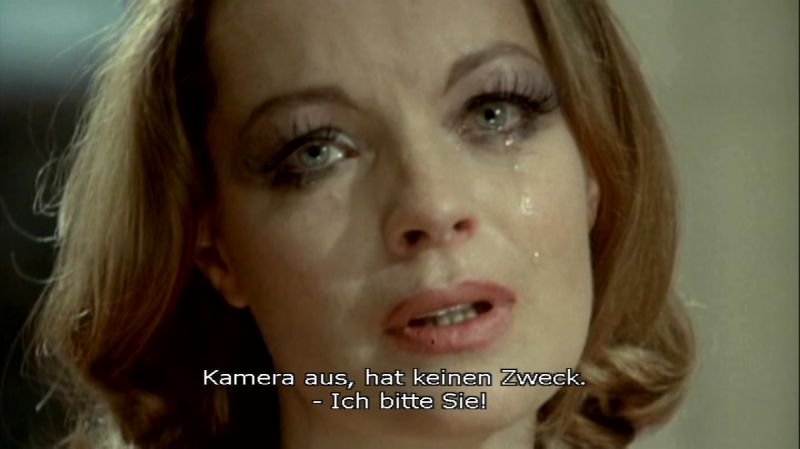

PROSPERITY FOR 2008 by Apichatpong Weerasethakul
PROSPERITY FOR 2008, a new short film by Apichatpong Weerasethakul, can be watched online. Many thanks to Thunska Pansittivorakul of Thaiindie group who told us about this news.
You can watch the film from the website of Thaiindie:
http://www.thaiindie.com/
or from
http://www.youtube.com/watch?v=G-bSGuz1IJA
You can watch the film from the website of Thaiindie:
http://www.thaiindie.com/
or from
http://www.youtube.com/watch?v=G-bSGuz1IJA
DVD WISH LIST: JORDAN BELSON, FRANS ZWARTJES, PETER METTLER, ROBERT FRANK
THIS IS MY COMMENT IN BIOSCOPE WEBBOARD
http://www.bioscopemagazine.com/
ตอบคุณ AMNESIAC
ไม่รู้เหมือนกันค่ะว่าจะหาดูหนังของ Kyle Canterbury ได้ที่ไหน บางทีอาจต้องสวดภาวนาให้เทศกาลหนังทดลองนำหนังของเขาเข้ามาฉาย
อ่านบทวิจารณ์ของ FRED CAMPER แล้วน่าสนใจดี เขาบอกว่าหนังของ Kyle Canterbury ตรงข้ามกับ Stan Brakhage เพราะในขณะที่ Brakhage พยายามนำองค์ประกอบหลายๆอย่างที่แตกต่างกันมาประสานเข้าด้วยกันในหนังอย่างกลมกลืน Canterbury กลับนำองค์ประกอบหลายๆอย่างที่แตกต่างกันมานำเสนอในหนัง โดยจงใจเน้นความแตกต่างและความเข้ากันไม่ได้ขององค์ประกอบเหล่านั้น
ตอนนี้หนังแนวพิสดารที่อยากดูมากคือหนังของ Jordan Belson โดยเฉพาะเรื่อง "สมาธิ" (1967) ซึ่งสามารถหาดูได้ในรูปแบบดีวีดี
http://ecx.images-amazon.com/images/I/51lX3KwHgzL._SS400_.jpg
This information of Jordan Belson's DVD is from http://www.amazon.com/
"New 2007 release by Center for Visual Music. Contains Allures (1961), Samadhi (1967), Light (1973), Fountain of Dreams (1984, never before released), and Epilogue (2005). "Jordan Belson is one of the greatest artists of visual music. Belson creates lush vibrant experiences of exquisite color and dynamic abstract phenomena evoking sacred celestial experiences." -- Film historian William Moritz. Noted film historian Gene Youngblood writes: "These five films by Jordan Belson, representing his early, middle, and later periods, are essential for three reasons: the early classics were breakthrough masterpieces, the previously unreleased "Fountain of Dreams" is a dazzling revelation from the middle period, and the shimmering "Epilogue" from 2005 makes it clear that the master still has the spark of genius, breathing new life into the vocabulary he has developed over more than a half-century of visionary filmmaking." "
The DVD of Jordan Belson is in Top Ten DVD of 2007 lists of many critics. You can see the lists here:
http://www.dvdbeaver.com/DVD_of_the_Year_2007.htm
WHO CAN KILL A CHILD? (1978, Narciso Ibanez Serrador, A+) win the most votes for BEST CULT DVD OF 2007.
There are many DVDs in these Top Ten lists that I would like to watch, such as
1.THE GREAT CINEMA MAGICIAN: FRANS ZWARTJES
http://twitchfilm.net/archives/009966.html
You can read a review of Zwartjes' film here:
http://esotika.blogspot.com/2007/10/living-frans-zwartjes-1971.html
2.ME AND MY BROTHER (1968, Robert Frank) (including a book)
http://ecx.images-amazon.com/images/I/41BapLGtqtL._SS500_.jpg
Information from http://www.amazon.com/
"Me and My Brother, Robert Frank's first feature-length film, premiered at the 1968 Venice Film Festival. Everything that had defined Frank's art up to that point is packed into this film--the view of America as if from the outside, the placement of the marginal in a central role, the poetic libertinage of the Beats. The story, which takes place during the showing of another film in a rundown movie theater, weaves together opposites, playing the counterfeit against the authentic, pornography against poetry, acting against being, Beat cynicism against hippie romanticism, monochrome against color. Me and My Brother celebrates the poetic essay, affirms the underground and the assemblage form, and packs in some bizarre twists and turns. This book and DVD set includes stills, dialogue and the re-edited 85-minute film. "
3.ECOUTE LE TEMPS (2007, Alante Cavaite)
http://ecx.images-amazon.com/images/I/512Yg+m44aL._SS500_.jpg
information from http://www.amazon.co.uk/
''If walls could talk, what would they say? In the supernatural thriller ECOUTE LE TEMPS, a sound engineer attempts to find out just that. Unhappy with the way the police are investigating her mother's murder, Charlotte (Emilie Dequenne) decides to take matters into her own hands. Using professional recording equipment, she tries to capture paranormal sounds in the house where the murder took place. But what she discovers is enough to shake her entire perception of who her mother was"
4.THOMAS KOERFER'S DVD COLLECTION
http://koerferfilm.com/e/dvd.html
5.HORROR RISES FROM THE TOMB (1972, Carlos Aured Alonso)
http://ecx.images-amazon.com/images/I/51g1l1VALEL._SS500_.jpg
"Scotland Yard begins an investigation that is so terrifying in its outcome it nearly brings the venerable organization to its knees. It begins with the inquiry into the murder of a young girl and soon evolves into a case surrounding a long forgotten crime a madman and zombies."
--Apart from the Top Ten lists in DVD Beaver, I also wish I could watch the 4 DVDs of Peter Mettler. I hope they will be available here soon.
http://www.petermettler.com/order.html
http://ecx.images-amazon.com/images/I/5188Qr3-geL._SS500_.jpg
http://ecx.images-amazon.com/images/I/51RMM2nLcJL._SS500_.jpg
http://ecx.images-amazon.com/images/I/51H7p8DP+GL._SS500_.jpg
--หนังเรื่อง THE ANTHEM ของ APICHATPONG WEERASETHAKUL ติดอันดับของ ROBERT KOEHLER ด้วยค่ะ ดูอันดับของเขาได้ที่
http://filmjourney.weblogger.com/


http://www.bioscopemagazine.com/
ตอบคุณ AMNESIAC
ไม่รู้เหมือนกันค่ะว่าจะหาดูหนังของ Kyle Canterbury ได้ที่ไหน บางทีอาจต้องสวดภาวนาให้เทศกาลหนังทดลองนำหนังของเขาเข้ามาฉาย
อ่านบทวิจารณ์ของ FRED CAMPER แล้วน่าสนใจดี เขาบอกว่าหนังของ Kyle Canterbury ตรงข้ามกับ Stan Brakhage เพราะในขณะที่ Brakhage พยายามนำองค์ประกอบหลายๆอย่างที่แตกต่างกันมาประสานเข้าด้วยกันในหนังอย่างกลมกลืน Canterbury กลับนำองค์ประกอบหลายๆอย่างที่แตกต่างกันมานำเสนอในหนัง โดยจงใจเน้นความแตกต่างและความเข้ากันไม่ได้ขององค์ประกอบเหล่านั้น
ตอนนี้หนังแนวพิสดารที่อยากดูมากคือหนังของ Jordan Belson โดยเฉพาะเรื่อง "สมาธิ" (1967) ซึ่งสามารถหาดูได้ในรูปแบบดีวีดี
http://ecx.images-amazon.com/images/I/51lX3KwHgzL._SS400_.jpg
This information of Jordan Belson's DVD is from http://www.amazon.com/
"New 2007 release by Center for Visual Music. Contains Allures (1961), Samadhi (1967), Light (1973), Fountain of Dreams (1984, never before released), and Epilogue (2005). "Jordan Belson is one of the greatest artists of visual music. Belson creates lush vibrant experiences of exquisite color and dynamic abstract phenomena evoking sacred celestial experiences." -- Film historian William Moritz. Noted film historian Gene Youngblood writes: "These five films by Jordan Belson, representing his early, middle, and later periods, are essential for three reasons: the early classics were breakthrough masterpieces, the previously unreleased "Fountain of Dreams" is a dazzling revelation from the middle period, and the shimmering "Epilogue" from 2005 makes it clear that the master still has the spark of genius, breathing new life into the vocabulary he has developed over more than a half-century of visionary filmmaking." "
The DVD of Jordan Belson is in Top Ten DVD of 2007 lists of many critics. You can see the lists here:
http://www.dvdbeaver.com/DVD_of_the_Year_2007.htm
WHO CAN KILL A CHILD? (1978, Narciso Ibanez Serrador, A+) win the most votes for BEST CULT DVD OF 2007.
There are many DVDs in these Top Ten lists that I would like to watch, such as
1.THE GREAT CINEMA MAGICIAN: FRANS ZWARTJES
http://twitchfilm.net/archives/009966.html
You can read a review of Zwartjes' film here:
http://esotika.blogspot.com/2007/10/living-frans-zwartjes-1971.html
2.ME AND MY BROTHER (1968, Robert Frank) (including a book)
http://ecx.images-amazon.com/images/I/41BapLGtqtL._SS500_.jpg
Information from http://www.amazon.com/
"Me and My Brother, Robert Frank's first feature-length film, premiered at the 1968 Venice Film Festival. Everything that had defined Frank's art up to that point is packed into this film--the view of America as if from the outside, the placement of the marginal in a central role, the poetic libertinage of the Beats. The story, which takes place during the showing of another film in a rundown movie theater, weaves together opposites, playing the counterfeit against the authentic, pornography against poetry, acting against being, Beat cynicism against hippie romanticism, monochrome against color. Me and My Brother celebrates the poetic essay, affirms the underground and the assemblage form, and packs in some bizarre twists and turns. This book and DVD set includes stills, dialogue and the re-edited 85-minute film. "
3.ECOUTE LE TEMPS (2007, Alante Cavaite)
http://ecx.images-amazon.com/images/I/512Yg+m44aL._SS500_.jpg
information from http://www.amazon.co.uk/
''If walls could talk, what would they say? In the supernatural thriller ECOUTE LE TEMPS, a sound engineer attempts to find out just that. Unhappy with the way the police are investigating her mother's murder, Charlotte (Emilie Dequenne) decides to take matters into her own hands. Using professional recording equipment, she tries to capture paranormal sounds in the house where the murder took place. But what she discovers is enough to shake her entire perception of who her mother was"
4.THOMAS KOERFER'S DVD COLLECTION
http://koerferfilm.com/e/dvd.html
5.HORROR RISES FROM THE TOMB (1972, Carlos Aured Alonso)
http://ecx.images-amazon.com/images/I/51g1l1VALEL._SS500_.jpg
"Scotland Yard begins an investigation that is so terrifying in its outcome it nearly brings the venerable organization to its knees. It begins with the inquiry into the murder of a young girl and soon evolves into a case surrounding a long forgotten crime a madman and zombies."
--Apart from the Top Ten lists in DVD Beaver, I also wish I could watch the 4 DVDs of Peter Mettler. I hope they will be available here soon.
http://www.petermettler.com/order.html
http://ecx.images-amazon.com/images/I/5188Qr3-geL._SS500_.jpg
http://ecx.images-amazon.com/images/I/51RMM2nLcJL._SS500_.jpg
http://ecx.images-amazon.com/images/I/51H7p8DP+GL._SS500_.jpg
--หนังเรื่อง THE ANTHEM ของ APICHATPONG WEERASETHAKUL ติดอันดับของ ROBERT KOEHLER ด้วยค่ะ ดูอันดับของเขาได้ที่
http://filmjourney.weblogger.com/


I DON'T WANT TO SLEEP WITH THE AXE
This is my comment in Screenout Webboard:
http://www.xq28.org/zaa/viewtopic.php?f=5&t=79&p=1223#p1223
มาแสดงความยินดีกับบ้านใหม่ค่ะ
นิตยสาร CAHIERS DU CINEMA ประกาศรายชื่อหนังยอดเยี่ยมประจำปี 2007 ออกมาแล้ว โดยมีหนังเกย์เรื่องนึงติดอันดับ 7 ประจำปีนี้ด้วย นั่นก็คือ BEFORE I FORGET ที่กำกับโดย Jacques Nolot
CAHIERS DU CINEMA’S 2007 LIST
1.Paranoid Park (Gus Van Sant)
2. Deathproof (Quentin Tarantino)
INLAND EMPIRE (David Lynch)
Still Life (Jia Zhang-ke)
5. La France (Serge Bozon)
Zodiac (David Fincher)
7. Romance of Astree and Celadon (Eric Rohmer)
Honour of the Knights (Quixotic) (Albert Serra)
Before I Forget (Jacques Nolot)
10. I Don’t Want to Sleep Alone (Tsai Ming-Liang)
Don't Touch the Axe (Jacques Rivette)
Syndromes and a Century (Apitchapong Weerasethakul)
You can read a review of BEFORE I FORGET here:
http://www.dvdverdict.com/judgeblog/jataide/post/1541
Images of BEFORE I FORGET from http://www.allocine.fr/


http://www.xq28.org/zaa/viewtopic.php?f=5&t=79&p=1223#p1223
มาแสดงความยินดีกับบ้านใหม่ค่ะ
นิตยสาร CAHIERS DU CINEMA ประกาศรายชื่อหนังยอดเยี่ยมประจำปี 2007 ออกมาแล้ว โดยมีหนังเกย์เรื่องนึงติดอันดับ 7 ประจำปีนี้ด้วย นั่นก็คือ BEFORE I FORGET ที่กำกับโดย Jacques Nolot
CAHIERS DU CINEMA’S 2007 LIST
1.Paranoid Park (Gus Van Sant)
2. Deathproof (Quentin Tarantino)
INLAND EMPIRE (David Lynch)
Still Life (Jia Zhang-ke)
5. La France (Serge Bozon)
Zodiac (David Fincher)
7. Romance of Astree and Celadon (Eric Rohmer)
Honour of the Knights (Quixotic) (Albert Serra)
Before I Forget (Jacques Nolot)
10. I Don’t Want to Sleep Alone (Tsai Ming-Liang)
Don't Touch the Axe (Jacques Rivette)
Syndromes and a Century (Apitchapong Weerasethakul)
You can read a review of BEFORE I FORGET here:
http://www.dvdverdict.com/judgeblog/jataide/post/1541
Images of BEFORE I FORGET from http://www.allocine.fr/
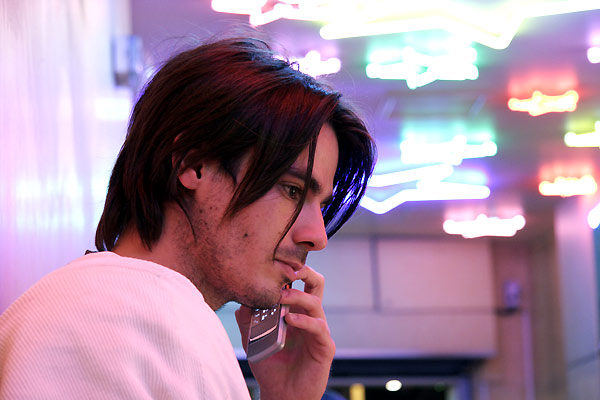
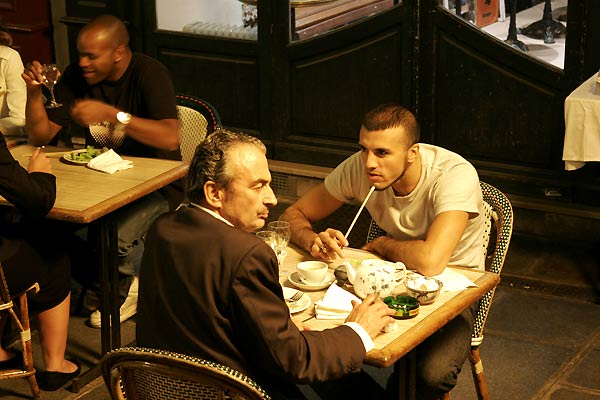

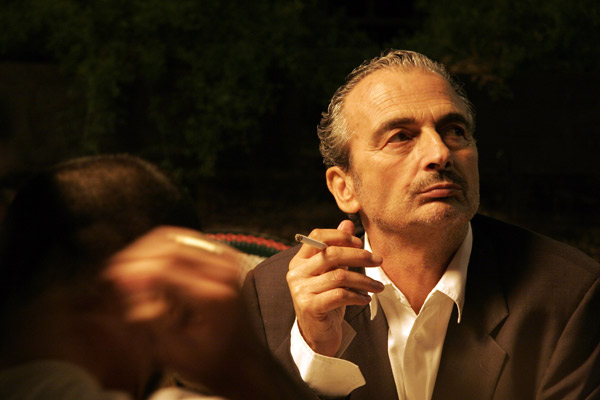
FASSBINDER, THE DEVIL, PROBABLY
As I don’t have a computer, I decide to use my blog as my own database to collect everything I wrote. So these are my comments in various places:
--in Girish’s blog:
http://www.girishshambu.com/blog/2007/12/favorites-2007.html
Noel, I'm glad you like PALMS. Second Run DVD releases this DVD. I think Second Run DVD is a great company. Their DVD catalogue includes THE PARTY AND THE GUESTS (Jan Nemec), THE THIRD PART OF THE NIGHT (Andrzej Zulawski), MARKETA LAZAROVA (Frantisek Vlacil), PASSENGER (Andrzej Munk), and INTERROGATION (Ryszard Bugajski). (I still haven't seen the last three mentioned here.)
--in Zach’s blog:
http://elusivelucidity.blogspot.com/2007/12/years-end.html
I love SO CLOSE very much. If you like Hong Kong action films, I also recommend INVISIBLE TARGET (2007, Benny Chan). I hope the film will be released there soon.
--in Peter Nellhaus’ blog:
http://www.coffeecoffeeandmorecoffee.com/archives/2007/12/my_best_of_2007.html#more
Happy New Year to you, Peter.
I'm glad you still remember THE SPERM. I also hope it will be more famous than this.
http://www.coffeecoffeeandmorecoffee.com/archives/2008/01/im_a_cyborg_but.html#more
I like this film very much. In my first viewing, I felt very confused and couldn’t follow some storylines, but I understood it more in the second viewing. I prefer this film to OLDBOY and SYMPATHY FOR LADY VENGEANCE.
--in Mubarak Ali’s blog:
http://supposedaura.blogspot.com/2008/01/to-year-gone.html
Glad to see AUTOHYSTORIA and THE POWER OF EMOTION in your list.
I had never heard of Wael Noureddine and Kyle Canterbury. But after I saw them in your list, I tried to find information about them and found that they are very interesting.
--in Matthew Hunt’s blog:
http://www.matthewhunt.com/blog/2008/01/happy-new-year.html
Happy new year to you and Dech.I spent my last day in 2007 watching SATANTANGO, and I finished watching it in 2008. :-)
--in Filmsick’s blog:
http://filmsick.exteen.com/20080105/the-third-generation-r-w-fassbinder-1979-terrorism-is-a-stup
ดีใจมากค่ะที่เขียนถึงหนังเรื่องนี้ หนังเรื่องนี้ติดอันดับ ONE OF MY MOST FAVORITE OPENING CREDITS EVER ค่ะ และนอกจากเครดิตเปิดเรื่องแล้ว ดิฉันก็ชอบหลายๆอย่างในหนังเรื่องนี้ด้วยเหมือนกัน ซึ่งรวมถึงการปะทะกันครั้งสำคัญระหว่างสามเจ้าแม่ Bulle Ogier, Margit Carstensen และ Hanna Schygulla
พอดีค้นเจอบทสัมภาษณ์ของฟาสบินเดอร์ เขาพูดถึงหนังเรื่อง THE DEVIL PROBABLY (1977, Robert Bresson, A+) ด้วยค่ะ คิดว่าน่าสนใจดี ก็เลยคัดลอกมาให้อ่าน
This is an excerpt from the book THE ANARCHY OF THE IMAGINATION (printed by The John Hopkins University Press). It comes from an interview in February 1979 of Fassbinder by Wolfram Schuette.
Rainer Werner Fassbinder: “In the last few years I’ve seen eight or nine films that meant a lot to me, and two theater productions and a few musicals that contained more hope and utopia than a thousand encounters. I’m thinking of SOLARIS [by Andrei Tarkovsky], then THE DEVIL PROBABLY [by Robert Bresson], Zadek’s two most recent productions of OTHELLO and A WINTER’S TALE; then there’s a film by Maurice Pialat with the title WE WON’T GROW OLD TOGETHER; then I’ve seen Visconti’s THE DAMNED thirty times. THE DEVIL PROBABLY is certainly the film of an old man, but no one can deny that the film is incredibly young in spirit—whether it’s a glorification of suicide or an acceptance of it, or as I think, the opposite, that is, that Bresson says: You have more opportunities to live your life if you accept death. It’s simply incredibly beautiful, even just from the point of view of form, when you see that someone who’s so old, and had already reached an end with LANCELOT, didn’t simply churn out an “old man’s film” with THE DEVIL PROBABLY. Because that isn’t an old man’s film but a young film.”
--in Twilight Virus’ blog:
http://twilightvirus.blogspot.com/2007/12/blog-post_30.html
หนังเยอรมันเกี่ยวกับพฤติกรรมแปลกๆของผู้โดยสารบนรถไฟ หนูเดาว่าน่าจะเป็นเรื่อง LINE 1 (1988, Reinhard Hauff, A+) ค่ะ หนังเรื่องนี้ดัดแปลงมาจากละครเพลง
----------------------------------------------------------------
--in Bioscope Webboard
http://www.bioscopemagazine.com/
อันนี้เป็นอันดับหนังทดลองประจำปี 2007 ของ Ed Halter จาก Village Voice ค่ะ โดย Halter เลือกเฉพาะหนังทดลองที่เขาชอบมากแต่ยังไม่มีโอกาสเขียนวิจารณ์ในปี 2007
http://www.villagevoice.com/film/0801,halter,78745,20.html
--Harrytuttle ก็ให้ INLAND EMPIRE เป็นอันดับหนึ่งประจำปี 2007 ค่ะ และให้ SYNDROMES AND A CENTURY ได้รางวัล BEST CAMERAWORK
หวังว่าคงยังจำกันได้นะคะว่า Harrytuttle คนนี้เคยเขียนชื่นชม AFTERNOON TIMES ของทศพล บุญสินสุขด้วย
ดูผลรางวัลอย่างละเอียดของ Harrytuttle ได้ที่ลิงค์นี้ค่ะ
http://screenville.blogspot.com/2008/01/tuttle-awards-2007.html
--รายชื่อหนังประจำปีของอีกคนนึงที่น่าสนใจมากๆ ก็คือของ Mubarak Ali ค่ะ ดูรายชื่อหนังประจำปีของเขาได้ที่
http://supposedaura.blogspot.com/2008/01/to-year-gone.html
หนังที่น่าสนใจในรายชื่อของเขาก็รวมถึง
1.JULY TRIP (2007, 35 min) ของ Wael Noureddine
หนังแนว essay เกี่ยวกับสงครามเลบานอน
อ่านบทวิจารณ์ JULY TRIP ของ Andy Rector ได้ที่ลิงค์ข้างล่างนี้ค่ะ
http://kinoslang.blogspot.com/2007/02/july-trip.html
Wael Noureddine เคยกำกับหนังสั้นเรื่อง FROM BEIRUT WITH LOVE (2005) ซึ่งสามารถหาดูได้ในรูปแบบดีวีดี โดยอยู่ในดีวีดีชุด RESISTANCE(S) ซึ่งสั่งซื้อได้จากเว็บไซท์ข้างล่างนี้
http://www.lowave.com/?language=EN§ion=shop&display=focus&focus_ref=LOWAVE017DVD
2. THE SEARCH ของ KYLE CANTERBURY
อ่านบทวิจารณ์ภาพยนตร์ของ KYLE CANTERBURY ที่เขียนโดย Fred Camper ได้ที่ลิงค์ข้างล่างนี้ค่ะ
http://www.fredcamper.com/Film/Canterbury.html
------------------------------------------------
ภาพจากหนังของ SHANA MOULTON
These are images from Shana Moulton’s films. She is in Ed Halter’s 2007 list.


--in Girish’s blog:
http://www.girishshambu.com/blog/2007/12/favorites-2007.html
Noel, I'm glad you like PALMS. Second Run DVD releases this DVD. I think Second Run DVD is a great company. Their DVD catalogue includes THE PARTY AND THE GUESTS (Jan Nemec), THE THIRD PART OF THE NIGHT (Andrzej Zulawski), MARKETA LAZAROVA (Frantisek Vlacil), PASSENGER (Andrzej Munk), and INTERROGATION (Ryszard Bugajski). (I still haven't seen the last three mentioned here.)
--in Zach’s blog:
http://elusivelucidity.blogspot.com/2007/12/years-end.html
I love SO CLOSE very much. If you like Hong Kong action films, I also recommend INVISIBLE TARGET (2007, Benny Chan). I hope the film will be released there soon.
--in Peter Nellhaus’ blog:
http://www.coffeecoffeeandmorecoffee.com/archives/2007/12/my_best_of_2007.html#more
Happy New Year to you, Peter.
I'm glad you still remember THE SPERM. I also hope it will be more famous than this.
http://www.coffeecoffeeandmorecoffee.com/archives/2008/01/im_a_cyborg_but.html#more
I like this film very much. In my first viewing, I felt very confused and couldn’t follow some storylines, but I understood it more in the second viewing. I prefer this film to OLDBOY and SYMPATHY FOR LADY VENGEANCE.
--in Mubarak Ali’s blog:
http://supposedaura.blogspot.com/2008/01/to-year-gone.html
Glad to see AUTOHYSTORIA and THE POWER OF EMOTION in your list.
I had never heard of Wael Noureddine and Kyle Canterbury. But after I saw them in your list, I tried to find information about them and found that they are very interesting.
--in Matthew Hunt’s blog:
http://www.matthewhunt.com/blog/2008/01/happy-new-year.html
Happy new year to you and Dech.I spent my last day in 2007 watching SATANTANGO, and I finished watching it in 2008. :-)
--in Filmsick’s blog:
http://filmsick.exteen.com/20080105/the-third-generation-r-w-fassbinder-1979-terrorism-is-a-stup
ดีใจมากค่ะที่เขียนถึงหนังเรื่องนี้ หนังเรื่องนี้ติดอันดับ ONE OF MY MOST FAVORITE OPENING CREDITS EVER ค่ะ และนอกจากเครดิตเปิดเรื่องแล้ว ดิฉันก็ชอบหลายๆอย่างในหนังเรื่องนี้ด้วยเหมือนกัน ซึ่งรวมถึงการปะทะกันครั้งสำคัญระหว่างสามเจ้าแม่ Bulle Ogier, Margit Carstensen และ Hanna Schygulla
พอดีค้นเจอบทสัมภาษณ์ของฟาสบินเดอร์ เขาพูดถึงหนังเรื่อง THE DEVIL PROBABLY (1977, Robert Bresson, A+) ด้วยค่ะ คิดว่าน่าสนใจดี ก็เลยคัดลอกมาให้อ่าน
This is an excerpt from the book THE ANARCHY OF THE IMAGINATION (printed by The John Hopkins University Press). It comes from an interview in February 1979 of Fassbinder by Wolfram Schuette.
Rainer Werner Fassbinder: “In the last few years I’ve seen eight or nine films that meant a lot to me, and two theater productions and a few musicals that contained more hope and utopia than a thousand encounters. I’m thinking of SOLARIS [by Andrei Tarkovsky], then THE DEVIL PROBABLY [by Robert Bresson], Zadek’s two most recent productions of OTHELLO and A WINTER’S TALE; then there’s a film by Maurice Pialat with the title WE WON’T GROW OLD TOGETHER; then I’ve seen Visconti’s THE DAMNED thirty times. THE DEVIL PROBABLY is certainly the film of an old man, but no one can deny that the film is incredibly young in spirit—whether it’s a glorification of suicide or an acceptance of it, or as I think, the opposite, that is, that Bresson says: You have more opportunities to live your life if you accept death. It’s simply incredibly beautiful, even just from the point of view of form, when you see that someone who’s so old, and had already reached an end with LANCELOT, didn’t simply churn out an “old man’s film” with THE DEVIL PROBABLY. Because that isn’t an old man’s film but a young film.”
--in Twilight Virus’ blog:
http://twilightvirus.blogspot.com/2007/12/blog-post_30.html
หนังเยอรมันเกี่ยวกับพฤติกรรมแปลกๆของผู้โดยสารบนรถไฟ หนูเดาว่าน่าจะเป็นเรื่อง LINE 1 (1988, Reinhard Hauff, A+) ค่ะ หนังเรื่องนี้ดัดแปลงมาจากละครเพลง
----------------------------------------------------------------
--in Bioscope Webboard
http://www.bioscopemagazine.com/
อันนี้เป็นอันดับหนังทดลองประจำปี 2007 ของ Ed Halter จาก Village Voice ค่ะ โดย Halter เลือกเฉพาะหนังทดลองที่เขาชอบมากแต่ยังไม่มีโอกาสเขียนวิจารณ์ในปี 2007
http://www.villagevoice.com/film/0801,halter,78745,20.html
--Harrytuttle ก็ให้ INLAND EMPIRE เป็นอันดับหนึ่งประจำปี 2007 ค่ะ และให้ SYNDROMES AND A CENTURY ได้รางวัล BEST CAMERAWORK
หวังว่าคงยังจำกันได้นะคะว่า Harrytuttle คนนี้เคยเขียนชื่นชม AFTERNOON TIMES ของทศพล บุญสินสุขด้วย
ดูผลรางวัลอย่างละเอียดของ Harrytuttle ได้ที่ลิงค์นี้ค่ะ
http://screenville.blogspot.com/2008/01/tuttle-awards-2007.html
--รายชื่อหนังประจำปีของอีกคนนึงที่น่าสนใจมากๆ ก็คือของ Mubarak Ali ค่ะ ดูรายชื่อหนังประจำปีของเขาได้ที่
http://supposedaura.blogspot.com/2008/01/to-year-gone.html
หนังที่น่าสนใจในรายชื่อของเขาก็รวมถึง
1.JULY TRIP (2007, 35 min) ของ Wael Noureddine
หนังแนว essay เกี่ยวกับสงครามเลบานอน
อ่านบทวิจารณ์ JULY TRIP ของ Andy Rector ได้ที่ลิงค์ข้างล่างนี้ค่ะ
http://kinoslang.blogspot.com/2007/02/july-trip.html
Wael Noureddine เคยกำกับหนังสั้นเรื่อง FROM BEIRUT WITH LOVE (2005) ซึ่งสามารถหาดูได้ในรูปแบบดีวีดี โดยอยู่ในดีวีดีชุด RESISTANCE(S) ซึ่งสั่งซื้อได้จากเว็บไซท์ข้างล่างนี้
http://www.lowave.com/?language=EN§ion=shop&display=focus&focus_ref=LOWAVE017DVD
2. THE SEARCH ของ KYLE CANTERBURY
อ่านบทวิจารณ์ภาพยนตร์ของ KYLE CANTERBURY ที่เขียนโดย Fred Camper ได้ที่ลิงค์ข้างล่างนี้ค่ะ
http://www.fredcamper.com/Film/Canterbury.html
------------------------------------------------
ภาพจากหนังของ SHANA MOULTON
These are images from Shana Moulton’s films. She is in Ed Halter’s 2007 list.


Tuesday, January 01, 2008
MY SEVENTH POLL: LIFE IN MONO
--Something to read
Michael Tully’s list
http://blogs.indiewire.com/tully/archives/015678.html
Michael Atkinson’s DVD list
http://ifc.com/news/article?aId=21871
I know about these lists from Greencine Daily
http://daily.greencine.com/
--I just voted for Lilli Carati in a poll in Moon in the Gutter’s blog, because I like her very much in TO BE TWENTY (1978, Fernando di Leo, A+)
http://mooninthegutter.blogspot.com/2007/12/artist-and-muse-33.html
-----------------------------
--My sixth poll ended with 10 votes. The result is
THESE FILMS HAVE SOMETHING CONCERNING STAGE PERFORMANCE. WHICH FILM DO YOU LIKE?
1.THE BABY OF MACON (1993, Peter Greenaway)
+ THE CHERRY ORCHARD (1990, Shun Nakahara)
+ LES ENFANTS DU PARADIS (1946, Marcel Carne)
+ GANG OF FOUR (1988, Jacques Rivette)
+THE LIBERTINE (2006, Laurence Dunmore)
Each of them got 3 votes or 30 %
6.ALL THAT JAZZ (1979, Bob osse)
+ BEING JULIA (2004, Istvan Szabo)
+ DIVERTIMENTO (2000, Jose Garcia Hernandez)
+ THE FALSE SERVANT (2000, Benoit Jacquot)
+ THE PEACH BLOSSOM LAND (1992, Stan Lai, Taiwan)
+ LA PURITAINE (1986, Jacques Doillon)
+ VANYA ON 42ND STREET (1994, Louis Malle)
Each of them got 2 vote or 20 %
13.A CHORUS LINE (1985, Richard Attenborough)
+ ESTHER KAHN (2000, Arnaud Desplechin)
+ MY LIFE AND TIMES WITH ANTONIN ARTAUD (1993, Gerard Mordillat)
Each of them got 1 vote or 10 %
Thank you very much for everyone who participated in it. I’m glad GANG OF FOUR got one of the most votes, because I like Jacques Rivette. I also just read an article on Rivette, which is written by Jonathan Romney in Film Comment sep-oct 2007. I think it’s a great article.
-----------------------------------------
As for my seventh poll, it is inspired by CRY IN SILENCE (2006, J. G. Biggs, A+), which is my most favorite film of 2007. This film is mostly in black-and-white. I just noticed that many films I love are in black-and-white, though they were made not long ago. So my seventh poll is about my favorite recent black-and-white films.
THESE FILMS HAVE SOME OR ALL PARTS IN BLACK-AND-WHITE. WHICH FILM DO YOU LIKE?
1. BEGOTTEN (1991, E. Elias Merhige)
http://ecx.images-amazon.com/images/I/51TGGRQ1XDL._SS500_.jpg
2.BULLET BALLET (1998, Shinya Tsukamoto)
3. CRY IN SILENCE (2006, J. G. Biggs)
4. FALLEN (2005, Fred Kelemen)
5. HEREMIAS (2006, Lav Diaz)
6. THE HOURS AND TIMES (1991, Christopher Munch)
http://ecx.images-amazon.com/images/I/51qbuVT8dlL._SS500_.jpg
7. HUNT ANGELS (2006, Alec Morgan)
8. INSTITUTE BENJAMENTA (1995, Brothers Quay)
9. LOOK OF LOVE (2006, Yoshiharu Ueoka)
10. MYSTERIOUS OBJECT AT NOON (2000, Apichatpong Weerasethakul)
11. NO PLACE TO GO (2000, Oskar Roehler)
12. PALMS (1993, Artur Aristakisyan)
13. PHANTOM LOVE (2007, Nina Menkes)
14. PI (1997, Darren Aronofsky)
15. PLEASANTVILLE (1998, Gary Ross)
16. REGULAR LOVERS (2005, Philippe Garrel)
17. RIGHT NOW (2004, Benoit Jacquot)
http://ecx.images-amazon.com/images/I/516Y9J1DPTL._SS500_.jpg
18. THE SADDEST MUSIC IN THE WORLD (2003, Guy Maddin)
http://ecx.images-amazon.com/images/I/51EE0X7PYYL._SS500_.jpg
19. SATANTANGO (1994, Bela Tarr)
20. TREASURE ISLAND (1999, Scott King)
http://ecx.images-amazon.com/images/I/518RQAF13CL._SS500_.jpg
You can cast multiple votes.
There are also some recent (partly) black-and-white films that I like very much, but I left them out of my poll so that the poll won’t be too long. These films include
21. FORGOTTEN SILVER (1995, Peter Jackson, Costa Botes)
22. JUHA (1999, Aki Kaurismaki)
23. KAFKA (1991, Steven Soderbergh)
24. THE MAN WHO WASN’T THERE (2001, Joel Coen)
25. MY LIFE AND TIMES WITH ANTONIN ARTAUD (1993, Gerard Mordillat)
26. SHADOWS AND FOG (1991, Woody Allen)
27. SCHINDLER’S LIST (Steven Spielberg)
28. TETSUO: THE IRON MAN (1991, Shinya Tsukamoto)
Please feel free to add any comment here.
--------------------------------------------
THIS IS MY COMMENT IN BIOSCOPE’S WEBBOARD
http://www.bioscopemagazine.com/smf/index.php?topic=831.0
สวัสดีปีใหม่ค่ะ
ดิฉันก็ไม่ได้ไปไหนเหมือนกันในคืนวันส่งท้ายปีเก่า นั่งดูหนังเรื่อง SATANTANGO ในวันที่ 31 ธ.ค. แต่กว่าจะดูหนังจบก็ล่วงเข้าปีใหม่เข้าไปแล้ว


Michael Tully’s list
http://blogs.indiewire.com/tully/archives/015678.html
Michael Atkinson’s DVD list
http://ifc.com/news/article?aId=21871
I know about these lists from Greencine Daily
http://daily.greencine.com/
--I just voted for Lilli Carati in a poll in Moon in the Gutter’s blog, because I like her very much in TO BE TWENTY (1978, Fernando di Leo, A+)
http://mooninthegutter.blogspot.com/2007/12/artist-and-muse-33.html
-----------------------------
--My sixth poll ended with 10 votes. The result is
THESE FILMS HAVE SOMETHING CONCERNING STAGE PERFORMANCE. WHICH FILM DO YOU LIKE?
1.THE BABY OF MACON (1993, Peter Greenaway)
+ THE CHERRY ORCHARD (1990, Shun Nakahara)
+ LES ENFANTS DU PARADIS (1946, Marcel Carne)
+ GANG OF FOUR (1988, Jacques Rivette)
+THE LIBERTINE (2006, Laurence Dunmore)
Each of them got 3 votes or 30 %
6.ALL THAT JAZZ (1979, Bob osse)
+ BEING JULIA (2004, Istvan Szabo)
+ DIVERTIMENTO (2000, Jose Garcia Hernandez)
+ THE FALSE SERVANT (2000, Benoit Jacquot)
+ THE PEACH BLOSSOM LAND (1992, Stan Lai, Taiwan)
+ LA PURITAINE (1986, Jacques Doillon)
+ VANYA ON 42ND STREET (1994, Louis Malle)
Each of them got 2 vote or 20 %
13.A CHORUS LINE (1985, Richard Attenborough)
+ ESTHER KAHN (2000, Arnaud Desplechin)
+ MY LIFE AND TIMES WITH ANTONIN ARTAUD (1993, Gerard Mordillat)
Each of them got 1 vote or 10 %
Thank you very much for everyone who participated in it. I’m glad GANG OF FOUR got one of the most votes, because I like Jacques Rivette. I also just read an article on Rivette, which is written by Jonathan Romney in Film Comment sep-oct 2007. I think it’s a great article.
-----------------------------------------
As for my seventh poll, it is inspired by CRY IN SILENCE (2006, J. G. Biggs, A+), which is my most favorite film of 2007. This film is mostly in black-and-white. I just noticed that many films I love are in black-and-white, though they were made not long ago. So my seventh poll is about my favorite recent black-and-white films.
THESE FILMS HAVE SOME OR ALL PARTS IN BLACK-AND-WHITE. WHICH FILM DO YOU LIKE?
1. BEGOTTEN (1991, E. Elias Merhige)
http://ecx.images-amazon.com/images/I/51TGGRQ1XDL._SS500_.jpg
2.BULLET BALLET (1998, Shinya Tsukamoto)
3. CRY IN SILENCE (2006, J. G. Biggs)
4. FALLEN (2005, Fred Kelemen)
5. HEREMIAS (2006, Lav Diaz)
6. THE HOURS AND TIMES (1991, Christopher Munch)
http://ecx.images-amazon.com/images/I/51qbuVT8dlL._SS500_.jpg
7. HUNT ANGELS (2006, Alec Morgan)
8. INSTITUTE BENJAMENTA (1995, Brothers Quay)
9. LOOK OF LOVE (2006, Yoshiharu Ueoka)
10. MYSTERIOUS OBJECT AT NOON (2000, Apichatpong Weerasethakul)
11. NO PLACE TO GO (2000, Oskar Roehler)
12. PALMS (1993, Artur Aristakisyan)
13. PHANTOM LOVE (2007, Nina Menkes)
14. PI (1997, Darren Aronofsky)
15. PLEASANTVILLE (1998, Gary Ross)
16. REGULAR LOVERS (2005, Philippe Garrel)
17. RIGHT NOW (2004, Benoit Jacquot)
http://ecx.images-amazon.com/images/I/516Y9J1DPTL._SS500_.jpg
18. THE SADDEST MUSIC IN THE WORLD (2003, Guy Maddin)
http://ecx.images-amazon.com/images/I/51EE0X7PYYL._SS500_.jpg
19. SATANTANGO (1994, Bela Tarr)
20. TREASURE ISLAND (1999, Scott King)
http://ecx.images-amazon.com/images/I/518RQAF13CL._SS500_.jpg
You can cast multiple votes.
There are also some recent (partly) black-and-white films that I like very much, but I left them out of my poll so that the poll won’t be too long. These films include
21. FORGOTTEN SILVER (1995, Peter Jackson, Costa Botes)
22. JUHA (1999, Aki Kaurismaki)
23. KAFKA (1991, Steven Soderbergh)
24. THE MAN WHO WASN’T THERE (2001, Joel Coen)
25. MY LIFE AND TIMES WITH ANTONIN ARTAUD (1993, Gerard Mordillat)
26. SHADOWS AND FOG (1991, Woody Allen)
27. SCHINDLER’S LIST (Steven Spielberg)
28. TETSUO: THE IRON MAN (1991, Shinya Tsukamoto)
Please feel free to add any comment here.
--------------------------------------------
THIS IS MY COMMENT IN BIOSCOPE’S WEBBOARD
http://www.bioscopemagazine.com/smf/index.php?topic=831.0
สวัสดีปีใหม่ค่ะ
ดิฉันก็ไม่ได้ไปไหนเหมือนกันในคืนวันส่งท้ายปีเก่า นั่งดูหนังเรื่อง SATANTANGO ในวันที่ 31 ธ.ค. แต่กว่าจะดูหนังจบก็ล่วงเข้าปีใหม่เข้าไปแล้ว


Subscribe to:
Posts (Atom)