The article below was first published two years ago in Indian Auteur website.
Twenty Young Independent Thai directors:
(in alphabetical order)
1.Alwa Ritsila
Alwa Ritsila and Komvish Zally shocked many audience in 2008 with their Mofo Life Size Doll (2007, 25 min), an unrelentingly brutal film using dolls as characters. The main character of this film rapes, tortures, kills, and crucifies other characters. This kind of extreme brutality can also be found in other films directed or co-directed by Alwa. Though the cruel stories in his films make some people want to look away from the screen, other people feel drawn to the beauty of the cinematography and the perfect use of the soundtrack in his films. Another interesting work of his is The Witch (2009, 29 min), which he co-directed with Phatamon Chitarachinda. In this film Alwa played all the three main characters by himself—the masturbating father, the virgin daughter, and a witch who loves drinking the blood of a virgin. It ranks as one of the most brutal films I have ever seen, but I can't deny its cinematic power. Alwa is the dark lord of Thai cinema. Some of his films can be watched at: http://www.youtube.com/user/madmadmaniv
2.Arpapun Plungsirisoontorn
Arpapun made Repeating Dramatic (2008, 8 min), which is one of the best Thai political films in 2008. In this film, an extremely melodramatic scene from a soap opera is replayed for numerous times. The colors of the scene are increasingly fading each time the scene is replayed, until what remains on the screen looks like moving mass of ugly colors. The audience also hears a radio report of political news during the same time. This film reminds me of the sad political history of Thailand, in which military coups have been staged frequently, even in 2006. The country has always been stuck in a vicious circle, like a melodramatic scene which is forever repeated and unable to move forward. Arpapun also made Fairy Feminine (2009, 29 min), which tells a twisted fairy tale about a relationship between a mother and a daughter. The mother looks like an angel, a witch, and a lesbian rolled into one. The prince in this film performs the role of a seducer instead of a rescuer-hero. And the seven dwarfs in this film look like a gang of rapists. Maybe this is a perfect fairy tale for children in our postmodern time.
3.Attapon Pamakho (born 1985)
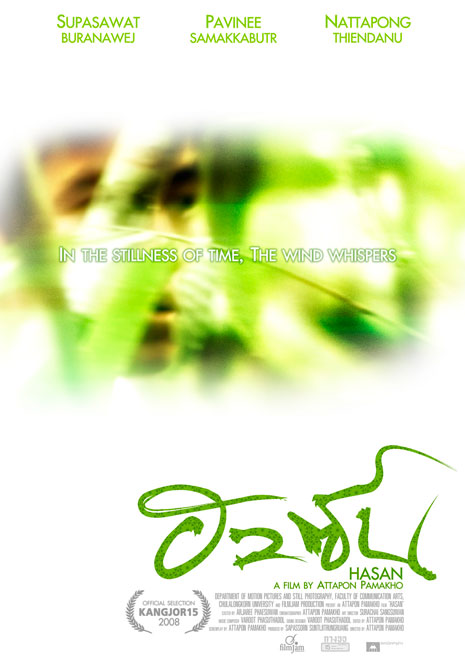
Attapon made Hasan (2008, 29 min), which is one of the most touching gay films I have ever seen. It deals with a married Muslim man who has an affair with his wife's brother. The story is very daring compared with most Thai films, and the cinematography is gorgeous. Hasan is successful in expressing the inner torment of the husband, the role of which is excellently played by Supasawasdi Buranawate. It reminds me of the power of another great gay film—Priest (1994, Antonia Bird). Attapon also co-directed Seaport (2006, 22 min) with Benya Poowarachnan. This documentary deals with immigrants from Myanmar who are living with difficulty in a province in Thailand, and the racial prejudice of Thai people. Seaport shares one thing with Hasan--the use of music in both films' ending scenes brings tears to my eyes.
Hasan (2008, Attapon Pamakho)
http://farm4.static.flickr.com/3154/2613435824_b7f50db892_o.jpg
4. Chaiwat Wiansantia
Chaiwat Wiansantia made Fragrance of the Wind (2007, 26 min), and Wake Up Time (2009, 10 min), both of which are like semi-experimental, semi-documentary films. They seem to tell no obvious stories, and focus on landscapes. I think the story of Fragrance of the Wind is about a person who is bored with living and working in a big city and decides to go visiting his rural hometown for a while. The film can capture the rural landscape, or the soul of the rural landscape, very well. It seems to be able to transport the pleasant atmosphere of the rural areas into the screening room miraculously. I felt as if there was a magical wind blowing in the screening room while the film was shown. I felt as if I could smell the damp earth soaked with rainwater while I was watching the film. Wake Up Time portrays a group of people who go to a seaside. The film lets us see their seemingly insignificant activities—walking, talking, painting—and interspersed them with seemingly unconnected scenes, such as scenes of a neon lamp going on and off, or scenes of a taxi. The "seemingly-illogical" editing helps create some magical feelings and makes this film very much different from a mere home video. You can watch some of Chaiwat's films at this Youtube channel: http://www.youtube.com/user/jas0146012
5.Chaloemkiat Saeyong
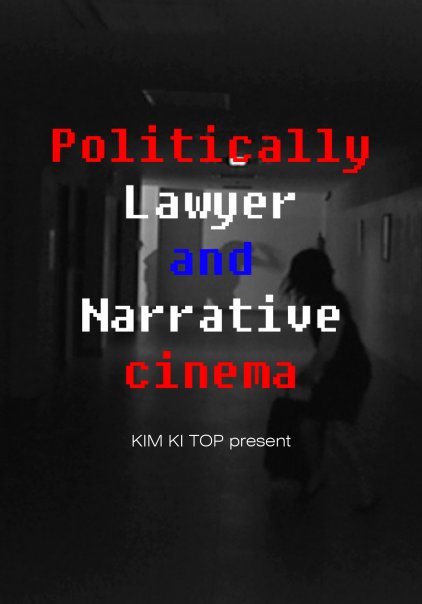
Chaloemkiat Saeyong's masterpiece is Politically Lawyer and Narrative Cinema (2009, 27 min), which plays with many elements of cinema. The film tells a fictional story about a murder in an airport and uses this murder to remind the viewers of the real case of Somchai Neelaphaijit, a Thai political lawyer who disappeared in 2004. Wiwat Lertwiwatwongsa, a Thai film critic, makes an interesting observation that the film seems to both tell a story and destroy its story at the same time. The film is extremely self-reflexive and has numerous weird things in it. For example, both the English title and the Thai title of this film are "intentionally" grammatically wrong. The film shows us a lecture room or a corridor in a building, while a text appearing on the screen says that the audience must imagine that what they see is an airport. The film reminds me of some weird and wonderful films by Jean-Luc Godard. Chaloemkiat also made Peru Time (2008, 18 min), which lets us watch a sunset for 18 minutes while some unreadable texts keep appearing on the screen. Wiwat compares this film to the opening scene of India Song (1974, Marguerite Duras). Chaloemkiat also made A Place of Different Air (2008, 24 min), in which the images appearing on the screen change their sizes from time to time. This semi-documentary, semi-experimental film is about a family who has just moved to a new place, and the different image sizes seem to emphasize the contrast between the old place and the new place.
Politically Lawyer and Narrative Cinema (2009, Chaloemkiat Saeyong)
http://farm3.static.flickr.com/2693/4173042455_ff6e48dde1_o.jpg
6.Chawit Waewsawangwong
Chawit Waewsawangwong made Fireflies (2005, 4 min), which presents beauty neon lights in Bangkok, while an electronic dance song is played. The editing of this film corresponds perfectly with the song rhythm, and it can be considered one of the most beautiful dance music videos ever made. I also like it very much that the film seems to celebrate neon lights and night life in Bangkok, instead of doing what some other Thai films and some other Thai artists do—trying to portray Bangkok as a one-sided place of evil and ugliness and looking down on night life. I consider this film as possibly one of the three most beautiful films about Bangkok. The other two are Rough Night (2001, Samart Imkham, 22 min) and Bangkok at 21:42 hrs (2001, Thanes Maneejak, 3 min). Chawit also made some good animations, such as Enough (2007, 3 min) and Continue (2005, 2 min). I also love Hate (2004, 2 min), in which we see someone intending to kill someone, but the film minimally and effectively tells its story by letting us see only the tip of a cutter moving closer to its victim.
7.Chulayarnnon Siriphol (born 1986)
Chulayarnnon made Hualampong (2004, 12 min) when he was a high-school student. This film observes an old man who frequently came to a railway station to take photos. There is nothing dramatic happening during the whole film. The film observes this man very patiently. This film drastically changed the attitude people had had towards Thai high-school students-filmmakers. Before this film, we used to think that high-school students only made funny films. After this film, we know we can never underestimate these teenagers any more. Chulayarnnon's masterpiece is Danger (Director's Cut) (2008, 14 min), which tells a story about a murder in an apartment building. What makes this film extraordinary is that the script of this film and some harsh comments on this film are also inserted into the film. We see texts from the script and texts commenting on the film appearing on the screen from time to time. This film is originally made as a thesis in a university. The harsh comments were made by a teacher. When we watch this film, we don't only see a murder story, but we also learn about its narrative structure and the bias against this film. I have never seen a film as self-reflexive as this before. An instant classic!
8.Janenarong Sirimaha (born 1987)
Janenarong made I Scream (2008, 21 min), which is a very entertaining horror-thriller film, though the film is as good as many good films in its genre. It doesn't transcend its genre. However, Read Me! (2008, 17 min) proves that Janenarong is a talent to watch. This film, which is about a female university student who can read other people's minds, is hard to categorize. It is extremely entertaining and can please general audience as much as a good mainstream film, but it is very different from most Thai genre films or most Thai mainstream films because it doesn't let itself be bound by the rules of any genres. It keeps on surprising the audience until the end. Janenarong also made Ying and Wan (2008, 7 min), a very funny film in which an actor played five characters. This low-budget film proves that creativity, not money, is the best thing you can rely on when making a film, no matter whether the film is a pure entertainment or a work of art. You can watch Janenarong's film at http://www.youtube.com/user/shuckwow .
9.Napat Treepalawisetkun (born 1990)
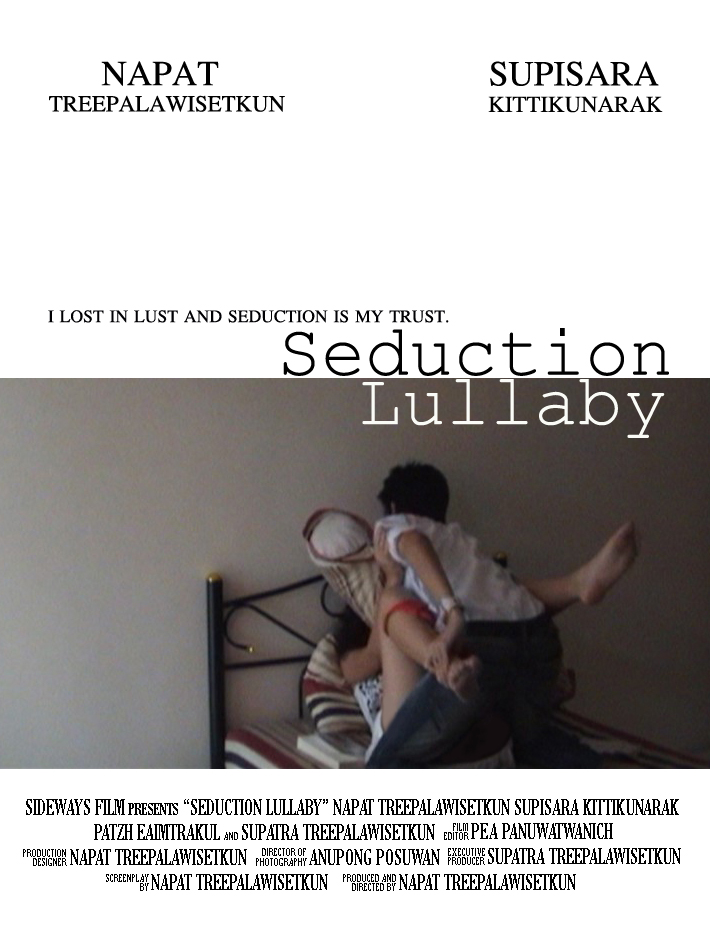
Napat likes John Waters and Michael Haneke, and this fact is obviously shown in his films. Nene, who gives maddeningly fierce, wild, raw, and extremely memorable performances in many of Napat's cult films, is his own Divine. A Series of Salinee Event (2007, 14 min), which was made while Napat was still a high-school student, tells the story of a woman (Nene) who hires a killer to kill someone, which turns out to be Salinee herself. This film made Napat stand out from other Thai teenage filmmakers, because the film has a very complicated narrative structure, and the extreme violence in this film is shown in a serious mode, while most films made by Thai teenagers show violence in a playful, funny mode. I Will Rape You with This Scissors (2008, 13 min), which stars Nene as a demented mother who may or may not kill her own daughter, also has a perplexing narrative structure. It even has a deeper layer of meaning. This cult film is actually a satire on the censorship of Syndromes and a Century (2006, Apichatpong Weerasethakul). While most of Napat's earlier films may show the influences of John Waters, the influences from Haneke become obvious in Seduction Lullaby (2009, 23 min), a feel-bad film which tells a story about rapes and guilt. The characters in this film don't expressively show their feelings as in Napat's earlier films. They carry enormous pain inside. Napat also made It's Hard to Say How I Love You, Captain Hook (2009, 10 min), which tells a story of a mother who patiently takes care of her disabled son. The film is very interesting because it doesn't seem to belong to any obvious genres. It is not a feel-bad, a comedy, a black comedy, a satire, or a tear-jerking drama. It is just itself. It also indicates that Napat's directing styles may evolve very fast.
Seduction Lullaby (2009, Napat Treepalawisetkun)
http://farm4.static.flickr.com/3240/3877700467_302de07f6a_o.jpg
It's Hard to Say How I Love You, Captain Hook (2009, Napat Treepalawisetkun)
http://farm3.static.flickr.com/2536/4173042459_d5e643eaf9_o.jpg
10.Nawapol Thamrongrattanarit (born 1984)
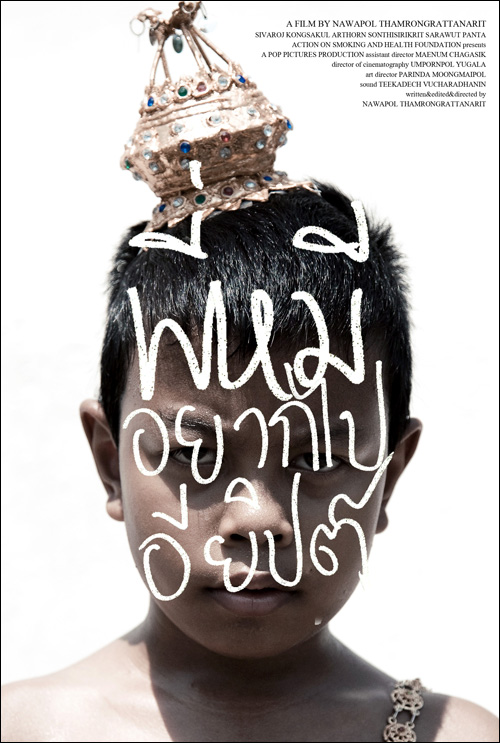
Nawapol works both independently and for studios. He became famous for See (2006, 9 min), which observes his own father while he is making fried rice, eating, and watching TV. The film also has what would later turns out to be Nawapol's signature styles, namely static camera, long take, and long shot. Though Nawapol uses some arthouse styles in his films, his films are very different from many arthouse films because there is a Nawapol's brand of humor in his films. I don't know how to define his kind of humor. I think I should just give some examples. The story of Giraffe (2007, 3 min) takes place when the world is about to end after 300 Malaysian giraffes died. Two people want to listen to a song before the world ends, but the song they end up listening to is So Dem a Com by E-Type. In his documentary Shit Happens (2003, 52 min), Nawapol talks about the problems his family has with dog excrement in front of his house. He didn't only interview his own family and neighbors, but also interviewed a lawyer about how to deal legally with this problem. I find this kind of things very funny, but this kind of humor is not often found in films made by other people. Another example of this can be found in Mr. Mee Wanna Go to Egypt (2009, 20 min), which is actually made for a no-smoking campaign, but the film presents a child character who keeps saying, "Let's smoke," for numerous times. Nawapol also proves that he is able to make serious films. Francais (2009, 30 min) effectively portrays many problems a blind university student faces while studying, and Nawapol's signature styles help very much in preventing this film from becoming a tear-jerking melodrama.
Mr. Mee Wanna Go to Egypt (2009, Nawapol Thamrongrattanarit)
http://farm4.static.flickr.com/3445/3761297679_db6ba1fb30_o.jpg
Francais (2009, Nawapol Thamrongrattanarit)
http://farm5.static.flickr.com/4009/4173042465_b912936e30_o.jpg
11.Prap Boonpan (born 1981)
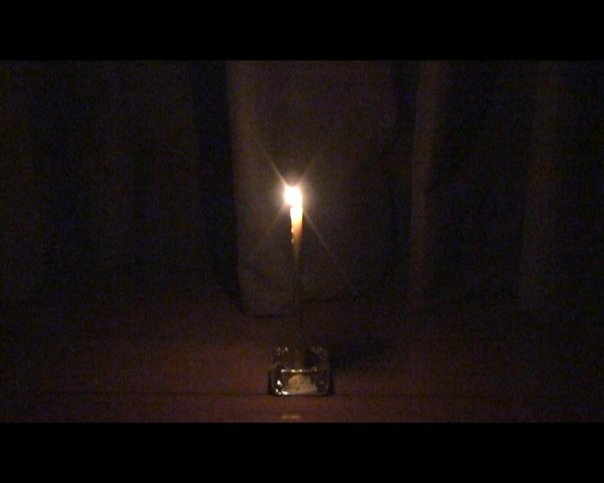
Prap Boonpan, whom I consider a leader of Thai political films, impressed me a lot with his Two Worlds in One World (2004, 18 min), which deals with the problems of the film The Siam Renaissance (2004, Surapong Pinijkhar), which may or may not present Thai historical facts, and may also present some wrong attitudes. Prap presents the problems of that film and his arguments very straightforwardly. He makes the characters in Two Worlds in One World talk about these problems and he uses his camera to focus on some historical textbooks in extreme close up, so that the viewers can read what is written on the textbooks. I like this kind of technique very much. It reminds me of some foreign essayistic films or some films by Jean-Luc Godard, but I had never found this kind of argumentative techniques employed in Thai films before. Prap uses this technique again in Letter from the Silence (2006, 5 min), in which he uses a camera to focus on a letter written by a Thai taxi driver who heroically committed suicide to protest the military coup in 2006. I had read this powerful letter before I saw this film. I liked the content of the letter very much, but it didn't have a strong effect on my feelings when I read it on a website. However, when the letter is presented in this film, the power of its words seems to increase exponentially and unexplainably, and this time the letter can make me cry. Maybe the film lends an "aura" to the letter. This technique is used again, but by a younger director, in a film called Women in Democracy (2009, Atthawut Boonyuang, 6 min), which is one of the best Thai films this year. This fact seems to indicate that Prap may have some influences on younger directors. Prap's masterpiece is The Bangkok Bourgeois Party (2007, 28 min), which condemns many bourgeois people who support the military coup. It contains an instant classic scene—a three-to-five minute blackout scene in which the viewers see nothing and hear nothing. This scene comes after the bourgeois characters kill a character who thinks differently. Though many films by Prap contain a lot of dialogues or texts, there are some films in which he turns to use some symbols, instead of texts or dialogues, to convey his messages. This group of films includes Culture and Nature (2008, 3 min) and the latter part of The White Short Film/The Candle Light (2009, 20 min), which earns him the R.D. Pestonji award. This award-winning film consists of two parts. In the first part, we see a man and a woman reading a script about the political situation in Thailand in late 2008 and early 2009. In the second part, we see a man watching a candle in a TV. This film, together with Culture and Nature, makes me contemplate about the future of Thailand. I think in the future if someone wants to write a book about Thai political films, Prap Boonpan is one of the names which must be included in that book.
Culture and Nature (2008, Prap Boonpan)
http://farm5.static.flickr.com/4010/4173042467_c545855603_o.gif
The White Short Film/The Candlelight (2009, Prap Boonpan)
http://farm5.static.flickr.com/4009/4173042469_647e372297_o.jpg
12.Prateep Suthathongthai (born 1980)
Prateep is an artist who makes photos, videos and video installations. He cleverly explores the themes of minorities and ethnicity in Thailand via his videos Where Are Thais From? (2007), and Explanation of the Word 'Thai' (2007, 2 min). In Explanation of the Word 'Thai', we see a Phu-Thai guy reading Thai history out loud by using his own local dialect, which makes his reading incomprehensible to many Thai viewers, especially Bangkokians. The video also presents some karaoke texts, so that the viewers can pronounce what the guy is saying, but still don't understand what the guy is saying. Wiwat Lertwiwatwongsa observes that this video makes the viewers realize that Thailand is not composed of only Thai people, but composed of people from many ethnic groups who have diverse cultures. The viewers also realize that some groups of people are marginalized by Thai mainstream culture, and these minorities are not mentioned in the definition of the word Thai which they are reading. I also like Moving Cameras – October 27 (2009), which is a video installation of Prateep. This video installation, which is composed of four TV sets, shows us the views from a camera which is passed from one person to another person to another person, and so on. This video installation, which may be about some abstract ideas, unintentionally makes me realize that in order to see the whole thing or to understand a thing completely, we should watch it from various viewpoints, observe it from various angles, or maybe listen to people who think differently.
13.Ratchapoom Boonbunchachoke (born 1987)
I have seen only three films by Ratchapoom, but I'm sure this director, who is also an avid cinephile, will go very far. His films include Unpronoucable in the Linguistic Imperialism of Yours (2008, 3 min), which is a mockumentary about a Thai female artist who opens her house to let people come in and watch her masturbating. This film makes the viewers realize that we rarely see a heroine expressing some sexual satisfaction in Thai films or Thai TV series. We more often see Thai villainesses expressing this kind of feelings. This film touches on some taboos in Thai media which we may not have noticed before. Ratchapoom tackles taboo subjects again in Mermaid Wearing Pants (2009, 7 min), which is composed of found footage from many banned films, including Salo, or the 120 Days of Sodom (1975, Pier Paolo Pasolini). This film also reminds us of some political taboos in Thailand. Ratchapoom's masterpiece is Bodily Fluid Is So Revolutionary (2009, 41 min), which tells a story of a gay couple who encounter a serious relationship problem when one of them becomes allergic to any bodily fluid coming out of his lover. The allergic one seeks help from a female doctor, who eagerly volunteers to have sex with her own patient, while his lover resorts to masturbation. What makes this film special is its self-reflexiveness. The images in this film are strangely disrupted from time to time, as if the film is shown via a scratched or damaged DVD, but the characters also realize that they exist in a scratched DVD and try to escape from it. Wiwat Lertwiwatwongsa observes that this film does not only tackle some sexual taboos, but is also about the relationship between film viewers who become allergic to arthouse films, critics who provide the cure, and filmmakers who are accused of masturbating themselves by making incomprehensible films.
Bodily Fluid Is So Revolutionary (2009, Ratchapoom Boonbunchachoke)
http://farm4.static.flickr.com/3567/3575828303_4d4471f10b_o.jpg
http://farm4.static.flickr.com/3354/3575828309_aa8a625085_o.jpg
14.Sompot Chidgasornpongse (born 1980)
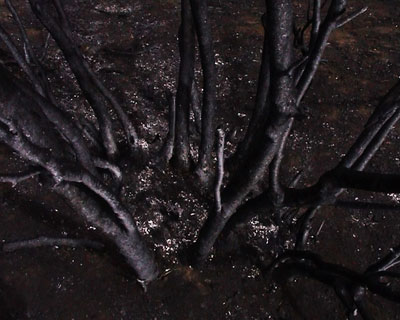
Sompot's first film is AUAD DEE (2003, 10 min), which impresses me a lot because it is like an essay. In this film we see a young man, who is supposed to be a representative of a certain group of Thai teenagers, expressing his opinions on many social trends for nearly 10 minutes. But in the end we hear the voice of a narrator expressing some scorn on this man. I think Sompot made this film in order to express his opinions on other people's opinions, and he succeeded. His method may be easy, but I like its straightforwardness and its difference from most Thai films. Sompot made another essay film called Diseases and a Hundred Year Period (2008, 20 min), which talks about the censorship of Syndromes and a Century. He also made some atmospheric films, including Bangkok in the Evening (2005, 16 min), Andaman (2005, 16 min), 8,241.46 Miles Away From Home (2006, 6 min), and Landscape 101 01 1101 01 ... (2007, 28 min), all of which seem to present "landscape" as one of the main characters. All of them are documentary-like and very slow. In this group of films, I prefer Landscape 101 01 1101 01 ... the most. This film explores the landscape of a burnt forest very patiently. I love its extreme slowness and the fact that the images in this film become blurred from time to time. However, it is interesting that Sompot changes the rhythm of his films after that. Physical Therapy (2007, 1 min), which is about a woman running in a desert, and Yesterday (2008, 13 min), which is about the hectic lives of Thai students in USA, are fast-paced, and it indicates that Sompot is a director who may like to change his styles from film to film in order to fit the different themes of each film. I can't wait to see his thesis film Are WeThere Yet?.
(I want to note that Sompot used to be an assistant director of Apichatpong Weerasethakul, and many other people who used to work with Apichatpong have turned out to be great independent directors, too. These great directors include Nitipong Thinthupthai, Phaisit Phanphruksachat, Santiphap Inkong-ngam, Suchada Sirithanawuddhi, Supamok Silarak, and Teekhadet Vucharadhanin.)
Landscape 101 01 1101 01... (2007, Sompot Chidgasornpongse)
http://farm3.static.flickr.com/2557/4173042461_3835a7f62b_o.jpg
Yesterday (2008, Sompot Chidgasornpongse)
http://farm3.static.flickr.com/2606/4173799498_c69ecd0e57_b.jpg
15.Supakit Seksuwan
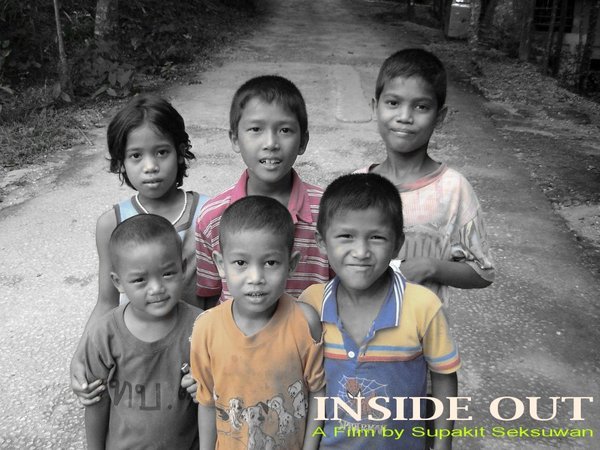
What I love in many of Supakit's films is its free flowing and its incomprehensibility. Some of his films seem to defy logic and make the viewers ask, "What is happening?", "What does this scene mean?", "What does the whole film mean?", or "Why was this scene inserted into the film, because it makes no sense at all?" Having said that, I don't want you to misunderstand that Supakit's films are very arty. In fact, his films seem to be cheaply made, and observe no rules of film aesthetics. This quality turns out to be the reason why seeing his films is a very refreshing experience. His films are the opposite of many films made by film school students who strictly observe the rules of what good arthouse films should be. In I Open at the Close (2009, 12 min), Supakit lets us see many unimportant activities in a university. Most viewers don't understand what this film is trying to say. I don't either. But it is a pleasant experience to see a film which seems to be bound by no rules, except the feelings of the director. There's one scene I like very much in this film. It's the scene in which the camera stalks a young student for a long time. It stalks this student for no obvious reasons, and it stops stalking when the student seems to realize that he is being stalked. I also love Inside Out (2009, 21 min) and The Love (2007, 8 min), two documentaries of his. The first is about a group of rural children who talk about many trivial things. The second is about his grandparents. What I like in these two is the feeling that Supakit might not know what was going to happen in the next minute or the next second when he was shooting these documentaries. It seems as if Supakit just let the subjects of his documentaries express their true selves and enjoy themselves, instead of trying to control his subjects in order to make his documentary serve some purposes or convey some messages. My most favorite film of Supakit is Prognostic (2009, 8 min), in which we see a guy walking and doing some activities, while the images of these activities are manipulated in various ways, such as being turned upside down, being blurred, or being affected by some special computer effects. It's a real "experimental" film. You can watch some of Supakit's films in his Youtube channel: http://www.youtube.com/user/venerator
Inside Out (2009, Supakit Seksuwan)
http://farm3.static.flickr.com/2656/4173799488_c8e4bb7c0e_o.jpg
16.Suphisara Kittikunarak
Suphisara made Thom (2009, 30 min) and Passion Sonata (2009, 13 min), both of which deal with sex in a very interesting way, or in a way I had never seen in Thai films before. I guess she can be called the Thai Catherine Breillat. Thom deals with a young woman whose husband just died. She decides to keep his corpse in her bedroom, becomes a prostitute, does some weird activities, flirts with a young boy, and shaves her head. Suphisara also plays the lead role in this film, and she did really have her own head shaved. That shows how devoted she is to her film. Passion Sonata deals with a young lesbian couple who sometimes have sex in a tennis court, and a gay couple who live nearby. One of the gay couple (played by Napat Treepalawisetkun) likes to play violin after making love. Trouble seems to happen when one of the lesbians tries very hard to rape one of the gays. Nearly all of these things in both of her films are presented in an objective tone. While most Thai filmmakers may try to present this kind of stories in a comedic tone or in a melodramatic tone, Suphisara tells her story in an objective tone, which reminds me of some Austrian films by Barbara Albert, Ulrich Seidl, or Michael Haneke.
17.Tanatchai Bandasak (born 1984)
I have seen five films by Tanatchai – Drift (2008, 3 min), Endless Rhyme (2008, 26 min), Lalita (2008, 5 min), Swamp (2008, 3 min), Sweetheart Garden (2009, 22 min) – and I don't think I understand them. I just know that they are very poetic and their beauty is beyond my ability to describe. Lalita may be the easiest film to be described. It is composed of found footage of two TV series starring Lalita Panyopas, a famous Thai actress in late 1980's and early 1990's. She stars in some melodramatic TV series, but the film 'Lalita' turns the found footage of these TV series into something very haunting. Some original TV scenes are slowed down, and some sound effects are added. It is as if Tanatchai had turned a found footage from Melrose Place and Beverly Hills, 90210 into Twin Peaks. I think Tanatchai is an expert in using sound. Drift presents us the drifting of one noise to another noise to another noise, and so on, while we see an image of a policeman gradually turning into some abstract images. Swamp lets us hear the voice of a radio DJ, while we see an image of an eye falling down into a swamp. My most favorite film of Tanatchai is Sweetheart Garden, which also has some haunting sound effects. In this film we see some unconnected gorgeous images, such as images of a dark corridor, a man watching TV, a porn theater, a wasteland with some historical images superimposed on it, a zoo in fog, the breast of a woman, etc, while images connected to train, such as images of a platform, a railway, or a tunnel, are interspersed between these unconnected images. The ultimate sublime feelings I have while seeing Sweetheart Garden reminds me of the experience of seeing Take the 5:10 to Dreamland (1977, Bruce Conner). Both Bruce Conner and Tanatchai Bandasak make films which defy explanation.
Sweetheart Garden (2009, Tanatchai Bandasak)
http://farm5.static.flickr.com/4047/4173799490_9eb2b6e9a4_o.jpg
18.Tossapol Boonsinsukh (born 1982)
Tossapol, who is also a writer and a musician, has already made about 100 short films, and he also made two feature films – Afternoon Times (2005, 90 min), and Under the Blanket (2008), the latter of which is actually composed of a few short films strung together. I think I may have seen only 25 of his films. What I like the most in his films is its extremely atmospheric quality. An obvious example of this can be found in No One at the Sea (2005, 3 min), in which we only see an image of a seashore while hearing a piece of piano music. Tossapol is also great in using his feelings, emotions, and instinct in making films. This fact makes some of his films "incomprehensible" but "emotionally overwhelming". Some films of his are composed of unconnected scenes strung together, such as Don't Warm Egg in Microwave Or Else It Will Explode! (2005, 14 min), and Life Is Short 2 (2003-2006, 14 min). I don't understand the logic behind the juxtaposition of the scenes in these two films. All I know is that Don't Warm Egg in Microwave Or Else It Will Explode! makes me feel so happy after seeing it, while Life Is Short 2 makes me feel so melancholy and uplifting at the same time. What I also love in Tossapol's films is the feelings of loneliness, but the loneliness in his films is not the kind of loneliness found in Wong Kar-wai's or Tsai Ming-liang's films, but it is the kind of loneliness found in Jun Ichikawa's films. It is about people who are alone, but sometimes they are contented to be alone. An example of this can be found in She Is Reading Newspaper (2005, 8 min), in which three people in a cafe don't talk to each other, but they are perfectly happy like that. Tossapol's masterpiece is Afternoon Times, which deals with a restaurant owner who falls in love with a delivery boy, and gets extremely depressed after he disappeared. This film also contains one scene which might be one of the longest static takes in Thai film at that time. It is a scene in which the heroine closes down her restaurant, thinking that she may never find the delivery boy again. The static camera lets us watch her picking up a lot of drawings and various objects in the restaurant into boxes. The longer the film lets me watch her doing this, the stronger I feel an urge to cry. I guess this long static take lasts about 15 minutes. I had never seen a long take like this before in Thai cinema, except in Windows (1999, Apichatpong Weerasethakul, 17 min). You can watch some of Tossapol's films in his Youtube channel: http://www.youtube.com/user/nangtoszlong
(I also want to note that nowadays many young independent Thai directors employ long static takes in their films/videos, though they are not influenced by Tossapol. Never Congregate Never Disregard (2007, Arin Rungjang, video installation) contains two scenes, each of which is a one-hour-long static take. You Have to Wait, Anyway (2007, Nawapol Thamrongrattanarit, 22 min), Restart (2008, Patchara Eaimtrakul, 25 min), and Confront with the Truth (2009, Chanin Hanjaroen, 11 min) contain only one long static take for the whole duration of each of the films.)
Under the Blanket (2008, Tossapol Boonsinsukh)
http://farm4.static.flickr.com/3097/2570773690_c1dfd61ba2_o.jpg
19.Tulapop Saenjaroen (born 1986)
Tulapop became famous in 2005 when his film Sad Scenery (19 min) won Vijitmatra award, though I haven't seen this film yet. The first time I was bowled over by his film is when I saw "___" (2006, 8 min), which contains some unconnected scenes strung together. In this strangely titled film, which I called the "underscore" film, we see images of some trees in the dark, someone washing his feet in the dark, children in a park, a cleaning lady doing her job, and some texts which run so fast that most viewers cannot read them completely. Our Waves (2006, 12 min) is also composed of unconnected scenes strung together. In the first half of the film, we see scenes of a group of friends doing many activities. In the latter half of the film, we see some waves in the water. These two films are very different from films by Tossapol and Tanatchai, though some of Tossapol's and Tanatchai's films are also made of unconnected scenes. While films of Tossapol touch my heart and my feelings, and while films of Tanatchai speak to my subconscious, these two films of Tulapop tease my brain. These two films remind me of some films by Arthur Lipsett and Alexander Kluge, which also contain unconnected scenes strung together and seem to appeal more to the intellect than to the feelings. Some of Tulapop's earlier films also appeal to the intellect, because they objectively experiment on many things. Vocal Instruction (2006) is an experiment on the contrast between text and voiceover. For example, when the viewers see the sentence "Read this" on the screen, the viewers hear the sentence "Do not read this" at the same time. Video Book (2007) shows us some random numbers, and teases us to find the connections between these numbers, though the connections may not exist. Water (2007) is an experiment on the changing forms of water. When the Movie Listens (2007, 11 min) stars Tulapop himself as an attentive listener. For the whole duration of this film, we see only the face of Tulapop who seems to be listening to anything the viewers talk about. "2008" (2008, 3 min) is a film composed of crazy ending credits. However, the other three films Tulapop made in 2008 seem to show more human feelings than before. The Return (2008, 5 min) talks about the memories of a son and a dead father. Tales of Swimming Pool (2008, 13 min) questions the meanings of life via three stories. The Eternal Light (2008) is an atmospheric film showing some beautiful abstract images and images of the sea under beautiful sunlight. I prefer The Eternal Light to many other films by Tulapop, partly because this film is not weighed down by concepts, ideas, or stories as other films of his. Maybe he has stepped on the right direction. I'm very eager to see his new film.
20.Yanin Pongsuwan (born 1985)
Yanin made The Spectrum (2006, 48 min), which is a documentary about the big band of Wat Ratchabopith school. The film shows us how hard the band's members tried in order to win in the annual competition for school big bands. My favorite scene is the one in which the coach got very angry with some behaviors of the band's members. He criticized them very harshly in front of the camera and seemed unafraid that this footage would be shown to the public. I felt as if I myself was criticized while I was watching this. I guess even Yanin herself might not have expected before that her documentary would have such a dramatic climax. Another thing I love in The Spectrum is how it portrays many gay teenagers in the band. The film shows how much these gays devoted themselves for the band, and show them as interesting human beings. This film offers a space for Thai gay teenagers, a space which they deserve, but don't often find, in Thai media. I think the true power of The Spectrum comes from the fact that Yanin found a way to get familar with or get close to the subjects of her film. Many footages in this film result from the trust the subjects have in the documentarian. Yanin made another great documentary called Home Video (2008, 14 min), which talks about her loving relationship with her mother and the fact that she may not have time to spend with her mother as much as before. The pace, the tone, the choice of footage, and the lyrical quality of this film made this film stand out from other Thai films in the same vein. This film touches everyone's heart.
(I want to note that many young and old independent Thai directors make films about their own families. The great ones include A Century of Love (2007, Chaloemrat Gaweewattana, 14 min), Ghosts (2005, Anocha Suwichakornpong, 35 min), Empire of Mind (2009, Nontawat Numbenchapol, 90 min), From Nachuak to Bangkok (2005, Siwadol Rathee, 83 min), Little Plant at the Old House (2007, Sasikan Suvanasuthi, 5 min), Love Actually (2008, Gun Sangkaew, 9 min), My Grandfather (2008, Pichet Smerchua, 45 min), Our Film (2005, Atthasit Somchob, 22 min), Sleeping Beauty (2006, Chulayarnnon Siriphol, 40 min), and Track 01 Take 30 (2008, Thakoon Khempunya, 17 min).)
The Spectrum (2006, Yanin Pongsuwan)
http://farm5.static.flickr.com/4001/4173799492_b473e926b3_o.jp
My biography:
Jit Phokaew is a cinephile living in Bangkok. He once wrote for a Thai book called Filmvirus 3. His favorite film lists of the year 2001-2007 can be found at the website Senses of Cinema. He used to comment in IMDB.com (http://www.imdb.com/user/ur0426898/comments). Limitless Cinema (http://celinejulie.blogspot.com ) is his bilingual blog.
Thursday, January 26, 2012


Sunday, January 22, 2012
Films seen on Saturday, January 21, 2012
1.WALKOVER (1965, Jerzy Skolimowski, Poland, A++++++++++++++++++++++++++++++)
2.A FORMAL FILM IN NINE EPISODES, PROLOGUE & EPILOGUE (2011, Mario Pfeifer, India/Germany, A+++++++++++++++)
3.HAIR (2010, Tayfun Pirselimoglu, Turkey, A++++++++++)
4.NO.89 SHIMEN ROAD (2010, Shu Haolun, China, A+)
5.PUSHED (2011, Florian Schneider, Germany, documentary, A+)

2.A FORMAL FILM IN NINE EPISODES, PROLOGUE & EPILOGUE (2011, Mario Pfeifer, India/Germany, A+++++++++++++++)
3.HAIR (2010, Tayfun Pirselimoglu, Turkey, A++++++++++)
4.NO.89 SHIMEN ROAD (2010, Shu Haolun, China, A+)
5.PUSHED (2011, Florian Schneider, Germany, documentary, A+)

Friday, January 20, 2012
MY MOST FAVORITE FILMS OF 2011
The list of my 120 most favorite films of 2011 can be found here:
http://www.sensesofcinema.com/2012/feature-articles/2011-world-poll/#59
My favorite horror films of 2011
http://celinejulie.blogspot.com/2012/01/favorite-horror-horrorthriller-or.html
My favorite South East Asian films of 2011
http://celinejulie.blogspot.com/2012/01/favourite-southeast-asian-films-i-saw.html
I still haven't done the list of my most favorite films of 2010 yet. :-(
The photo is from NAKORN ASAJARN TRILOGY: MIGHT (2011, Wachara Kanha)

http://www.sensesofcinema.com/2012/feature-articles/2011-world-poll/#59
My favorite horror films of 2011
http://celinejulie.blogspot.com/2012/01/favorite-horror-horrorthriller-or.html
My favorite South East Asian films of 2011
http://celinejulie.blogspot.com/2012/01/favourite-southeast-asian-films-i-saw.html
I still haven't done the list of my most favorite films of 2010 yet. :-(
The photo is from NAKORN ASAJARN TRILOGY: MIGHT (2011, Wachara Kanha)


Sunday, January 15, 2012
Favorite Thai Songs 13: SECOND HAND -- Carrot
http://www.youtube.com/watch?v=nYWf1AMa7FQ&feature=share
จำได้ว่ามีมิวสิควิดีโออันนึงของสามสาวแครอทที่เลียนแบบ RHYTHM NATION ของเจเน็ต แจ็คสันด้วย แต่จำไม่ได้ว่าชื่อเพลงอะไร โดยในมิวสิควิดีโอนี้ สามสาวแครอทใส่ชุดทหารเต้นกันในโรงงาน และมีชายหนุ่มที่ดูเหมือนคนงานก่อสร้างแอบดูสามสาวนี้เต้นในโรงงาน
จำได้ว่ามีมิวสิควิดีโออันนึงของสามสาวแครอทที่เลียนแบบ RHYTHM NATION ของเจเน็ต แจ็คสันด้วย แต่จำไม่ได้ว่าชื่อเพลงอะไร โดยในมิวสิควิดีโอนี้ สามสาวแครอทใส่ชุดทหารเต้นกันในโรงงาน และมีชายหนุ่มที่ดูเหมือนคนงานก่อสร้างแอบดูสามสาวนี้เต้นในโรงงาน
Favorite Lyrics 3: YOU HAVE KILLED ME -- Morrissey
http://www.youtube.com/watch?v=cC4SBm7gQys
Thanks to a friend who told me about this song.
" Pasolini is me
'Accattone' you'll be
I entered nothing and nothing entered me
'Til you came with the key
And you did your best but
As I live and breathe
You have killed me
You have killed me
Yes I walk around somehow
But you have killed me
You have killed me
Piazza Cavour, what's my life for?
Visconti is me
Magnani you'll never be
I entered nothing and nothing entered me
'Til you came with the key
And you did your best but
As I live and breathe
You have killed me
You have killed me
Yes, I walk around somehow
But you have killed me
You have killed me
Who am I that I come to be here...?
As I live and breathe
You have killed me
You have killed me
Yes I walk around somehow
But you have killed me
You have killed me
And there is no point saying this again
there is no point saying this again
But I forgive you, I forgive you
Always I do forgive you."
It is interesting to see the cross references between films and songs. I also think about the song TSUI HARK by Sparks and the song BRAKHAGE by Stereolab.
http://www.youtube.com/watch?v=FeHdIDeUsEY
http://www.youtube.com/watch?v=UAHcAiG-PM0
Thanks to a friend who told me about this song.
" Pasolini is me
'Accattone' you'll be
I entered nothing and nothing entered me
'Til you came with the key
And you did your best but
As I live and breathe
You have killed me
You have killed me
Yes I walk around somehow
But you have killed me
You have killed me
Piazza Cavour, what's my life for?
Visconti is me
Magnani you'll never be
I entered nothing and nothing entered me
'Til you came with the key
And you did your best but
As I live and breathe
You have killed me
You have killed me
Yes, I walk around somehow
But you have killed me
You have killed me
Who am I that I come to be here...?
As I live and breathe
You have killed me
You have killed me
Yes I walk around somehow
But you have killed me
You have killed me
And there is no point saying this again
there is no point saying this again
But I forgive you, I forgive you
Always I do forgive you."
It is interesting to see the cross references between films and songs. I also think about the song TSUI HARK by Sparks and the song BRAKHAGE by Stereolab.
http://www.youtube.com/watch?v=FeHdIDeUsEY
http://www.youtube.com/watch?v=UAHcAiG-PM0
Wednesday, January 11, 2012
MY SCHEDULE
THURSDAY 12 JAN
1800hrs GRAVE DECISIONS (2006, Marcus H. Rosenmüller, Germany) at BACC
http://www.facebook.com/pages/Mini-Theater-at-BACC-by-Film-Archive-Public-Organization/166116676828745
SAT 14 JAN
1345 ONE OF THE LUCKY ONES (1994, Clifton Ko Chisum) at Pridi
http://www.facebook.com/events/314107221950735/
2000 DON 2 (2011, Farhan Akhtar, India) at Major Rama III
http://www.bollywoodthai.com/
MON 16
1930 THERAPY (stage play) at B-FLOOR
THURSDAY 19 JAN
1800 THE LEGEND OF TIME (2006, Isaki Lacuesta, Spain) at BACC
http://www.facebook.com/pages/Mini-Theater-at-BACC-by-Film-Archive-Public-Organization/166116676828745
SAT 21
11.00 GREAT DAY (2010, Chiu Keng Guan, Malaysia, 91 min)
1330 A TOKYO DAY (2011, Benjamin Genissel, France, 21 min) + A FORMAL FILM IN NINE EPISODES, PROLOGUE & EPILOGUE (2011, Mario Pfeiffer, 52 min)
1540 HAIR (2010, Tayfun Pirselimoglu, Turkey)
1900 WALKOVER (1965, Poland)
2100 THE HALF OF THE WORLD (2009, Jaime Ruiz Ibanez, Mexico, 92 min)
SUN 22
1100 PINOY SUNDAY (2010, Taiwan, 84 min)
1330 LOVELY MAN (2010, Teddy Soeriaatmadja, Indonesia, 75 min)
1530 TURIN HORSE (2011, Bela Tarr, Hungary, 146 min)
1900 LITTLE JERUSALEM (2005, France, 94 min)
2100 PUSHED (2010, Florian Schneider, Germany, 82 min)
MON 23
1100 NOSTALGIA FOR THE LIGHT (2010, Patricio Guzman, Chile, 90 min)
1330 THE KID WHO LIES (2011, Marite Ugas, Peru, 94 min)
1540 DANCE TOWN (2010, Jeon Kyu-Hwan, South Korea, 95 min)
1800 LA ACACIAS (2011, Argentina, 85 min)
2030 DOG SWEAT (2011, Hossein Keshavarz, Iran, 90 min)
TUES 24
1100 RETURN TICKET (2011, Teng Yung-Shing, China, 88 min)
1330 SHORT WAVE PROGRAM 3 (77 min)
1610 A SCREAMING MAN (2010, Chad, 92 min)
1840 WASTE LAND (2010, Lucy Walker, Karen Harley, João Jardim, Brazil, 98 min)
2030 THE ILLUSIONIST (2010, Sylvain Chomet, France, 83 min)
WED 25
1100 JULIETS (2010, Hou Chi-Jan, Chen Yu-Hsun, Shen Ko-Shang, Taiwan, 106 min)
1400 CHEONGGYECHEON MEDLEY: A DREAM OF IRON (2010, Kyung Kun Park, South Korea, 79 min)
1640 SEVEN DAYS IN HEAVEN (2010, Liu Zi-Jie, Yulin Wang, Taiwan, 93 min)
1850 THE CAVE OF FORGOTTEN DREAM 3D (2011, Werner Herzog, 90 min)
2200 THE BEETLE SOLDIERS (2011, Ari Sihasale, Indonesia, 106 min)
THURSDAY 26
1100 THE BALLAD OF GENESIS AND LADY JAYE (2010, 75 min)
1330 ZEPHYR (2010, Belma Bas, Turkey, 93 min)
1530 SHORT WAVE PROGRAM 1 (68 min)
1800 SHORT WAVE PROGRAM 4 (90 min)
2030 UNDERTOW (2009, Javier Fuentes-Leon, Peru, 100 min)
FRI 27
1300 GEORGE THE HEDGEHOG (2011, Wojciech Wawszczyk, Jakub Tarkowski, Tomasz Lesniak, animation, Poland, 90 min)
1530 SHORT WAVE PROGRAM 2 (91 min)
1800 THE CHEER AMBASSADOR (2011, Luke Cassady-Dorion, Thailand, 90 min)
2010 LUNG NEAW VISITS HIS NEIGHBOUR (2011, 149 min)
SAT 28
Bangkok Experimental Film Festival
http://beffbeff.com/BEFF%20Programmes/from-the-archives/
SUN 29
Bangkok Experimental Film Festival
http://beffbeff.com/BEFF%20Programmes/from-the-archives/
MON 30
1800 LUX program at William Warren Library
http://beffbeff.com/BEFF%20Programmes/bacc/
TUES 31 JAN
1930 AFTERNOON (2007, Angela Schanelec, Germany) at Goethe
http://www.goethe.de/ins/th/ban/en8449826v.htm

1800hrs GRAVE DECISIONS (2006, Marcus H. Rosenmüller, Germany) at BACC
http://www.facebook.com/pages/Mini-Theater-at-BACC-by-Film-Archive-Public-Organization/166116676828745
SAT 14 JAN
1345 ONE OF THE LUCKY ONES (1994, Clifton Ko Chisum) at Pridi
http://www.facebook.com/events/314107221950735/
2000 DON 2 (2011, Farhan Akhtar, India) at Major Rama III
http://www.bollywoodthai.com/
MON 16
1930 THERAPY (stage play) at B-FLOOR
THURSDAY 19 JAN
1800 THE LEGEND OF TIME (2006, Isaki Lacuesta, Spain) at BACC
http://www.facebook.com/pages/Mini-Theater-at-BACC-by-Film-Archive-Public-Organization/166116676828745
SAT 21
11.00 GREAT DAY (2010, Chiu Keng Guan, Malaysia, 91 min)
1330 A TOKYO DAY (2011, Benjamin Genissel, France, 21 min) + A FORMAL FILM IN NINE EPISODES, PROLOGUE & EPILOGUE (2011, Mario Pfeiffer, 52 min)
1540 HAIR (2010, Tayfun Pirselimoglu, Turkey)
1900 WALKOVER (1965, Poland)
2100 THE HALF OF THE WORLD (2009, Jaime Ruiz Ibanez, Mexico, 92 min)
SUN 22
1100 PINOY SUNDAY (2010, Taiwan, 84 min)
1330 LOVELY MAN (2010, Teddy Soeriaatmadja, Indonesia, 75 min)
1530 TURIN HORSE (2011, Bela Tarr, Hungary, 146 min)
1900 LITTLE JERUSALEM (2005, France, 94 min)
2100 PUSHED (2010, Florian Schneider, Germany, 82 min)
MON 23
1100 NOSTALGIA FOR THE LIGHT (2010, Patricio Guzman, Chile, 90 min)
1330 THE KID WHO LIES (2011, Marite Ugas, Peru, 94 min)
1540 DANCE TOWN (2010, Jeon Kyu-Hwan, South Korea, 95 min)
1800 LA ACACIAS (2011, Argentina, 85 min)
2030 DOG SWEAT (2011, Hossein Keshavarz, Iran, 90 min)
TUES 24
1100 RETURN TICKET (2011, Teng Yung-Shing, China, 88 min)
1330 SHORT WAVE PROGRAM 3 (77 min)
1610 A SCREAMING MAN (2010, Chad, 92 min)
1840 WASTE LAND (2010, Lucy Walker, Karen Harley, João Jardim, Brazil, 98 min)
2030 THE ILLUSIONIST (2010, Sylvain Chomet, France, 83 min)
WED 25
1100 JULIETS (2010, Hou Chi-Jan, Chen Yu-Hsun, Shen Ko-Shang, Taiwan, 106 min)
1400 CHEONGGYECHEON MEDLEY: A DREAM OF IRON (2010, Kyung Kun Park, South Korea, 79 min)
1640 SEVEN DAYS IN HEAVEN (2010, Liu Zi-Jie, Yulin Wang, Taiwan, 93 min)
1850 THE CAVE OF FORGOTTEN DREAM 3D (2011, Werner Herzog, 90 min)
2200 THE BEETLE SOLDIERS (2011, Ari Sihasale, Indonesia, 106 min)
THURSDAY 26
1100 THE BALLAD OF GENESIS AND LADY JAYE (2010, 75 min)
1330 ZEPHYR (2010, Belma Bas, Turkey, 93 min)
1530 SHORT WAVE PROGRAM 1 (68 min)
1800 SHORT WAVE PROGRAM 4 (90 min)
2030 UNDERTOW (2009, Javier Fuentes-Leon, Peru, 100 min)
FRI 27
1300 GEORGE THE HEDGEHOG (2011, Wojciech Wawszczyk, Jakub Tarkowski, Tomasz Lesniak, animation, Poland, 90 min)
1530 SHORT WAVE PROGRAM 2 (91 min)
1800 THE CHEER AMBASSADOR (2011, Luke Cassady-Dorion, Thailand, 90 min)
2010 LUNG NEAW VISITS HIS NEIGHBOUR (2011, 149 min)
SAT 28
Bangkok Experimental Film Festival
http://beffbeff.com/BEFF%20Programmes/from-the-archives/
SUN 29
Bangkok Experimental Film Festival
http://beffbeff.com/BEFF%20Programmes/from-the-archives/
MON 30
1800 LUX program at William Warren Library
http://beffbeff.com/BEFF%20Programmes/bacc/
TUES 31 JAN
1930 AFTERNOON (2007, Angela Schanelec, Germany) at Goethe
http://www.goethe.de/ins/th/ban/en8449826v.htm

Sunday, January 08, 2012
Favorite Music Videos 32: MEN LIKE GODS -- Gazelle Twin
http://www.youtube.com/watch?v=ANaabsQo-uA
This music video is made up of footage found in the digital library of Sardinia.
I think it should be screened together with other music videos made up of found footage, such as:
VIDEO GAMES -- Lana Del Rey
http://www.youtube.com/watch?v=HO1OV5B_JDw
STARS & STRIPES FOREVER -- Matmos
http://www.youtube.com/watch?v=ZEXgNM9MAMY
This music video is made up of footage found in the digital library of Sardinia.
I think it should be screened together with other music videos made up of found footage, such as:
VIDEO GAMES -- Lana Del Rey
http://www.youtube.com/watch?v=HO1OV5B_JDw
STARS & STRIPES FOREVER -- Matmos
http://www.youtube.com/watch?v=ZEXgNM9MAMY
Friday, January 06, 2012
Favorite Thai Songs 10: BENZ SPORT -- Ple Irene
http://www.youtube.com/watch?v=WUMmEmBdVI8&feature=share
Thanks to Graiwoot for telling me about this song.
Thanks to Graiwoot for telling me about this song.
Thursday, January 05, 2012
UNCLE BOONMEE BY CHRIS WARE
UNCLE BOONMEE WHO CAN RECALL HIS PAST LIVES' poster by Chris Ware won the best movie poster of 2011 in Mubi.
http://mubi.com/notebook/posts/the-best-movie-posters-of-2011?utm_source=digest&utm_medium=email&utm_campaign=digest37

http://mubi.com/notebook/posts/the-best-movie-posters-of-2011?utm_source=digest&utm_medium=email&utm_campaign=digest37

CINEPHILE CHALLENGE PHASE III DAY 5
Phase III Day 5: Favorite Hitchcock film: THE LADY VANISHES (1938)
http://www.facebook.com/30daycinephilechallenge

http://www.facebook.com/30daycinephilechallenge

Wednesday, January 04, 2012
CINEPHILE CHALLENGE PHASE III DAY 4
Phase III Day 4: Favorite Welles film -- F FOR FAKE (1975)
http://www.facebook.com/30daycinephilechallenge

http://www.facebook.com/30daycinephilechallenge

Tuesday, January 03, 2012
FAVORITE HORROR, HORROR/THRILLER, OR HORROR-TINGED FILMS I SAW IN 2011
This list is inspired by Wiwat Lertwiwatwongsa.
http://filmsick.wordpress.com/2011/12/13/856/
Many films in this list are not horror films, but they are films with just a tinge of horror or nightmare in it.
1.HUSK (2011, Brett Simmons)
2.INSIDIOUS (2010, James Wan)
3.PARANORMAL ACTIVITY 3 (2011, Henry Joost + Ariel Schulman)
4.ONIBABA (1964, Kaneto Shindo)
5.IMAGINATION (จิน ต) (2010, Somsak Tepmalai)
6.LADDALAND (2011, Sophon Sakdaphisit, Thailand)
7.LIGHTS OUT (2010, Fabrice Gobert)
8.WHEN FEAR STRIKES (QUAND VIENT LA PEUR) ( 2010, Élisabeth Rappeneau, miniseries)
9.SCREAM 4 (2011, Wes Craven)
10.THE WOMB IN AQUARIUM (มดลูกในตู้ปลา) (2010, Napat Treepalawisetkun)
11.MIZU (2010, Teerath Wangwisarn)
http://www.youtube.com/watch?v=NdRpc3VrnGU
12.WHAT!!! (สิ่งประหลาดในสวนหลังบ้าน) (2011, Prempapan Plittapolkranpim)
13.DANGEROUS SUMMER (ฤดูร้อนที่อันตราย) (2010, Thattapol Rachnok)
14.THAT NIGHT (2011, Krit Kittikornrat)
15.VANISHING ON 7TH STREET (2010, Brad Anderson)
16.BIRD NEEDS BB (เบิร์ดอยากได้บีบี) (2011, Meathus Sirinawin)
http://www.youtube.com/watch?v=QREhHlOk9iI
17.DEPARTURE (2011, Wuttikorn Skulsaknimit, video installation)
18.BLOOD FOR DRACULA (1974, Paul Morrissey)
19.THE CHILLING HOURS AND THE MURDERER IN THE NUMBING SILENCE (โมงยามอันยะเยือกและผู้ร้ายฆ่าคนในความเงียบนิ่งงัน) (2010, Tani Thitiprawat)
20.SPIRIT DE NOIR (2011, Pichet Smerchua)
21.RED LOTUS POND (NONG BUA DANG) (1973, Sor Asanajinda, Thailand)
22.ONE NIGHT IN GAY MOVIE PRODUCTION CLUB (ซอมบี้ขยี้ตุ๊ด) (2010, Somsak Sonphaeng)
23.DON'T BE AFRAID OF THE DARK (2010, Troy Nixey)
24.KARMA (กามา) (2010, Pachara Yang)
25.THE WARD (2010, John Carpenter)
26.DOUBLE ENQUÊTE (2010, Pierre Boutron, miniseries)
27.SHARK NIGHT 3D (2011, David R. Ellis)
28.LES OUBLIÉES (FORGOTTEN GIRLS) (2007, Hervé Hadmar, miniseries)
29.THE DARKNESS (2011, Arisara Poolvoralaks, Thailand, 15 min)
30.V (2010, Thee Boonkreangkai)
My list of 31 favorite horror films
http://celinejulie.blogspot.com/2007/10/31-horror-films.html
My list of 30 favorite Thai short films with ghosts
http://celinejulie.blogspot.com/2010/09/favorite-thai-short-films-with-ghosts.html

http://filmsick.wordpress.com/2011/12/13/856/
Many films in this list are not horror films, but they are films with just a tinge of horror or nightmare in it.
1.HUSK (2011, Brett Simmons)
2.INSIDIOUS (2010, James Wan)
3.PARANORMAL ACTIVITY 3 (2011, Henry Joost + Ariel Schulman)
4.ONIBABA (1964, Kaneto Shindo)
5.IMAGINATION (จิน ต) (2010, Somsak Tepmalai)
6.LADDALAND (2011, Sophon Sakdaphisit, Thailand)
7.LIGHTS OUT (2010, Fabrice Gobert)
8.WHEN FEAR STRIKES (QUAND VIENT LA PEUR) ( 2010, Élisabeth Rappeneau, miniseries)
9.SCREAM 4 (2011, Wes Craven)
10.THE WOMB IN AQUARIUM (มดลูกในตู้ปลา) (2010, Napat Treepalawisetkun)
11.MIZU (2010, Teerath Wangwisarn)
http://www.youtube.com/watch?v=NdRpc3VrnGU
12.WHAT!!! (สิ่งประหลาดในสวนหลังบ้าน) (2011, Prempapan Plittapolkranpim)
13.DANGEROUS SUMMER (ฤดูร้อนที่อันตราย) (2010, Thattapol Rachnok)
14.THAT NIGHT (2011, Krit Kittikornrat)
15.VANISHING ON 7TH STREET (2010, Brad Anderson)
16.BIRD NEEDS BB (เบิร์ดอยากได้บีบี) (2011, Meathus Sirinawin)
http://www.youtube.com/watch?v=QREhHlOk9iI
17.DEPARTURE (2011, Wuttikorn Skulsaknimit, video installation)
18.BLOOD FOR DRACULA (1974, Paul Morrissey)
19.THE CHILLING HOURS AND THE MURDERER IN THE NUMBING SILENCE (โมงยามอันยะเยือกและผู้ร้ายฆ่าคนในความเงียบนิ่งงัน) (2010, Tani Thitiprawat)
20.SPIRIT DE NOIR (2011, Pichet Smerchua)
21.RED LOTUS POND (NONG BUA DANG) (1973, Sor Asanajinda, Thailand)
22.ONE NIGHT IN GAY MOVIE PRODUCTION CLUB (ซอมบี้ขยี้ตุ๊ด) (2010, Somsak Sonphaeng)
23.DON'T BE AFRAID OF THE DARK (2010, Troy Nixey)
24.KARMA (กามา) (2010, Pachara Yang)
25.THE WARD (2010, John Carpenter)
26.DOUBLE ENQUÊTE (2010, Pierre Boutron, miniseries)
27.SHARK NIGHT 3D (2011, David R. Ellis)
28.LES OUBLIÉES (FORGOTTEN GIRLS) (2007, Hervé Hadmar, miniseries)
29.THE DARKNESS (2011, Arisara Poolvoralaks, Thailand, 15 min)
30.V (2010, Thee Boonkreangkai)
My list of 31 favorite horror films
http://celinejulie.blogspot.com/2007/10/31-horror-films.html
My list of 30 favorite Thai short films with ghosts
http://celinejulie.blogspot.com/2010/09/favorite-thai-short-films-with-ghosts.html


AN INTERVIEW WITH SUNANTA NAKSOMPOP

ประโยคคลาสสิคจากสุนันทา นาคสมภพ นางเอกละคร "คุณหญิงบ่าวตั้ง" และผู้สร้างละคร "เพลิงพ่าย" (1990)
http://www.youtube.com/watch?v=bcmdKQfpdAU
http://www.youtube.com/watch?v=GsUzlbTjOB0
Thanks to Donsaron Kov for giving me Sunanta's interview.
"ที่บ้านโดนปล้น พ่อโดนยิง เรื่องมันเกิดขึ้นมา 30 กว่าปี จะฝังใจที่พ่อตายต่อหน้า ถูกยิงตอนเราอายุประมาณ 12-13"
"มากรุงเทพฯมาอยู่บ้านพี่สาวกับพี่เขย พี่เขยขึ้นหา เลยออกจากบ้าน"
"เข้าประกวดนางสาวไทยด้วยนะคะ ปีนิภาภัทร สุดศิริ เข้ารอบ 30 คน"
"แกไปงานกับผู้หญิงคนหนึ่ง ตัวเตี้ย เราเห็นแล้วรูปร่างเรากินขาด จริตจะก้านสู้เราไม่ได้หรอก"
"ทำขนมบ้าบิ่นขาย เพราะอยู่ได้หลายวันกว่าจะเสีย ฝรั่งถามอะไร บอกเครซี่ คุ้กกี้"
"มีคนหนึ่งพูดให้ได้ยินว่า ไม่มีพี่น้อยอู๊ดแย่แน่ อู๊ดเป็นคนที่ฆ่าได้ หยามไม่ได้ ก็ทำต่อ ทนมาเป็นปี"
"พอเรื่องขิงก็ราข่าก็แรงไปได้ดี ใช้หนี้ใกล้จะหมด ต่อด้วยเรื่องเพลิงพ่าย ซัคเซสมาก ห้องตัดต่อของเราเอง ทำเองหมดทุกอย่าง มีความรู้สึกว่าขอไปนอนที่โรงแรมดุสิตธานี โทร.บอกสามี สามีเริ่มโกรธ เริ่มระหองระแหง"
"ลูกเหมือนน้ำเย็นๆ เราเหมือนไฟ อะไรที่เราวางแผนไว้จะล้างแค้น พอเห็นหน้าลูก เรามีความรู้สึกว่า ทำไม่ลง ห่วงลูก"


http://www.youtube.com/watch?v=bcmdKQfpdAU
http://www.youtube.com/watch?v=GsUzlbTjOB0
Thanks to Donsaron Kov for giving me Sunanta's interview.
"ที่บ้านโดนปล้น พ่อโดนยิง เรื่องมันเกิดขึ้นมา 30 กว่าปี จะฝังใจที่พ่อตายต่อหน้า ถูกยิงตอนเราอายุประมาณ 12-13"
"มากรุงเทพฯมาอยู่บ้านพี่สาวกับพี่เขย พี่เขยขึ้นหา เลยออกจากบ้าน"
"เข้าประกวดนางสาวไทยด้วยนะคะ ปีนิภาภัทร สุดศิริ เข้ารอบ 30 คน"
"แกไปงานกับผู้หญิงคนหนึ่ง ตัวเตี้ย เราเห็นแล้วรูปร่างเรากินขาด จริตจะก้านสู้เราไม่ได้หรอก"
"ทำขนมบ้าบิ่นขาย เพราะอยู่ได้หลายวันกว่าจะเสีย ฝรั่งถามอะไร บอกเครซี่ คุ้กกี้"
"มีคนหนึ่งพูดให้ได้ยินว่า ไม่มีพี่น้อยอู๊ดแย่แน่ อู๊ดเป็นคนที่ฆ่าได้ หยามไม่ได้ ก็ทำต่อ ทนมาเป็นปี"
"พอเรื่องขิงก็ราข่าก็แรงไปได้ดี ใช้หนี้ใกล้จะหมด ต่อด้วยเรื่องเพลิงพ่าย ซัคเซสมาก ห้องตัดต่อของเราเอง ทำเองหมดทุกอย่าง มีความรู้สึกว่าขอไปนอนที่โรงแรมดุสิตธานี โทร.บอกสามี สามีเริ่มโกรธ เริ่มระหองระแหง"
"ลูกเหมือนน้ำเย็นๆ เราเหมือนไฟ อะไรที่เราวางแผนไว้จะล้างแค้น พอเห็นหน้าลูก เรามีความรู้สึกว่า ทำไม่ลง ห่วงลูก"


HAIKU (2009, Apichatpong Weerasethakul, A+)
I like the inexplicable quality of the second shot, and the homoerotic tinge of the third shot very much.
http://www.dailymotion.com/video/xjan47_haiku-apichatpong-weerasethakul_shortfilms
It is a part of VISION DU RÉEL:
" To commemorate the 15th anniversary of Visions du Réel, the festival has asked select filmmakers for the gift of images, in the form of cinematic haikus. Each short film in the Haiku series is comprised of “three shots to contemplate reality and to capture, in the manner of Japanese poems, the unforeseeable, fleeting eternity of a moment, to be discovered at the beginning of each projection.""
I discovered this film from Dave McDougall's Favorite Film of 2011 list:
http://chainedtothecinematheque.blogspot.com/2012/01/2011-year-in-cinema.html
http://www.dailymotion.com/video/xjan47_haiku-apichatpong-weerasethakul_shortfilms
It is a part of VISION DU RÉEL:
" To commemorate the 15th anniversary of Visions du Réel, the festival has asked select filmmakers for the gift of images, in the form of cinematic haikus. Each short film in the Haiku series is comprised of “three shots to contemplate reality and to capture, in the manner of Japanese poems, the unforeseeable, fleeting eternity of a moment, to be discovered at the beginning of each projection.""
I discovered this film from Dave McDougall's Favorite Film of 2011 list:
http://chainedtothecinematheque.blogspot.com/2012/01/2011-year-in-cinema.html
CINEPHILE CHALLENGE PHASE III DAY 3
Phase III Day 3: Your favorite Fellini film: JULIET OF THE SPIRITS (1965)
http://www.facebook.com/30daycinephilechallenge

http://www.facebook.com/30daycinephilechallenge

ULTRA MODERN (2011, Adam Wingard)
It reminds me of Gaspar Noé's film.
http://vimeo.com/33196409
Thanks to Chayanin for telling us about this.
ULTRA MODERN is a part of the omnibus film 60 SECONDS OF SOLITUDE.
http://60sec.ee/directors
http://vimeo.com/33196409
Thanks to Chayanin for telling us about this.
ULTRA MODERN is a part of the omnibus film 60 SECONDS OF SOLITUDE.
http://60sec.ee/directors
Monday, January 02, 2012
FAVORITE OLD SONGS 127: PERMAFROST (1993) -- Thomas Köner
http://www.youtube.com/watch?v=1teSrZ1LE7M&feature=share
This is an excellently haunting song by Thomas Koener, who directed the film SUBURBS OF EMPTINESS (2003), which is one of my most favorite films I saw in 2007.
http://www.sensesofcinema.com/2008/46/2007-world-poll-3/
This is an excellently haunting song by Thomas Koener, who directed the film SUBURBS OF EMPTINESS (2003), which is one of my most favorite films I saw in 2007.
http://www.sensesofcinema.com/2008/46/2007-world-poll-3/
CINEPHILE CHALLENGE PHASE III DAY 2
Phase III Day 2: Your favorite Godard film: LA CHINOISE (1967)
http://www.facebook.com/30daycinephilechallenge

http://www.facebook.com/30daycinephilechallenge

2012 NEW YEAR CELEBRATION FILMS FROM THAI FILMMAKERS
1.HAPPY STORMY YEAR 2012 (Chaisiri Jiwarangsan)
http://www.youtube.com/watch?v=VMH7MWtWtqk
2.CHAINSAW CELEBRATION (Pairach Khumwan)
http://www.youtube.com/watch?v=xbrbGXVBMdE
3.HAPPY NEW YEAR 2012 (Prap Boonpan)
http://www.youtube.com/watch?v=TkeMQR1eLkk
4.NYE2012 (Wiwat Lertwiwatwongsa)
http://www.youtube.com/watch?v=O-0oWyi5UJc
http://www.youtube.com/watch?v=VMH7MWtWtqk
2.CHAINSAW CELEBRATION (Pairach Khumwan)
http://www.youtube.com/watch?v=xbrbGXVBMdE
3.HAPPY NEW YEAR 2012 (Prap Boonpan)
http://www.youtube.com/watch?v=TkeMQR1eLkk
4.NYE2012 (Wiwat Lertwiwatwongsa)
http://www.youtube.com/watch?v=O-0oWyi5UJc
Sunday, January 01, 2012
CINEPHILE CHALLENGE PHASE III DAY 1
30 Day Cinephile Challenge: Phase III: Day 1: Your favorite Bergman film: THE SILENCE (1963)
http://www.facebook.com/30daycinephilechallenge

http://www.facebook.com/30daycinephilechallenge

FAVOURITE SOUTHEAST ASIAN FILMS I SAW IN 2011
I made this list for Wiwat Lertwiwatwongsa.
1. ANTHEM (2011, Proxy, Thailand, video installation in an exhibition curated by Josef Ng at WTF Gallery)
http://wtfbangkok.com/index.php/2011/11/19/proxy/
2. LEASTWAYS/MODERATE WAYS/EXTREME WAYS (2011, Tritos Termarbsri, Thailand, 90 min)
http://celinejulie.blogspot.com/2011/12/leastwaysmoderate-waysextreme-ways-2011.html
3. FORGET ME NOT (2010, Napat Chaithiangthum, Thailand, 30 min)
http://www.youtube.com/watch?v=xf9YXI3fJcI
4. WHY DO YOU JUMP? (2011, Korn Kanogkekarin, Thailand, 19 min)
5. GAZE AND HEAR (2010, Nontawat Numbenchapol, Thailand, 10 min)
6. UNDO (2011, Cierlito Tabay + Moreno Benigno, Philippines, documentary, 19 min)
7. ENEMIES OF THE PEOPLE (2009, Rob Lemkin + Thet Sambath, Cambodia, documentary)
8. ONE SUNNY MORNING (2011, Bk Lim, Singapore, 18 min)
9. THE TANK (2011, Gino Santos, Philippines, 7 min)
10. AFTERNOON RIVER EVENING SKY (2010, Edmund Yeo, Malaysia, 19 min)

1. ANTHEM (2011, Proxy, Thailand, video installation in an exhibition curated by Josef Ng at WTF Gallery)
http://wtfbangkok.com/index.php/2011/11/19/proxy/
2. LEASTWAYS/MODERATE WAYS/EXTREME WAYS (2011, Tritos Termarbsri, Thailand, 90 min)
http://celinejulie.blogspot.com/2011/12/leastwaysmoderate-waysextreme-ways-2011.html
3. FORGET ME NOT (2010, Napat Chaithiangthum, Thailand, 30 min)
http://www.youtube.com/watch?v=xf9YXI3fJcI
4. WHY DO YOU JUMP? (2011, Korn Kanogkekarin, Thailand, 19 min)
5. GAZE AND HEAR (2010, Nontawat Numbenchapol, Thailand, 10 min)
6. UNDO (2011, Cierlito Tabay + Moreno Benigno, Philippines, documentary, 19 min)
7. ENEMIES OF THE PEOPLE (2009, Rob Lemkin + Thet Sambath, Cambodia, documentary)
8. ONE SUNNY MORNING (2011, Bk Lim, Singapore, 18 min)
9. THE TANK (2011, Gino Santos, Philippines, 7 min)
10. AFTERNOON RIVER EVENING SKY (2010, Edmund Yeo, Malaysia, 19 min)

Saturday, December 31, 2011
A BEAUTIFUL PERSON WALKING IN PUBLIC IN USA (2011, Mint Dejudom, Thailand, A++++++++++)
http://www.youtube.com/watch?v=n_7Y0lbXg6o&feature=related
This is one of the funniest films I have ever seen this year.
This is one of the funniest films I have ever seen this year.
Wednesday, December 28, 2011
Favorite quote from Philip Cheah
http://asiapacificfilms.tv/host-philip-cheah-blog-my-travels-in-the-post-colonial-film-festival-world/
"In my 20 years of being in film festivals, I know that it’s IMPOSSIBLE to know what audiences will like or not understand. It’s an illusion to think that audiences can be predicted. This illusion is a legacy of colonialism and imperialism that believes that there are a chosen few who understand the masses more than them, and knows what is good for them.
One of the chief virtues of film selection is honesty and the spirit of sharing. If you honestly like and believe in a film, no matter how strange or foreign it may look, then the only reasonable response is a desire to share this experience with your audience."
"In my 20 years of being in film festivals, I know that it’s IMPOSSIBLE to know what audiences will like or not understand. It’s an illusion to think that audiences can be predicted. This illusion is a legacy of colonialism and imperialism that believes that there are a chosen few who understand the masses more than them, and knows what is good for them.
One of the chief virtues of film selection is honesty and the spirit of sharing. If you honestly like and believe in a film, no matter how strange or foreign it may look, then the only reasonable response is a desire to share this experience with your audience."
Monday, December 26, 2011
Favorite Thai Songs 7: MY HUSBAND IS THE WIFE OF SOMEONE ELSE'S HUSBAND (2011) -- Jintara Poonlarp
http://www.youtube.com/watch?v=M_rQvYponQQ
คำร้อง-ทำนอง บอย เขมราฐ
*ผัวๆๆๆๆ มีผัวผิด ล่ะคิดจนวันตาย ผัวเอย ผัวข้อยเปลี่ยนไป (ซ้ำ) ผัวนอกใจ ล่ะแอบไปมีผัว....
1.ก่อนแต่งล่ะเพิ่นดู แม๊นแมน..เด๊ะ เป็นแฟนเมื่อแรกก็ว่า แมนดีเล่นกล้ามหนวดเครา เข้มขรึม..นะ สาวตรึม ล่ะตอมกันปานแมงหวี่ใครๆเขารุมอิจฉา(ซ้ำ) ได้เข้าวิวาห์ หนุ่มหน้าตาดีนึกว่าสามีเป็นชาย(ซ้ำ) แต่ที่ไหนได้.. เป็นเก้งกวางชะนี.....
2.จับได้ล่ะคาหนัง คาเขา..ช๊ะ หม้อข้าวล่ะก็ยังบ่ ทันเปื้อนหนวดเหนิดขนหน้าแข้ง ก็โกน..สั้น คบหากะเทย ข้างบ้านเป็นเพื่อนแต่ก่อนมิเคยเข้าครัว(ซ้ำ) นี่นั่งตำถั่ว จนบ้านสะเทือนถ้าบ่ได้เห็นกับตา(ซ้ำ) บ่เซื่อดอกค่ะ.. ว่าผัวหนูสิเป็นเมียผัวเพื่อน..
3.ผัวข้อยล่ะเป็นเมียผัวเขา..ช๊ะ ผัวเขาล่ะก็เป็นผัวๆข้อยผัวข้อยล่ะก็เป็นเมียผัวเขา.. ช๊ะ ผัวเขาละก็เป็นผัวๆข้อยทั้งอายล่ะทั้งอยากจะหนี(ซ้ำ) ที่คุณสามี ทำตัวด่างพร้อยกอดลูกทั้งน้ำตาไหล(ซ้ำ) สิเอาผัวใหม่ ล่ะก็จะกลัวซ้ำรอย..
คำร้อง-ทำนอง บอย เขมราฐ
*ผัวๆๆๆๆ มีผัวผิด ล่ะคิดจนวันตาย ผัวเอย ผัวข้อยเปลี่ยนไป (ซ้ำ) ผัวนอกใจ ล่ะแอบไปมีผัว....
1.ก่อนแต่งล่ะเพิ่นดู แม๊นแมน..เด๊ะ เป็นแฟนเมื่อแรกก็ว่า แมนดีเล่นกล้ามหนวดเครา เข้มขรึม..นะ สาวตรึม ล่ะตอมกันปานแมงหวี่ใครๆเขารุมอิจฉา(ซ้ำ) ได้เข้าวิวาห์ หนุ่มหน้าตาดีนึกว่าสามีเป็นชาย(ซ้ำ) แต่ที่ไหนได้.. เป็นเก้งกวางชะนี.....
2.จับได้ล่ะคาหนัง คาเขา..ช๊ะ หม้อข้าวล่ะก็ยังบ่ ทันเปื้อนหนวดเหนิดขนหน้าแข้ง ก็โกน..สั้น คบหากะเทย ข้างบ้านเป็นเพื่อนแต่ก่อนมิเคยเข้าครัว(ซ้ำ) นี่นั่งตำถั่ว จนบ้านสะเทือนถ้าบ่ได้เห็นกับตา(ซ้ำ) บ่เซื่อดอกค่ะ.. ว่าผัวหนูสิเป็นเมียผัวเพื่อน..
3.ผัวข้อยล่ะเป็นเมียผัวเขา..ช๊ะ ผัวเขาล่ะก็เป็นผัวๆข้อยผัวข้อยล่ะก็เป็นเมียผัวเขา.. ช๊ะ ผัวเขาละก็เป็นผัวๆข้อยทั้งอายล่ะทั้งอยากจะหนี(ซ้ำ) ที่คุณสามี ทำตัวด่างพร้อยกอดลูกทั้งน้ำตาไหล(ซ้ำ) สิเอาผัวใหม่ ล่ะก็จะกลัวซ้ำรอย..
Sunday, December 25, 2011
Friday, December 23, 2011
THE OLD HERMIT AND THE DREAMY DOG (2011, Somporn Kongrod, A+++++)
One of my most favorite animations I saw this year
http://www.youtube.com/watch?v=Qn_bpBSXxoE
http://www.youtube.com/watch?v=Qn_bpBSXxoE
THAT NAWENG'S TALE (2011, Arnon Saiyotha, A+++++++++++++++)
You can watch the film from the link below:
http://www.youtube.com/watch?v=w1KMZlu-6Ms&feature=share
http://www.youtube.com/watch?v=w1KMZlu-6Ms&feature=share
KRASUESAO WAS SHOWN WHILE I WAS BORN
I just visited the exhibition PROXY (2011, Proxy, curated by Josef Ng, A+++++++++++++++++++++++++++++) at WTF Gallery and learned from this exhibition that the film which was shown in Thailand around the time I was born (February 1973) is the horror film KRASUESAO (1973, S. Naowarach). I think it is very appropriate that this film was shown while I was born.
http://wtfbangkok.com/index.php/2011/11/19/proxy/
Talking about my birthday, I also noticed that Philipp Rösler, the economy minister of Germany, was born in Vietnam in February 24, 1973, or just two days before me. His life seems like a total success, while mine is not. Hahaha.


http://wtfbangkok.com/index.php/2011/11/19/proxy/
Talking about my birthday, I also noticed that Philipp Rösler, the economy minister of Germany, was born in Vietnam in February 24, 1973, or just two days before me. His life seems like a total success, while mine is not. Hahaha.


"PROFESSIONAL AT BEING HUMAN BEINGS"
Apichatpong Weerasethakul talks about his exhibition PRIMITIVE in the link below:
http://bk.asia-city.com/events/article/interview-apichatpong-weerasethakul
I like this sentence very much "I always select actors that have a lot of experience that I don’t have. People say, they are not professional. But for me they are very professional, professional at being human beings. They’ve gone through so much."
http://bk.asia-city.com/events/article/interview-apichatpong-weerasethakul
I like this sentence very much "I always select actors that have a lot of experience that I don’t have. People say, they are not professional. But for me they are very professional, professional at being human beings. They’ve gone through so much."
Sunday, December 18, 2011
THE GINGERBREAD HOUSE (2009, Claudio Centimeri, A+/A)
This black comedy is suitable for those who like ABNORMAL FAMILY (1984, Masayuki Suo) and SITCOM (1998, François Ozon).
http://www.youtube.com/watch?v=GkLldjo1LBk
http://www.youtube.com/watch?v=GkLldjo1LBk
SKHIZEIN (2008, Jérémy Clapin, animation, A+)
http://www.youtube.com/watch?v=qxoO3F6N81U
This animation about a mental problem should be screened together with I LOVE SYNDROME (2011, Ninart Boonpothong).
This animation about a mental problem should be screened together with I LOVE SYNDROME (2011, Ninart Boonpothong).





Saturday, December 17, 2011
Friday, December 16, 2011
The poem THE RED CARNATION (1871) by Louise Michel
"If were to go to the black cemetery
Brothers, throw on your sister,
As a final hope,
Some red 'carnations' in bloom.
In the final days of Empire,
When the people were awakening,
It was your smile red carnation
which told us that all was being reborn.
Today, go blossom in the shadow of the black and sad prisons.
Go, bloom near the somber captive,
And tell him/her truly that we love him/her.
Tell that through fleeting time
Everything belongs to the future
That the livid-browed conqueror
can die more surely than the conquered."

Brothers, throw on your sister,
As a final hope,
Some red 'carnations' in bloom.
In the final days of Empire,
When the people were awakening,
It was your smile red carnation
which told us that all was being reborn.
Today, go blossom in the shadow of the black and sad prisons.
Go, bloom near the somber captive,
And tell him/her truly that we love him/her.
Tell that through fleeting time
Everything belongs to the future
That the livid-browed conqueror
can die more surely than the conquered."

Thursday, December 15, 2011
Favorite quote from Louise-Michel (1830-1905)
"“Since it seems that every heart that beats for freedom has no right to anything but a little slug of lead, I demand my share. If you let me live, I shall never cease to cry for vengeance.”"


Wednesday, December 14, 2011
Favorite quote from Dave Kehr
http://www.villagevoice.com/2011-09-14/film/you-cannot-send-shit-through-the-internet-and-other-life-lessons-from-critic-dave-kehr/2/
" . I have a general suspicion of big theme movies—when you look at big life-affirming epics from [William] Wyler or [George] Stevens or something, every individual shot is just so dead that it contradicts whatever humanist message they're trying to put across, whereas someone who seems to be as nihilistic asGeorge Romero is just so alive imaginatively on the level of shots and how he's arranging things, and that seems to me a much more life-affirming experience than so many of these big lumbering humanistic classics."
The photo comes from DIARY OF THE DEAD (2007, George A. Romero). You can read about George A. Romero in Thai from the book FILMVIRUS 5: LOW BUDGET FILMS IN COMBAT (2007).

" . I have a general suspicion of big theme movies—when you look at big life-affirming epics from [William] Wyler or [George] Stevens or something, every individual shot is just so dead that it contradicts whatever humanist message they're trying to put across, whereas someone who seems to be as nihilistic asGeorge Romero is just so alive imaginatively on the level of shots and how he's arranging things, and that seems to me a much more life-affirming experience than so many of these big lumbering humanistic classics."
The photo comes from DIARY OF THE DEAD (2007, George A. Romero). You can read about George A. Romero in Thai from the book FILMVIRUS 5: LOW BUDGET FILMS IN COMBAT (2007).

Monday, December 05, 2011
Saturday, December 03, 2011
LEASTWAYS/MODERATE WAYS/EXTREME WAYS (2011, Tritos Termarbsri, 90 min, A++++++++++++++++++++++++++++++)
อย่างน้อย/อย่างกลาง/อย่างมาก (ไตรทศ เติมอาบศรี)
(I can't remember any details in the film now. I apologize if I remember anything wrongly.)
This is one of my most favorite films I saw this year, and is definitely one of my most favorite Thai films of all time.
What I like very much in this film includes:
1.It made me cry a lot at the end of the film. It seems as if the pain of the protagonist has been transferred to me. I'm very surprised that the film can make me feel as hurtful as this, because I don't share the same experience with the protagonist of the film. I don't have a dead friend whom I'm always think about. But the film is successful in making me fully sympathize with the protagonist and his pain.
2.I'm not sure why the film can have that powerful effect on me, but I'm sure this film doesn't follow the formula of tear-jearking films. This film doesn't tell a straightforward story. It doesn't tell "one" story of a man who misses his dead friend very much, but it tells seven stories, each of which varies a lot in tones, styles or genres. So I like it very much that the film can make me cry uncontrollably by telling stories in a way that is radically different from most tear-jerking films.
3.I like the structure of the film very much. It consists of seven stories, each of them has a plot or subplot concerning a dead friend. The structure of the film is one of the things that makes the film unique.
The structure of the film, which consists of tangentially-connected stories, may be comparable to such films as DON'T WARM EGGS IN MICROWAVE OR ELSE THEY WILL EXPLODE! (2005, Tossapol Boonsinsukh), LIFE IS SHORT 2 (2006, Tossapol Boonsinsukh), 71 FRAGMENTS OF A CHRONOLOGY OF CHANCE (1994,Michael Haneke), or DISAPPEAR (2010, Tani Thitiprawat), because these films also tell barely-connected stories and can also give us some kinds of emotional climax. However, I think LEASTWAYS/MODERATE WAYS/EXTREME WAYS is interesting because the mini-stories in this film vary a lot in tones, styles, or genres, while the mini-stories in other films don't vary a lot in tones.
In a way, I think LEASTWAYS/MODERATE WAYS/EXTREME WAYS is as successful as VIDEO 50 (1978, Robert Wilson), because VIDEO 50 also consists of barely-connected segments which vary a lot in tones, styles or genres, and can give us some emotional climax. I consider VIDEO 50 one of my most favorite films of all time, and I think it is extremely hard for any filmmakers to make a film with this kind of structure and can also affect the audience tremendously. There are very few filmmakers who can pull off this kind of thing. Robert Wilson can do it. And now Tritos Termarbsri proves that he can do it, too.
What about the comparison with Alexander Kluge, the master of this kind of cinema? I think Tritos' film is radically different from Kluge's films, because Kluge's films affect the brain, while Tritos' film makes me cry. However, the films of Kluge, Robert Wilson, and Tritos may affect my subconscious, because all of them have a profound effect on me in an unexplainable way.
4.Each of the seven stories is very interesting in itself, so when they are all combined together in this film, it results in one of my most favorite films of the year.
The seven stories include:
4.1 LEASTWAYS อย่างน้อย (14 min)
It is about two male friends who talk about some funny things in a bookshop. At first it looks like a low-budget comedy focusing on a dialogue, but the film changes its genre in the second half, when one of the friends reveals that a ghost of his friend is always around him. I like the low-budget look and the playful tone of this segment very much. The abrupt change of genre reminds me of such films as FROM DUSK TILL DAWN (1995, Robert Rodriguez).
4.2 MODERATE WAYS อย่างกลาง
This segment is about an ex-boyfriend and an ex-girlfriend who meets each other in a park. After they talk for a while, they find out that the failure of their past relationship is caused by white lies. If only they hadn't lied to each other with good intentions, their relationship wouldn't have failed. I like it very much that the film doesn't support white lies.
This segment's tone is a little bit like BEFORE SUNSET (2004, Richard Linklater). It has a natural feeling and features some long dialogues. I like many scenes in this segment, especially the scenes in which the hero and the heroine talk with each other in a small boat under a bridge, and the scene in which they talk on a park bench near a pond. The acting in both scenes are excellent. I also like the reflection of water in the park bench scene very much. I think the park bench scene is one of my most favorite scenes in Thai films this year because of these reasons: it is shot very beautifully but the beauty is not overemphasized; it features great acting and lets the actors continue their performances for a long time without interruptions; it doesn't try to arouse the audience too much; and it is very human.
There's a cute thing I like very much in the boat-under-a-bridge scene. It's the moment in which the heroine wants to sing, so the hero announces something like, "Let the music play!", and then both the audience and the characters hear the music, which originates from an ambiguous space. The music does not come from anywhere "in the park", but the characters can hear it and control it. That moment makes me feel as if the film is saying to the audience, "You are watching a film, and the characters know that they are in a film." And this moment seems to blur the line between diegetic sound and non-diegetic sound or something like that.
The main characters from LEASTWAYS become supporting characters in MODERATE WAYS.
4.3 DINING TABLE โต๊ะอาหาร
The tone of this segment is a little bit like LEASTWAYS. It features some long dialogues between friends. The dialogue is not serious and reminds me a little bit of some cute dialogues in PULP FICTION. After the first half, the segment seems to change its genre, when the characters begin to wonder if they are in a dream, whose dream they are in, or if any of them is a ghost or not. The segment is partly inspired by INCEPTION, and it adapts the idea from INCEPTION in a very lovely way.
I also like the look of the ghosts in this segment very much. These ghosts do not look like "frightening ghosts in standard horror films", but they look half-creepy, half-funnily-low-tech. These ghosts remind me of the ghosts in CELINE AND JULIE GO BOATING (1974, Jacques Rivette) and THE BODY BENEATH (1970, Andy Milligan).
4.4 INTERVIEW สัมภาษณ์
This segment is like a TV program about ghosts. A man is giving an interview on his ability to see a ghost of his friend. What I like very much in this segment is that its tone surprises me. At first I assumed that this segment would be either a comedy or a horror. But it turns out to be neither of them. Its tone is half-serious. The man seriously believes that he can contact a ghost of his friend, and the film neither ridicules the man nor confirms his ability. The viewers must judge by themselves whether the man is believable or not.
4.5 THE MAN WHO IS BECOMING A FATHER ชายผู้ที่กำลังจะเป็นพ่อคน
I like this segment the least in the film. In this segment, a man and a woman is discussing about the case of Annie Brooks and Film Rathapoom, and then they discuss about their own relationship. Then, it is revealed that they are in a dream, but I can't remember many details in it, including:
4.5.1 Whose dream they are in
4.5.2 Whether the woman is pregnant or not pregnant
4.5.3 If the woman is pregnant, who is the father of her child?
4.5.4 Whether the woman was pregnant and lost her child in the past
4.5.5 Whether the woman is already dead
4.5.6 What is the real motivation of the man
Though I think the emotion in this segment falls flat, I still like some aspects of this segment very much, including the fact that this segment enables the film to talk about some topical issues, which might not be related to the main plot of the film.
4.6 MEETING AGAIN พบกันอีกครั้ง
This segment is excellent. I like it very much. In this segment, a university student accidentally meets his old friend. They talk for several minutes. His old friend seems to remind him of a mutual friend who is dead. The performance in this segment is very natural.
What I like very much in this segment is that it is "a slice of life". It doesn't give us any obvious conclusion. It just presents "several minutes" in the life of a man. Several minutes in which nothing important seems to happen. But these several minutes are so true, so heartfelt, so subtle, so deeply moving.
4.7 POOM ปุ้ม
The last segment of this film is extremely powerful. A man and a woman is watching ETERNAL SUNSHINE OF THE SPOTLESS MIND (2004, Michel Gondry) in a theatre. From their conversation, we understand that they are the main characters from LEASTWAYS. The woman is the ghost of the man's friend. There are other viewers in the theatre, too. And these viewers are the male protagonists from other segments in the film.
The man tries hard not to fall asleep, because he realizes that if he falls asleep, his ghost friend will disappear from his life forever. He tries very hard, but in the end he falls asleep in the theatre. Then, we hear the song FUN LUM-IANG by La-ong-fong. A part of the lyrics of this song talks about things like, "if you want to meet that person, you must close your eyes, and think of that person, and dream of that person, because you can't meet that person in reality anymore."
http://www.youtube.com/watch?v=IiJNi0Vsa4Y
The ending of this film brings tears to my eyes and reminds me of the last few minutes in the documentary TU AS CRIÉ: LET ME GO (1999, Anne Claire Poirier, Canada). In the documentary, the director mourns the untimely death of her daughter. Anne Claire Poirier seems to make this documentary as a way to heal herself, to come to terms with the death of her own daughter, to understand her own grief and deal with it. In the ending of TU AS CRIÉ: LET ME GO, the director says to the spirit of her daughter, "I LET YOU GO."
Every time I think of this four-word sentence in TU AS CRIÉ: LET ME GO, I cry, and I'm not sure why it has such a tremendous effect on me. Anyway, I think that this sentence indicates that, at last, Anne Claire Poirier can come to terms with the untimely death of her daughter. She will always miss her daughter, but she will not be too much obsessed with this death any more. She now can accept this tragedy as a fact of life, and can now go on living.
The ending of LEASTWAYS/MODERATE WAYS/EXTREME WAYS makes me feel the same way. It makes me feel that, finally, the protagonist of this film can accept the fact that his friend is dead and he can't change it. He can think of his dead friend, but he can't be too obsessed with it, and he must continue living his own life. The ending of Tritos' film makes me feel as if its protagonist wants to say to the spirit of his dead friend, "I DON'T WANT TO LET YOU GO, BUT NOW I MUST LET YOU GO."
Life is sad. The longer you live, the more you will see your beloved ones die. No one can stay with each other forever. What is left is only a memory of the good old times we spent together.
5.LEASTWAYS/MODERATE WAYS/EXTREME WAYS is one of the most powerful films dealing with grief for the death of a loved one. In this film, we never see the protagonist lament for the death of his friend. The topic is even dealt with comically, instead of seriously. But in the end, the film is extremely successful in making me understand the grief of the protagonist.
If I have to screen this film with other films, I may choose to screen it with my favorite films dealing with grief, such as
5.1 ALONG TOGETHER พบ (2009, Wuttipan Deepanya, 9 min)
5.2 ALWAYS (1990, Steven Spielberg)
5.3 COMING TO TERMS WITH THE DEAD (1994, Pascale Ferran)
5.4 THE DOOR IN THE FLOOR (2004, Tod Williams)
5.5 PAPA (2005, Maurice Barthélémy)
5.6 THREE COLOURS: BLUE (1993, Krzysztof Kieslowski)
Tritos' film also reminds me of two songs I like about grief for loved ones. These two songs are:
5.7 I'LL BE THERE -- The Escape Club
http://www.youtube.com/watch?v=1EnO8yRcIeI
5.8 TOGETHER AGAIN (1997) -- Janet Jackson
http://www.youtube.com/watch?v=LyQ_81dChWU
In conclusion, LEASTWAYS/MODERATE WAYS/EXTREME WAYS is one of my most favorite Thai films of all time, because it makes me cry uncontrollably, and because the structure of the film is unique: it is composed of seven stories whose styles/tones/genres are different from one another.
(I can't remember any details in the film now. I apologize if I remember anything wrongly.)
This is one of my most favorite films I saw this year, and is definitely one of my most favorite Thai films of all time.
What I like very much in this film includes:
1.It made me cry a lot at the end of the film. It seems as if the pain of the protagonist has been transferred to me. I'm very surprised that the film can make me feel as hurtful as this, because I don't share the same experience with the protagonist of the film. I don't have a dead friend whom I'm always think about. But the film is successful in making me fully sympathize with the protagonist and his pain.
2.I'm not sure why the film can have that powerful effect on me, but I'm sure this film doesn't follow the formula of tear-jearking films. This film doesn't tell a straightforward story. It doesn't tell "one" story of a man who misses his dead friend very much, but it tells seven stories, each of which varies a lot in tones, styles or genres. So I like it very much that the film can make me cry uncontrollably by telling stories in a way that is radically different from most tear-jerking films.
3.I like the structure of the film very much. It consists of seven stories, each of them has a plot or subplot concerning a dead friend. The structure of the film is one of the things that makes the film unique.
The structure of the film, which consists of tangentially-connected stories, may be comparable to such films as DON'T WARM EGGS IN MICROWAVE OR ELSE THEY WILL EXPLODE! (2005, Tossapol Boonsinsukh), LIFE IS SHORT 2 (2006, Tossapol Boonsinsukh), 71 FRAGMENTS OF A CHRONOLOGY OF CHANCE (1994,Michael Haneke), or DISAPPEAR (2010, Tani Thitiprawat), because these films also tell barely-connected stories and can also give us some kinds of emotional climax. However, I think LEASTWAYS/MODERATE WAYS/EXTREME WAYS is interesting because the mini-stories in this film vary a lot in tones, styles, or genres, while the mini-stories in other films don't vary a lot in tones.
In a way, I think LEASTWAYS/MODERATE WAYS/EXTREME WAYS is as successful as VIDEO 50 (1978, Robert Wilson), because VIDEO 50 also consists of barely-connected segments which vary a lot in tones, styles or genres, and can give us some emotional climax. I consider VIDEO 50 one of my most favorite films of all time, and I think it is extremely hard for any filmmakers to make a film with this kind of structure and can also affect the audience tremendously. There are very few filmmakers who can pull off this kind of thing. Robert Wilson can do it. And now Tritos Termarbsri proves that he can do it, too.
What about the comparison with Alexander Kluge, the master of this kind of cinema? I think Tritos' film is radically different from Kluge's films, because Kluge's films affect the brain, while Tritos' film makes me cry. However, the films of Kluge, Robert Wilson, and Tritos may affect my subconscious, because all of them have a profound effect on me in an unexplainable way.
4.Each of the seven stories is very interesting in itself, so when they are all combined together in this film, it results in one of my most favorite films of the year.
The seven stories include:
4.1 LEASTWAYS อย่างน้อย (14 min)
It is about two male friends who talk about some funny things in a bookshop. At first it looks like a low-budget comedy focusing on a dialogue, but the film changes its genre in the second half, when one of the friends reveals that a ghost of his friend is always around him. I like the low-budget look and the playful tone of this segment very much. The abrupt change of genre reminds me of such films as FROM DUSK TILL DAWN (1995, Robert Rodriguez).
4.2 MODERATE WAYS อย่างกลาง
This segment is about an ex-boyfriend and an ex-girlfriend who meets each other in a park. After they talk for a while, they find out that the failure of their past relationship is caused by white lies. If only they hadn't lied to each other with good intentions, their relationship wouldn't have failed. I like it very much that the film doesn't support white lies.
This segment's tone is a little bit like BEFORE SUNSET (2004, Richard Linklater). It has a natural feeling and features some long dialogues. I like many scenes in this segment, especially the scenes in which the hero and the heroine talk with each other in a small boat under a bridge, and the scene in which they talk on a park bench near a pond. The acting in both scenes are excellent. I also like the reflection of water in the park bench scene very much. I think the park bench scene is one of my most favorite scenes in Thai films this year because of these reasons: it is shot very beautifully but the beauty is not overemphasized; it features great acting and lets the actors continue their performances for a long time without interruptions; it doesn't try to arouse the audience too much; and it is very human.
There's a cute thing I like very much in the boat-under-a-bridge scene. It's the moment in which the heroine wants to sing, so the hero announces something like, "Let the music play!", and then both the audience and the characters hear the music, which originates from an ambiguous space. The music does not come from anywhere "in the park", but the characters can hear it and control it. That moment makes me feel as if the film is saying to the audience, "You are watching a film, and the characters know that they are in a film." And this moment seems to blur the line between diegetic sound and non-diegetic sound or something like that.
The main characters from LEASTWAYS become supporting characters in MODERATE WAYS.
4.3 DINING TABLE โต๊ะอาหาร
The tone of this segment is a little bit like LEASTWAYS. It features some long dialogues between friends. The dialogue is not serious and reminds me a little bit of some cute dialogues in PULP FICTION. After the first half, the segment seems to change its genre, when the characters begin to wonder if they are in a dream, whose dream they are in, or if any of them is a ghost or not. The segment is partly inspired by INCEPTION, and it adapts the idea from INCEPTION in a very lovely way.
I also like the look of the ghosts in this segment very much. These ghosts do not look like "frightening ghosts in standard horror films", but they look half-creepy, half-funnily-low-tech. These ghosts remind me of the ghosts in CELINE AND JULIE GO BOATING (1974, Jacques Rivette) and THE BODY BENEATH (1970, Andy Milligan).
4.4 INTERVIEW สัมภาษณ์
This segment is like a TV program about ghosts. A man is giving an interview on his ability to see a ghost of his friend. What I like very much in this segment is that its tone surprises me. At first I assumed that this segment would be either a comedy or a horror. But it turns out to be neither of them. Its tone is half-serious. The man seriously believes that he can contact a ghost of his friend, and the film neither ridicules the man nor confirms his ability. The viewers must judge by themselves whether the man is believable or not.
4.5 THE MAN WHO IS BECOMING A FATHER ชายผู้ที่กำลังจะเป็นพ่อคน
I like this segment the least in the film. In this segment, a man and a woman is discussing about the case of Annie Brooks and Film Rathapoom, and then they discuss about their own relationship. Then, it is revealed that they are in a dream, but I can't remember many details in it, including:
4.5.1 Whose dream they are in
4.5.2 Whether the woman is pregnant or not pregnant
4.5.3 If the woman is pregnant, who is the father of her child?
4.5.4 Whether the woman was pregnant and lost her child in the past
4.5.5 Whether the woman is already dead
4.5.6 What is the real motivation of the man
Though I think the emotion in this segment falls flat, I still like some aspects of this segment very much, including the fact that this segment enables the film to talk about some topical issues, which might not be related to the main plot of the film.
4.6 MEETING AGAIN พบกันอีกครั้ง
This segment is excellent. I like it very much. In this segment, a university student accidentally meets his old friend. They talk for several minutes. His old friend seems to remind him of a mutual friend who is dead. The performance in this segment is very natural.
What I like very much in this segment is that it is "a slice of life". It doesn't give us any obvious conclusion. It just presents "several minutes" in the life of a man. Several minutes in which nothing important seems to happen. But these several minutes are so true, so heartfelt, so subtle, so deeply moving.
4.7 POOM ปุ้ม
The last segment of this film is extremely powerful. A man and a woman is watching ETERNAL SUNSHINE OF THE SPOTLESS MIND (2004, Michel Gondry) in a theatre. From their conversation, we understand that they are the main characters from LEASTWAYS. The woman is the ghost of the man's friend. There are other viewers in the theatre, too. And these viewers are the male protagonists from other segments in the film.
The man tries hard not to fall asleep, because he realizes that if he falls asleep, his ghost friend will disappear from his life forever. He tries very hard, but in the end he falls asleep in the theatre. Then, we hear the song FUN LUM-IANG by La-ong-fong. A part of the lyrics of this song talks about things like, "if you want to meet that person, you must close your eyes, and think of that person, and dream of that person, because you can't meet that person in reality anymore."
http://www.youtube.com/watch?v=IiJNi0Vsa4Y
The ending of this film brings tears to my eyes and reminds me of the last few minutes in the documentary TU AS CRIÉ: LET ME GO (1999, Anne Claire Poirier, Canada). In the documentary, the director mourns the untimely death of her daughter. Anne Claire Poirier seems to make this documentary as a way to heal herself, to come to terms with the death of her own daughter, to understand her own grief and deal with it. In the ending of TU AS CRIÉ: LET ME GO, the director says to the spirit of her daughter, "I LET YOU GO."
Every time I think of this four-word sentence in TU AS CRIÉ: LET ME GO, I cry, and I'm not sure why it has such a tremendous effect on me. Anyway, I think that this sentence indicates that, at last, Anne Claire Poirier can come to terms with the untimely death of her daughter. She will always miss her daughter, but she will not be too much obsessed with this death any more. She now can accept this tragedy as a fact of life, and can now go on living.
The ending of LEASTWAYS/MODERATE WAYS/EXTREME WAYS makes me feel the same way. It makes me feel that, finally, the protagonist of this film can accept the fact that his friend is dead and he can't change it. He can think of his dead friend, but he can't be too obsessed with it, and he must continue living his own life. The ending of Tritos' film makes me feel as if its protagonist wants to say to the spirit of his dead friend, "I DON'T WANT TO LET YOU GO, BUT NOW I MUST LET YOU GO."
Life is sad. The longer you live, the more you will see your beloved ones die. No one can stay with each other forever. What is left is only a memory of the good old times we spent together.
5.LEASTWAYS/MODERATE WAYS/EXTREME WAYS is one of the most powerful films dealing with grief for the death of a loved one. In this film, we never see the protagonist lament for the death of his friend. The topic is even dealt with comically, instead of seriously. But in the end, the film is extremely successful in making me understand the grief of the protagonist.
If I have to screen this film with other films, I may choose to screen it with my favorite films dealing with grief, such as
5.1 ALONG TOGETHER พบ (2009, Wuttipan Deepanya, 9 min)
5.2 ALWAYS (1990, Steven Spielberg)
5.3 COMING TO TERMS WITH THE DEAD (1994, Pascale Ferran)
5.4 THE DOOR IN THE FLOOR (2004, Tod Williams)
5.5 PAPA (2005, Maurice Barthélémy)
5.6 THREE COLOURS: BLUE (1993, Krzysztof Kieslowski)
Tritos' film also reminds me of two songs I like about grief for loved ones. These two songs are:
5.7 I'LL BE THERE -- The Escape Club
http://www.youtube.com/watch?v=1EnO8yRcIeI
5.8 TOGETHER AGAIN (1997) -- Janet Jackson
http://www.youtube.com/watch?v=LyQ_81dChWU
In conclusion, LEASTWAYS/MODERATE WAYS/EXTREME WAYS is one of my most favorite Thai films of all time, because it makes me cry uncontrollably, and because the structure of the film is unique: it is composed of seven stories whose styles/tones/genres are different from one another.

Thursday, December 01, 2011
Favorite Old Songs 125: THE LONESOME DEATH OF HATTIE CARROLL -- Bob Dylan
http://www.youtube.com/watch?v=b7h6xAxe_aY
I worship the lyrics of this song.
The real case which inspired this song:
http://en.wikipedia.org/wiki/The_Lonesome_Death_of_Hattie_Carroll
I worship the lyrics of this song.
The real case which inspired this song:
http://en.wikipedia.org/wiki/The_Lonesome_Death_of_Hattie_Carroll
Subscribe to:
Posts (Atom)