Sunday, January 07, 2018
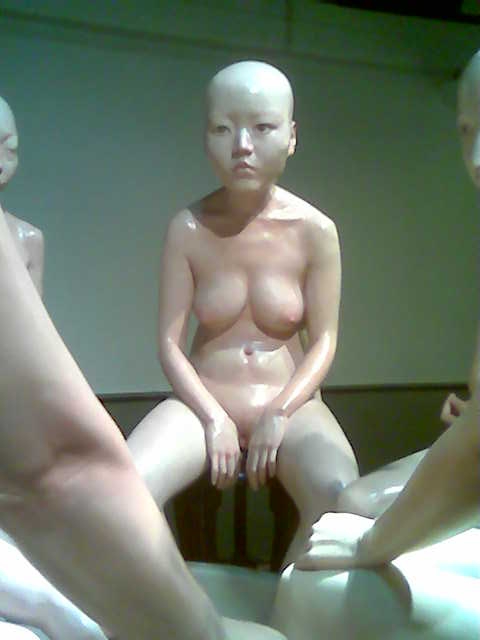
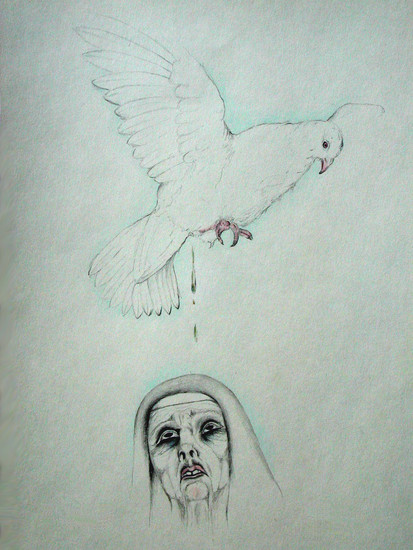
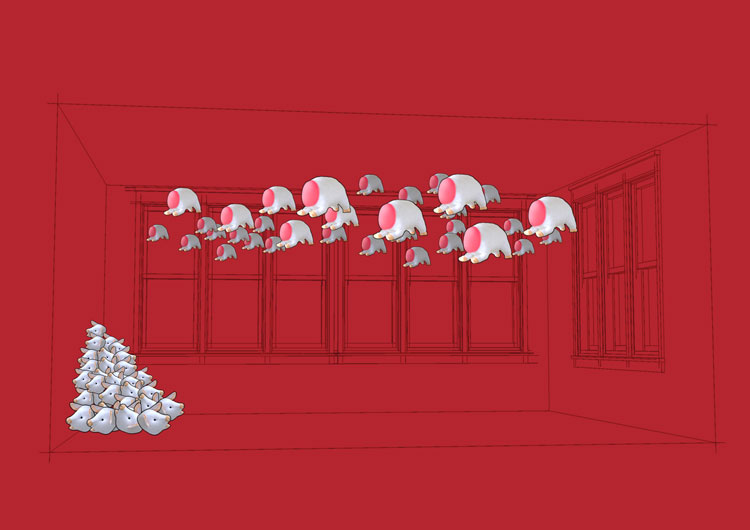
NIRANAM YUMMAYOOSHI (2015, Araya Rasdjarmrearnsook, video installation, A+30)
Sunday, March 12, 2017
.ANTS IN THE LEGS (2016, Danielle Zorbas, Australia, 41min, A+30)
Saturday, March 19, 2016
Book Wish List Hysteria: A ROOM FOR LIFE (2010) by Mona Kakanj
2.อ่านจากทางด้านซ้าย แล้วจะรู้เรื่องประวัติชีวิตของนิน่าในเยอรมนี
3.ถ้าเอาหนังสือมาจัดวางในแบบที่ถูกต้อง “หน้าลับ” ก็จะปรากฏออกมา และเนื้อหาในหน้าลับนี้บันทึกเรื่องราวชีวิตรักต้องห้ามของนิน่า
Thursday, November 15, 2012
DOCUMENTA 13 AND MULTIDISCIPLINARY ARTS BY ARAYA RASDJARMREARNSOOK
Saturday, July 09, 2011
30 DAY CINEPHILE CHALLENGE: DAY 15
http://www.ula-stoeckl.com/

Friday, February 11, 2011
Friday, January 07, 2011
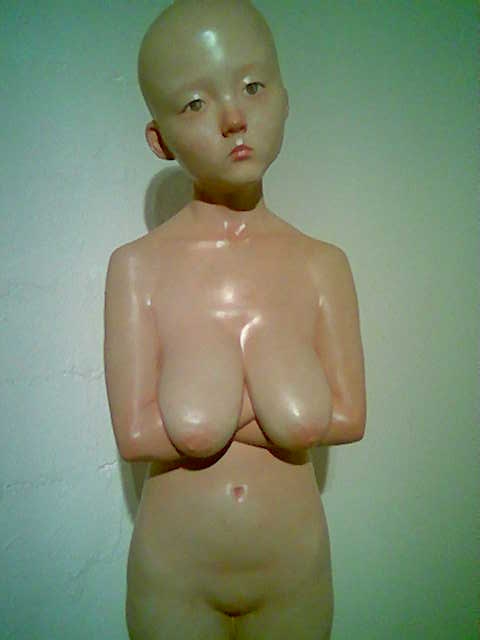
AN IMAGE FOR CHILDREN'S DAY

คำขวัญวันเด็ก "เด็กในวันนี้คือกะหรี่ในวันหน้า"
Saturday, December 18, 2010
Tuesday, August 17, 2010
FAVORITE THAI FEMALE DIRECTORS LATELY
1.Anocha Suwichakornpong (MUNDANE HISTORY)
2.Wasunan Hutawach (LOVE ME LOVE MY DOG เธอชื่อพระจันทร์, THIS WAY ทางออก)
3.Pattaraporn Werasakwong (BEHIND THE SEAWALL ทะเลจากกำแพง)
4.Visra Vichit-Vadakan (IN SPACE สูญญากาศ)
5.Arpapun Plungsirisoontorn (DRY FISH DAY DREAM ฝันตากแห้งของปลากลางแดด, ANGEL AND DEMON (AND THE PANDA GOD))
6.Chulaluck Gongpol (GOGO ลงสนาม)
7.Prawmalee Songmueng (MY FORTRESS OF HAPPINESS ความทรงจำในม่านตาของเธอ)
8.Najaree Ratanajiajaroen (THE RENOVATION OF THE TEMPLE บูรณะ)
9.Arpasri Thitatharn (AN(OTHER) สีน้ำเงินในโฆษณาผ้าอนามัย)
10.Suchana Mudgarun (HANABI)
11.Sinjai Piraisangjun (GOOD MORNING สวัสดี)
12.Siraprapa Puengton (PRINCESS เจ้าหญิง)
13.Nipaporn Kunsing (+ Pimpetch Pimthong) (CHANGING ความเปลี่ยนแปลง, RUNNING วิษณุมนต์)
14.Chunya Thawitangkoon (CIVIC EDUCATION ON CLIPS คลิปใหม่คนใหม่หัวใจพลเมือง)
15.Wanweaw + Weawwan Hongwiwat (DEAR MUM AND DAD)
--I don't know if Pimpetch Pimthong is a boy or a girl. I just know that this director is studying in Roi Ed province.
--The word "director" here means "film director". As for favorite Thai female stage play directors, there are many of them that I like.
--I only include directors whose films I have seen during the past few weeks.
--I still haven't seen many Thai films by female directors, though some of them are available in Youtube. I still haven't seen LAST DREAM (Supamittra Vorapongpichet), RUN AND HIT (Tuksina Pipitkul), SWEET MONOLOGUE (Gawisara Punnapanukool), MARCH OF THE STRANDED (Wanweaw + Weawwan Hongwiwat), REFLECT (Machima Ungsriwong), etc.
Saturday, April 18, 2009
ARAYA RASDJARMREARNSOOK'S PARTIAL VIDEOGRAPHY
(Parts of this information are from Matthew Hunt’s website.)
http://www.matthewhunt.com/taboo/death.html
1.READING FOR THREE FEMALE CORPSES (1997)
2.READING FOR MALE AND FEMALE CORPSES (1998)
3.POND (1998)
4.LAMENT (2000)
5.CHANT FOR FEMALE CORPSE (2001)
6.READING FOR FEMALE CORPSE (2001)
7.READING INAOW FOR FEMALE CORPSE (2001)
8.CONVERSATION I-III (2002)
9.DEATH SEMINAR I-II (2005)
10.I’M LIVING (2002)
11.SUDSIRI AND ARAYA (2002)
12.THAI MEDLEY I-III (2002)
13.THREE FEMALE SCAPES (2002)
14.WIND PRINCESS WHITE BIRDS (2002)
15.THE CLASS I-III (2005)
16.FECES, LIVE, LOVE, LUST (2006)
17.GLOME PEE: THE CRYING OF THE EARTH (2006)
18.GREAT TIMES MESSAGE STORYTELLERS OF THE TOWN: THE INSANE (2006)
19.THE NINE-DAY PREGNANCY OF A MIDDLE-AGED ASSOCIATE PROFESSOR (2006)
20.IN A BLUR OF DESIRE (2007)
21.MANET’S LUNCHEON ON THE GRASS AND THE THAI VILLAGERS (2008)
22.MILLET’S THE GLEANERS AND THE THAI FARMERS (2008)
23.RENOIR’S BALL AT THE MOULIN DE LA GALETTE AND THE THAI VILLAGERS (2008)
24.VAN GOGH’S THE MIDDAY SLEEP AND THE THAI VILLAGERS (2008)
25.IN REINTERPRETING OLD LANDSCAPE, WE MAY HAVE TO ENDURE REPETITION OF THE SAME OLD KARMA (2009)
26.IN THE POOL OF STILL WATER, THERE IS A YEARNING FOR THE TORRENTIAL FLOW OF THE BIG RIVER (2009)
27.IN THIS CIRCUMSTANCE, THE SOLE OBJECT OF ATTENTION SHOULD BE THE TREACHERY OF THE MOON (2009)
28.THE SEASON’S GONE SO IT’S TIME TO GO BACK, THE SEASON’S GONE YET ONE CANNOT RETURN (2009)
29.SOME UNEXPECTED EVENTS SOMETIMES BRING MOMENTARY HAPPINESS (2009)
30.AFTERWARDS, REGRET RISES IN OUR MEMORY EVEN FOR BYGONE HARDSHIPS (2009)
Wednesday, April 08, 2009
POLL 52: MULTI-TALENTED FEMALE ARTISTS
After watching Janice Martin, I think about other female artists who have many skills and talents. So I make the list below:
I LIKE THESE MULTI-TALENTED FEMALE ARTISTS. WHICH ARTISTS DO YOU LIKE?
1.Araya Rasdjarmrearnsook (filmmaker, writer, graphic artist, installation artist)
2.Cindy Sherman (filmmaker, photographer)
http://www.ubu.com/film/sherman_doll.html
3.Doris Doerrie (filmmaker, writer)
I haven’t read any of her books.
4.Janice Martin (acrobat, singer, violinist, pianist)
http://www.youtube.com/watch?v=60XO5sXXFoI
5.Joni Mitchell (singer, painter)
6.Laura Mulvey (filmmaker, writer)
I haven’t seen her films, and I have read only one article of hers. But her article unintentionally makes me not feel guilty anymore of not admiring Alfred Hitchcock as much as other cinephiles. Many years ago, I once talked with my friend that I much prefer women in films by Dario Argento, Wes Craven, and Paul Verhoeven to women in Hitchcock’s films, because many women in Hitchcock’s films are so weak that I can’t identify myself with them and I feel a little bit irritated watching them. After reading Mulvey’s article which touches on the roles of men and women in Hitchcock’s films, I began to understand why I don’t like Hitchcock as much as other cinephiles.
7.Laurie Anderson (singer, performance artist, violin builder)
http://www.ubu.com/film/kitchen_anderson.html
8.Marguerite Duras (filmmaker, writer)
9.Marina Abramovic (filmmaker, performance artist)
http://www.ubu.com/film/coulibeuf.html
10.Miranda July (filmmaker, performance artist)
11.Nezaket Ekici (filmmaker, performance artist)
12.Nuntana Weerachon (filmmaker, writer)
This famous novelist directed PUMAREE SEE THONG (1988). I haven’t seen this film yet, and I can’t remember if I had read any of her novels or not. But I love MAI SIN RAI FAI SAWAT (THE FLAME OF LOVE NEVER DIES) (1994, Adul Dulyarut) and PLEARNG PAI (1990), two TV dramas adapted from her novels.
MAI SIN RAI FAI SAWAT
http://www.youtube.com/watch?v=LiOAp0gVcgI
13.Peggy Wauters (sculptress, drawing artist)
14.Pinaree Sanpitak (painter, sculptress, installation artist)
15.Rebecca Horn (filmmaker, sculptress)
http://www.ubu.com/film/horn.html
16.Sam Taylor-Wood (filmmaker, photographer)
I haven’t seen her films yet.
http://www.ubu.com/film/tw.html
17.Sudsiri Pui-ock (filmmaker, painter)
http://www.bloggang.com/viewdiary.php?id=a-wild-sheep-chase&month=03-2009&date=11&group=3&gblog=14
http://www.sudsiripuiock.com/
18.Susan Sontag (filmmaker, writer)
I haven’t seen her films yet.
19.Tracey Moffatt (filmmaker, photographer)
http://www.ubu.com/film/moffatt.html
20.Yoko Ono (filmmaker, singer, performance artist, conceptual artist)
http://www.ubu.com/film/ono.html
--You can cast multiple votes.
--The word "filmmaker" here includes videomakers or any moving-image makers.
--I excluded actress/filmmaker (such as Nicole Garcia) and actress/singer (such as Jane Birkin and Paris Hilton) from this list, because there are so many of them. Maybe I will make a list of favorite actress/singer in the future.
--Other interesting multi-talented female artists include:
21.Carla Bruni (singer, model)
22.Carolee Schneeman (filmmaker, performance artist)
http://www.ubu.com/film/schneeman.html
23.Ing K (filmmaker, painter)
24.Jane Fonda (actress, aerobic instructor)
25.Maya Deren (filmmaker, dancer)
26.Naomi Campbell (singer, model)
27.Nattarika Thanpridanant (actress, artist)
28.Sally Potter (filmmaker, dancer)
29.Sophie Marceau (actress, writer)
30.Tabea Blumenschein (actress, costume designer)
31.Valie Export (filmmaker, performance artist)
Monday, April 06, 2009
IN THE POOL OF STILL WATER, THERE IS A YEARNING FOR THE TORRENTIAL FLOW OF THE BIG RIVER (A+++++)
http://www.ardelgallery.com/html/detail_exhibition.php?id=35
Eight videos are shown in this exhibition. My most favorite video is IN THE POOL OF STILL WATER, THERE IS A YEARNING FOR THE TORRENTIAL FLOW OF THE BIG RIVER. There are many things I love in this video, including the fact that the position of the viewer will affect the visibility of the image in this video.
I’m not sure if Araya intended to make this kind of effect or not, but I like this thing very much, because it’s the first time I have experienced this kind of thing.
I think this video is about seven-minute long. At first you see a human body wrapped under a white cloth sleeping on a bed near a pool of still water. Then the body starts moving around under the cloth, and we also hear many voices talking at the same time.
The screen goes darker and darker, and after 4 minutes, we can see nothing at all except the black screen.
But actually it isn’t. If you stand far from the TV screen, you will see only the black screen for the last three minutes of this video. But if you stand very close to the TV screen and let your shadow fall right on the middle of the TV screen, you will be able to continue seeing the body moving and moving on the bed until the video ends. But if you move away from that spot, you will not be able to see it. You must cast your own shadow at the middle of the TV screen in order to view it.
This video gives me a really unique experience.
Monday, August 25, 2008
SPACE INVADERS NEED A RESOLUTION REMIX
http://www.bioscopemagazine.com/smf/index.php?topic=71.1650
อ่านที่คุณ pc เขียนเกี่ยวกับความลักลั่นในสังคมไทยแล้วเลยทำให้นึกถึงบทสัมภาษณ์ Tuksina Pipitkul ผู้กำกับภาพยนตร์/ศิลปินหญิงชาวไทยในนิตยสาร FINE ART ฉบับเดือนก.ค.ปีนี้ โดยผู้สัมภาษณ์คือ Andrews Little เจ้าของ Conference of Birds Gallery
อันนี้เป็นส่วนหนึ่งของบทสัมภาษณ์ค่ะ
I am very impressed with Tuksina Pipitkul’s interview in Fine Art Magazine, July 2008. The interviewer is Andrews Little, the owner of Conference of Birds Gallery.
Excerpt from the interview:
Tuksina Pipitkul (Haru): As a child, I was always told, “Thais are compassionate.” And “Thais are so helpful”. I frequently heard that “Thailand is Buddhism.” and all aspects of my environment stressed the importance of mercy toward sentient beings. This degree of mercy and compassion can be achieved in meditation.
Now I wonder if what I heard is true. My work seeks to directly challenge this Thai Buddhist moral framework. I have always seen one of my neighbors give food to monks each morning so that he can gain merit. I have also seen this same neighbor kill an old dog that was lying in front of his driveway. He just drove a car right over the animal. At another point I saw him poisoning baby dogs. Belief is complicated, and often contradictory, but there is a limit to how much I hope to interrogate it. I only know that we should respect other sentient things because all such things have only one life.
You can find more information about Tuksina Pipitkul’s work here:
http://www.conferenceofbirds.com/Haru.html
Fine Art Magazine’s website:
http://www.fineart-magazine.com/index.html
In my own opinion, I think Tuksina Pipitkul is one of the most interesting Thai female filmmakers this year. The other two are Arpapun Plungsirisoontorn (REPEATING DRAMATIC) and Fari Tesprateep (THE THING).
FAVORITE MUSIC VIDEO
SIX ARMS AND ONE LEG – Minilogue
http://www.youtube.com/watch?v=vm5iQcH2Wfw
FAVORITE SONG
SPACE INVADERS NEED A RESOLUTION REMIX – Leila VS Aaliyah
http://www.youtube.com/watch?v=yk-EjlW3EW0
อันนี้เป็นข้อความที่ดิฉันเขียนตอบคุณปราปต์ในบล็อกของตัวเอง ก็เลยถือโอกาสเอามาแปะในนี้ด้วย
http://celinejulie.blogspot.com/2008/08/i-film-my-village-2006-shao-yuzhen.html
--พูดถึงการผสมผสานระหว่างความเป็นเมืองใหญ่และชนบทแล้ว ก็เลยทำให้นึกถึงหนังเรื่อง “อาข่า ผู้น่ารัก” (2008, สุกัญญา วงศ์สถาปัตย์, A+) ที่เพิ่งได้ดูมา เพราะพบว่าหนังเรื่องนี้ทำให้นึกถึงมิวสิควิดีโอของชนกลุ่มน้อย ที่ดิฉันเดาว่าน่าจะเป็นชาวเขา ที่ได้ดูในงาน VIDEOTOP ของกลุ่ม THIRD CLASS CITIZEN ของเต๋อ นวพล+ merveillesxx + ชาครในเดือนพ.ค.ปีนี้ เพราะพบว่าหนังและมิวสิควิดีโอสองอันนี้มีลักษณะที่น่านำมาเปรียบเทียบกัน และสองสิ่งนี้อาจจะทำให้นึกถึงความแตกต่างกันระหว่าง “ภาพของชาวเขาที่คนภายนอกต้องการนำเสนอ” กับ “ภาพของชาวเขาที่ชาวเขาต้องการนำเสนอ”
1.ในหนังเรื่อง “อาข่า ผู้น่ารัก” มีฉากที่อาสาสมัครของกลุ่มกระจกเงา ทำรายการโทรทัศน์ด้วยการบันทึกภาพชาวบ้านขณะทำการเกษตร (หรือทำพิธีกรรมทางการเกษตรอะไรสักอย่าง) พร้อมกับร้องเพลงพื้นบ้านในภาษาชาวเขาไปด้วย
2.ในมิวสิควิดีโอ (ที่ดิฉันไม่รู้ชื่อเพลงแน่นอน) ในงาน VIDEOTOP นั้น มีฉากที่คล้ายๆกัน นั่นก็คือเป็นฉากชาวบ้านทำการเกษตรหรือพิธีกรรมทางการเกษตร พร้อมกับที่เราจะได้ยินเสียงเพลงภาษาชาวเขาไปด้วย แต่เพลงที่เราได้ยินนั้นกลับเป็นเพลงจังหวะแร็พ ฮิปฮอป โย่ โย่ ในภาษาชาวเขา และก็มีชาวเขาที่แต่งตัวเป็นเด็กแร็พมาร้องเพลงนี้ โดยมีการตัดสลับภาพประเพณีต่างๆของชาวเขาเข้ามาเป็นระยะๆ
ถ้าจำไม่ผิด ชื่อเพลงนี้จะสะกดคล้ายๆ O tsui yeh o ส่วนศิลปินใช้ชื่อว่า Moses
--รู้สึกประทับใจองค์ประกอบบางส่วนในหนังสั้นหลายๆเรื่องตรงความเป็น “บ้านๆ” ของมัน ดิฉันเองก็ไม่แน่ใจเหมือนกันว่าคำจำกัดความที่แท้จริงของคำว่า “บ้านๆ” คืออะไร แต่ในที่นี้ดิฉันไม่ได้หมายความถึงความเป็นบ้านนอก เพราะหนังที่ดิฉันรู้สึกว่ามันมีเสน่ห์แบบ “บ้านๆ” บางเรื่องในที่นี้อาจจะหมายรวมไปถึงหนังที่มีเนื้อหาเกิดขึ้นในกรุงเทพ หรือกำกับโดยผู้กำกับชาวกรุงเทพด้วย
หนังสั้นที่มีเสน่ห์แบบบ้านๆที่ชอบมาก
1.เก็บไว้กับเธอ (2007, มัลลิกา มิตรธงไชย)
ไม่แน่ใจว่าเนื้อหาของหนังเรื่องนี้เกิดขึ้นในกรุงเทพ หรือย่านชานเมือง หรือในจังหวัดอะไร แต่องค์ประกอบหลายอย่างในหนังมันดูบ้านๆได้อย่างน่ารักมากๆ
2.คืนเปลี่ยวในซอยตรวจ (2008, วีระศักดิ์ สุยะลา)
3.เพื่อน-รัก-ความทรงจำ (2008, ขจรศักดิ์ จันทร์คำ)
หนังเกย์
4.ลิง ไก่ ขาบ แพะ แบะ แบะ (2008, เอกวิทย์ ทมราตรี)
5.เออ...เองเก่ง (2008, ภูมิพัฒน์ อารยะธนิตกุล)
อันนี้เป็นสารคดีเกี่ยวกับจังหวัดสมุทร...อะไรสักอย่าง หนังเป็นสารคดีที่ค่อนข้างตรงไปตรงมา แต่ดูน่ารักและไม่น่าเบื่อเลย
6.วังยื่นหาบ (2008, สมพงษ์ โสดา)
ผู้กำกับคนนี้เคยกำกับหนังสั้นเรื่อง “THE MISSION” และในสูจิบัตรเทศกาลหนังสั้นปีที่แล้วบอกว่าผู้กำกับคนนี้อาศัยอยู่ในกรุงเทพ แต่หนังเรื่อง “วังยื่นหาบ” ถ่ายทอดการไปเที่ยวป่าในชนบทได้ออกมาดู “บ้านๆ” มาก
7.เพื่อนรัก...(แอบ)รักเพื่อน (2007, ระชานนท์ ทวีผล)
หนังเกย์เด็กมัธยม
8.สาวน้อย คาถา แอ๊บแบ๊ว (2008, ยุทธนา เสนีวงศ์)
9.ไม้วิเศษ (2007, วรวุฒิ หลักชัย)
10.จตุคาม-จตุคำ (2007, รมย์รวินท์ ชุ่มจีน)
แต่ก็ไม่ใช่ว่าดิฉันจะชอบหนังสั้นแบบบ้านๆไปซะทุกเรื่อง เพราะบางเรื่องก็ดูไม่ค่อยสนุก และบางเรื่องก็เชิดชูการทำความดีหรือคุณธรรมในแบบที่ดิฉันไม่รู้สึกอินด้วยเท่าไหร่นัก แต่ 10 เรื่องที่ยกมาข้างต้นเป็นหนังที่ชอบมากตรงเสน่ห์ความเป็นบ้านๆของมัน หนังบางเรื่องในกลุ่มนี้อาจจะมีความไม่ลงตัวในบางจุด แต่ดิฉันก็มองว่ามันก็เหมือนกับมนุษย์นั่นแหละ ที่ทุกคนต่างก็มีทั้ง “ข้อบกพร่อง” และมี “เสน่ห์” หรือ “ข้อดี” ในแบบของตัวเอง เพราะฉะนั้นความไม่ลงตัวของหนังบางเรื่องในกลุ่มนี้จึงเป็นสิ่งที่ดิฉันสามารถมองข้ามมันไปได้อย่างง่ายดาย
--ที่ประเทศอื่นๆก็คงจะมีผู้กำกับหนังแบบบ้านๆอยู่เหมือนกัน หนึ่งในผู้กำกับกลุ่มนี้ก็คือ Moncef Kahloucha ใน Tunisia ที่เป็นชาวบ้านที่ชอบกำกับหนังเองและเล่นเอง และชีวิตของเขาก็เพิ่งได้รับการถ่ายทอดลงในสารคดีเรื่อง VHS – KAHLOUCHA (2006, Nejib Belkhadi) โดยหนังสารคดีเรื่องนี้ติดตามถ่ายทำ Moncef ขณะเขากำลังสร้างหนังเรื่อง TARZAN OF THE ARABS
เว็บไซท์ของหนังเรื่องนี้
http://www.kahloucha.com/
--ได้ยินชื่อ TARZAN OF THE ARABS แล้ว ก็เลยทำให้นึกถึงหนังที่อยากดูมากๆเรื่องหนึ่ง ซึ่งก็คือเรื่อง TURKISH SUPERMAN (1979, Kunt Tulgar)
ดูคลิปตัวอย่างของหนังเรื่องนี้ได้ที่
http://www.youtube.com/watch?v=p9oI7Fd3Uec
ชอบคลิปนี้มากในระดับ A+++++
Saturday, August 09, 2008
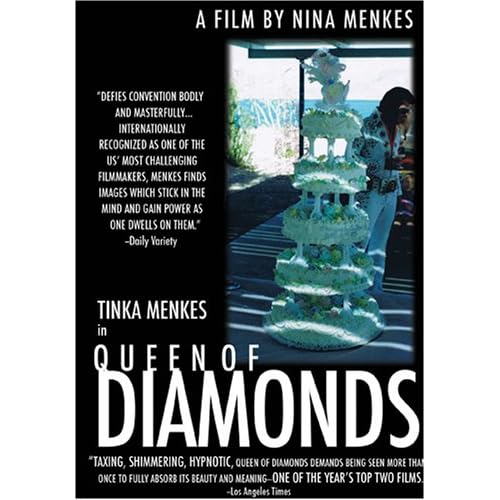
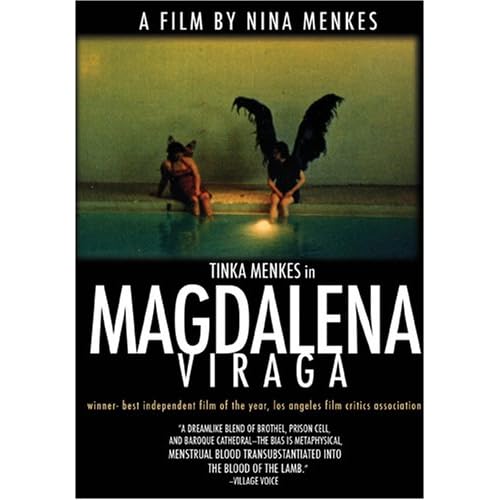
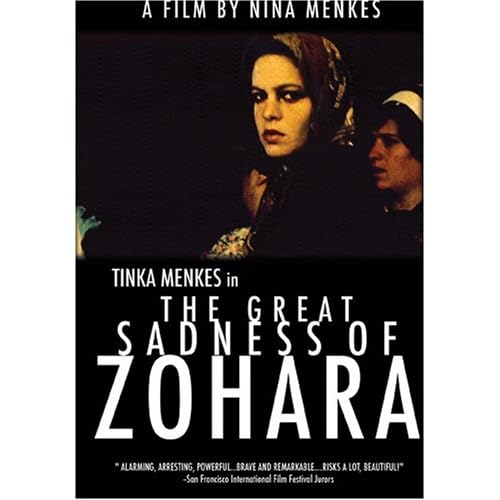
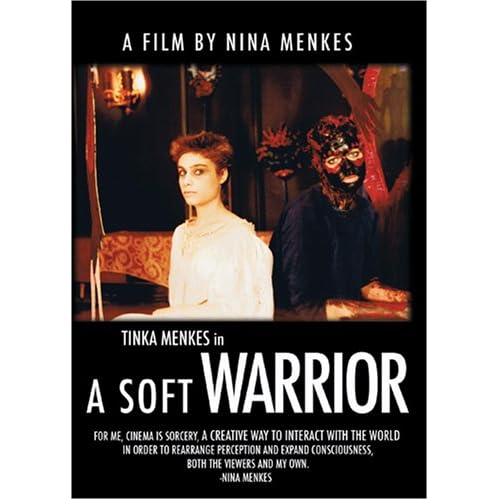
NINA MENKES' INTERVIEW IN UNSPOKEN CINEMA BLOG
http://unspokencinema.blogspot.com/2008/08/nina-menkes-interview.html
I also asked for Harrytuttle's permission to post the interview here, too.
1. In PHANTOM LOVE, there are very few dialogues, especially in the casino scenes. What do you think about the role of dialogue in films? Do you always use little dialogue in all your films? Would you say that this small dialogue in PHANTOM LOVE corresponds to the journey of a woman into her own self? Or maybe is it related to the alienation portrayed in your film(s)?
NM: Yes, there is very little dialogue in all my films. Some films have a bit more than others, but in general, I stay away from dialogue, because I feel that the most powerful energies in our lives, and in fact, the way we actually pick up information and feelings about ourselves and other people is not through words, but through energy and other levels of connection. Words can be powerful and meaningful, like poetry, for example, can be so moving, but just talking,chatting "dialogue"-- usually, its waste of time, in my opinion, and also, it covers up deeper levels of reality.
2. Why did you choose the heroine of PHANTOM LOVE to be an employee at a casino? Could you tell us about the inspiration that motivated this choice? I find the boring life of a casino job very interesting for at least two reasons: firstly because the casino is usually a place of excitement in most films, but in this film it is a place of extreme boredom; secondly because most filmmakers seem to portray the boredom of modern life via stereotypical characters (like for example corporate office employees), but it is different in your film. Was this contrast intentional?
NM:For me, the casino is an intense symbol of extreme alienation for a few reasons.
It is labor with no product. Basically in a casino, people are losing money as entertainment. The worker, just takes your money and you don't get anything at all. I guess you get a thrill. But actually, this thrill will pass and what did you get? Even if you buy a cheap sweater at K-mart, you got a sweater. You can wear it in case you are cold. At the casino, the money drains into the pocket of someone else and there is no return. And the casino is so outside time. In Vegas there is no natural light and no clocks inside the casinos which are open 24/7. So its hell.
To me, it's a perfect picture of hell. Visually, I like it too, because of the numbers.
The numbers are connected with Death. "His number was Up" in slang English can mean-- he was killed. Money is counted. Counting in general is from the devil…it's a known fact, that counting is connected to death. People sometimes like to know how old I am, but I don't like to count, how many days have I been on planet earth? How many days are left? This is not for us to know. The Bedouins in Sinai, where I lived for some months, years ago—they don't know when they were born, so they don't know their age. Its very liberating. The numbers constrain you, they tie you down, they limit perception. God is infinite and cannot be counted.
3. The editing in your films is most peculiar : discontinuity between places, backgrounds or positions. What is your intention? Why are the narratives in your films so fragmented in such a way?
NM:My editing is based on psychic continuity, not material or physical continuity. All the connections in terms of editing are in terms of the flow of feelings and psychic energy. I purposely dislocate the viewer in terms of physical or geographic material space and so called normal counting of minutes and time. Instead all the connections are on the psychic level.
4. I am very interested in the temporal dimension of your films, and in the universe portrayed in your film. Could you tell us about the perception of time by your characters?
NM:This connects to the above questions, in terms of counting, and time is normally "counted" is a very specific and linear way. This way of counting time and arranging time and space, which is the conventional way, is 1)not interesting to me , but more than that—I think its also not True. When I was in India some years ago, I had a dream that I was wearing two wrist watches. One on each hand. And each watch had two hands, and both of the hands, in both of watches were spinning wildly counter-clockwize. When I woke up, I told a swami, whom I met on the road, about my dream, he said-"Oh…sure…you have contacted the reality that is outside time and space."
J
SO, anyway, we have our way of organizing time for "normal life" and we need it, if we have to meet someone at 3 o'clock, okay we both have to know what is 3 o'clock, but the part of ourselves where things are happening most powerfully is not associated with these numbers. Psychoanalysts know that our adult sexual relationships are probably almost always driven by what happened when we were, say, 5 years old right? And that is alive and vibrating inside us, the Buddhists always say that past present and future are all co-existent, its obviously true.
Recently I came to Israel and one of my friends from long ago found me, we had not seen each nor talked or written each other for 20 years. This is a very special friend, but anyway, we found each other and it was as if less than 20 minutes had passed, since our last meeting. Twenty years was nothing. Zero.
My characters are located on the level of time and space where intense emotions are existing in an unadulterated state, a state not compressed by ordinary social reality.
5. In PHANTOM LOVE, it seems the spirits of different human characters are connected to different kinds of animals. What is your concept behind this?
NM:I feel very connected to the animal world.The different animals have different energies and powers. I know the Native American Indians in North America were very tuned into this aspect of life, but in our modern life we don't have so much connection to the animal world, but to me, animals are somehow sacred, they are closer to God than we are, although a friend recently told me "I am God too", not only this bird, or this tiger, but me, a man. Yes, that's true too, but somehow we are corrupted by our loss of connection to the sacred. In fact, my films are essentially and ultimately about precisely this loss of connection.
6. I feel there is something spiritual about PHANTOM LOVE. Could you tell us your personal thoughts on spirituality or about the spirituality you've put in this film?
NM:Yes, its what I was trying to say just now. There is a connection, its not feelings or intellect. There is a sacred whirlpool in the area right below or around the heart chakra, between the breasts, at least, a close friend was speaking of this whirlpool this morning and I burst into tears, I felt it was so small in me, and I pray it can become from a tiny little bud stronger and more open. My films are about loss of connection to the spiritual. And the pain that comes from that loss. The alienation in my films is ultimately about that. The spiritual alienation then vibrates on all levels. But that is the root alienation.
7. The mother-daughter relationship in PHANTOM LOVE is quite shocking for me. What inspired you this particular relation?
NM:Its an image of an incestuous relation. But it's a dream. Lulu has a dream that shows her what has happened to her on an energetic level…. that all her boundaries, her most private and the most intimate areas of herself, have been invaded and violated in a terrible way. She has to refuse this invasion.
8. Why filming PHANTOM LOVE in black-and-white rather than in colour?
NM:I don't have an answer, it was an intuition, it felt right to me. Color would have been too much. The film is so rich, it could not have in addition to the rich content, also COLOR, that would have been too much.
9. Could you tell us about your next project? What are you working on currently?
NM:I have a script called HEATSTROKE, and I hope to find the right actresses for it…..
It is about two sisters, like PHANTOM LOVE, but it is in color. I am looking for a producer for this film at this time, and I welcome any help or suggestions you might have.
Here is an official little "blurb" about my new film:
HEATSTROKE is a mirage-like mystery set in Los Angeles, California and Cairo, Egypt during the feverish heat of a contemporary summer.The film's root is a violent -- possibly sexual -- early trauma that sits in the psychic closet of two sisters .The film sets the psychic split of the sisters and the violence within their family against the violent split between the Arab world and the West.
I thank you deeply for your understanding and appreciation of my work.
--------------------------
LINK TO PURCHASE MENKES DVDS
http://www.amazon.com/s/ref=sr_nr_i_1?ie=UTF8&rs=&keywords=%26%2334%3Bnina%20menkes%26%2334%3B&rh=i%3Aaps%2Ck%3A%26%2334%3Bnina%20menkes%26%2334%3B%2Ci%3Advd
for more information:
http://www.ninamenkes.com/films
------------------------------
Saturday, June 07, 2008
NAKED BEYOND SKIN (Xiang Jing, China, A+)
Monday, April 28, 2008
MOST FAVORITE MONOLOGUE OF ALL TIME
My seventeenth poll ended with 12 votes. Thank you very much for everyone who participated in it. Here is the result:
I LOVE THESE EXPERIMENTAL FILMS BY FEMALE FILMMAKERS VERY MUCH. WHICH FILM DO YOU LIKE?
1.LOCOMOTION IN WATER (2005, Hanna Shell)
It got 5 votes or 41%.
2.BIRTH OF THE SEANEMA (2004, Sasithorn Ariyavicha, Thailand)
It got 3 votes or 25%.
3.ATOMIK PARK (2003, Dominique Gonzalez-Foerster, France)
+BERLIN – EXERCISES IN NINE PARTS: DREAMING UNDER WATER OF THINGS AFAR (1975, Rebecca Horn, Germany)
+SOMETHING HAPPENED (2007, Keren Cytter)
Each of them got 2 votes or 16 %.
6.FUSES (1965, Carolee Schneemann, USA)
+I'M NOT THE GIRL WHO MISSES MUCH (1986, Pipilotti Rist)
+SEEING SPACE AND HEARING SPACE (1974, Valie Export)
Each of them got 1 vote or 8 %.
9.BETWEEN (1989, Claudia Schillinger, Germany)
+BY TOMORROW (2008, Tuksina Pipitkul, Thailand)
+FUN RIEM (2006, Luddawan Subpeng, Thailand)
+THE INSANE (2006, Araya Rasdjarmrearnsook, Thailand)
+LINEAGE OF THE DIVINE (2002, Monika Tichasek, Australia)
+THE LITTLE GIRL (1997, Nicole Greenwood, Pantipa Tanchookiat, Thailand)
+LIVING A BEAUTIFUL LIFE (2003, Corinna Schnitt, Gemany)
+NEWS FROM HOME (1977, Chantal Akerman)
+PHANTOM LOVE (2007, Nina Menkes, USA)
+PHYSICAL REQUIREMENTS FOR BEING AN ARTIST – ENJOY YOURSELF IN EVERY CONDITION, PART 2 (2000, Chang Jia, South Korea)
+RED SAGA (2004, Gabriela Krista Dalena, Philippines)
+RISE SON (2006, Visra Vichit-vadakan, Thailand)
Each of them got 0 vote.
-------------------------------------------
-- You can read about THE INSANE from:
http://www.frieze.com/issue/review/araya_rasdjarmrearnsook/
Talking about THE INSANE (2006, Araya Rasdjarmrearnsook, Thailand), I just found that you can buy a book about Araya's recent video works from this website (if you can read Thai):
http://www.matichonbook.com/index.php?mnuid=5&selmnu=490306141046
This book, ART AND WORDS, is in both English and Thai. It also includes 11 monologues from THE INSANE. I love one of the monologues very much. It sure is one of my most favorite monologues of all time.
I copied the following monologue from the book ART AND WORDS by Araya Rasdjarmrearnsook. Listening to or reading this monologue make me think that the insane woman who spoke this monologue could have been as famous as J.K. Rowling if she was not insane. I like her power of imagination very much.
"...Then I went to stay at home. I went to help my father and mother at work, raising chickens, ducks, swans, and geese. We also had dogs, cats, a hybrid parrot, doves, we raised them all. Parrots and grackles also. A peahen came to live with us as well. It displayed its feathers and brooded four eggs. And then there was also a giraffe. The village zoo came to our house (laughs). We also raised an owl and a pygmy owlet; they all came to live with us. There were so many of them; a cat who had four kittens and the peahen had a shed full of little pea fowls. We also had pigs, a boar and a swine. They also had a shed full of piglets. And then there were the elephants, the cows, buffalos, tigers, and lions, different snakes, a rattlesnake, they all came to stay at our house. From America they came. The demon took care of them. I dreamed of having a mammoth coming to stay at our house as well, a male and female. They come from America, mammoths. They gave birth to little baby-mammoths also at our house. My father and mother asked me if I was afraid of mammoths. I said no, I'm not afraid. There were many kinds of elephants that came to stay at our hose. There was a white elephant as well. In the story Kasateriya, white elephants are used in battle. There were many elephants, a total of twenty-eight elephants, in the battle with Burma, which Thailand won. Burma set fire to Ayuthaya, Sukhothai and Thonburi. They belonged to King Bureingnong who took King Dam's sister as his Queen. King Naresuan, he is the brother of King Naresuan (laughs), and then (laughs), there is the Phayaym crow and the river crow. They also came to our house (laughs). There were so many of them (laughs). The river crow likes diving. The Phayayom crow is the prince of devils, the prince of death. He also came to live at our house. When this crow calls out in front of somebody's hose, someone in that house will die. The Phayayom crow (laughs). The river crow, he is good, the river crow. He brings good luck and good fortune. A female parrot also came to stay with us. Then there were mice, cats, they all came to stay. Elephants came, cows, buffalos, lions, tigers, bears. All our money was spent taking care of them. A very big animal, that mammoth. The mammoth with fur like silk, the male mammoth, went wild. The mammoth with the long hair went in heat and soon became a mother-mammoth. It gave birth at our house to many little baby-mammoths...."
"...A whole bunch of geckos came to stay at our house. They had lots of baby-geckos. Geckos, tigers, and bears as well. There were Siberian water-ducks we took care of at our house. We fed them bananas. We cleaned the pool and raised ducks, swans and geese. We also had fish, pearl-oysters as well, cockles also (laughs). Repugnant animals we raised as well; leeches, they were in the pool. They stuck to my leg and my mother asked me if I was afraid. I said no. I pulled them off my leg. Crocodiles came also. They were at the pool. They let me watch them mate. Elephants came to stay as well. I put fruit on two trays for them. There were apples, sugar-cane, bananas, oranges, green rose-apples, red rose-apples, mangosteen, and water-melon and pineapple. The elephants liked that, you know. They stayed at the pool. They let me watch them mate (laughs). Kootsie insects came to stay with us as well (laughs loudly while talking). We also had kootsie insects. Very fussy they were. And butterflies (laughs). Noychoo-ee chickens (laughs). If I wanted eggs I just ran outside. I had a sheep. Shrimps came, crabs, oysters, they all came to stay. There were crocodiles and alligators that came to stay with us. Kraitong came to stay as well. There was a guinea pig. Playchumphon and his wife came and stayed with us. They came but the giant Bangmut crocodile, I stepped on it...."
--Apart from the monologue in THE INSANE, another of my most favorite monologues of all time is the monologue near the end of the film THE ANDECHS FEELING (1974, Herbert Achternbusch, West Germany, A+).
http://www.imdb.com/title/tt0071140/
Saturday, April 26, 2008
TRAN T. KIM-TRANG'S FILMS AT CONFERENCE OF BIRDS GALLERY
TRAN T. KIM-TRANG: THE COMPLETE BLINDNESS SERIES1992 - 2006, 8 Videos
Opening Party: Saturday 26 April 7pm
Dates: 26/4/08 - 15/5/08
CONFERENCE OF BIRDS
131/18 Thanon Pun
Silom, Bangrak, Bangkok 10500
conference@conferenceofbirds.com
http://www.conferenceofbirds.com/
Phone: 0849281152
GALLERY HOURS: EVERY DAY 12PM - 8PM
"A rare video artist who is equally comfortable talking about Freud
and the Khmer Rouge." Steve Anderson, The Independent
Fourteen years after beginning The Blindness Series, Tran T. Kim-Trang
completedEpilogue: The Palpable Invisibility of Life (2006, 14 min.)
-- inspired by the exhibitionMemoirs of the Blind, curated by Jacques
Derrida for the Louvre Museum. Vastly different in style, the eight
videos of the series investigate blindness and its metaphors. In
addition to the Los Angeles premiere of Epilogue, the screening
tonight includesamaurosis (2002, 28 min.), a portrait of blind
guitarist Nguyen Duc Dat; alexia (2000, 10 min.), about "word
blindness"; ekleipsis (1998, 22 min.), which explores hysterical
blindness among Cambodian women refugees; ocularis (1997, 21 min.), a
piece on surveillance technology; kore (1994, 17 min.), an examination
of the relationship between vision and sexuality; operculum (1993, 14
min.), which focuses on cosmetic eyelid surgery; and aletheia (1992,
16 min.), the introduction to the series.
Detailed program
1.Epilogue: The Palpable Invisibility of Life (DV; 14 min.; 2006)
--When Derrida died in 2004, Epilogue shifted focus from his work on mourning
to ruminate on 1) the visible and invisible traces one leaves behind:
a font made from Derrida's infamous handwriting, my mother's dying
words, etc.; 2) the cycle of life and death: my son's birth on the
same day, date, and time as my mother's death six years prior; and 3)
imaging technologies that allowed me to see my unborn son, leading to
fantasies about what technologies it would take to "image" my
incorporeal mother, and discovering that ancient medicine brings me
closer to my dead mother.
2.amaurosis (DV; 28 min; 2002)
--A portrait of Nguyen Duc Dat, a blind guitarist who is a "triple outcast": disabled, Amerasian, and an orphan. Dat went from a life on the streets of Saigon selling lottery
tickets to winning guitar championships in the state of California,
where he now resides. The video unfolds in layers of conversation with
Dat about his experiences as a new immigrant and young adult inAmerica.
3.alexia (DV; 10 min; 2000)
--Word-blindness (alexia) is a condition that afflicts people who have suffered a stroke, causing them to lose the visual recognition of individual letters but perceive the entire word,
or vice versa. Metaphors are here discussed in their function to reveal and obscure perception. Divided into five short sections, the tape draws a pattern with several motifs--the finger (pointing as one of the earliest forms of language), the moon (contrasting Buddhist and Wittgensteinian philosophies about metaphors and the visible)—to ruminate on language and blindness. Giambattista Vico's theory on the origin of language is also addressed.
4.ekleipsis (Betacam; 22 min; 1998)
--An experimental documentary about Cambodian women in Long Beach, California, known as the largest group of hysterically blind people in the world. Hysterical blindness is a
psychological condition where one is not able to see despite the absence of physical problems. ekleipsis traces two histories: the Cambodian Civil War and hysteria, to speak about pathology and agency. To transcend what has been described as the 'eye-searing' horrors of war, these women cried themselves into blindness.
5.ocularis (Betacam; 21 min; 1997)
--Through a 1-800 (toll free) phone number publicized nationally, recorded messages of fears and fantasies about video surveillance were collected from callers: If you were
caught on videotape, what would be the worst thing you could be caught
doing? If you could watch someone, what would you want to see? This
experimental video highlights several narratives to raise issues of
surveillance: the construction of our society's desire to watch
surveillance materials and its insatiable voyeurism, as well as what
it would mean to have an alter-electronic ego or to be biologically
tagged without the recourse to 'pass' for survival's sake.
6.kore (Betacam; 17 min; 1994)
--This project investigates theconjunction of sexuality with
1) the eye as purveyor of desire;
2) the sexual fear and fantasy of blindness and the blindfold;
And 3) women and AIDS.
Can the blindfold embody a touch-based pleasure associated
with female sexuality, in contrast with a vision-based pleasure
assigned to male sexuality? Could the choice to not-see facilitate
ecstasy for the subject? How does fear and fantasy contrast with the
reality of vision loss in advance stages of AIDS?
7.operculum (3/4"; 14 min; 1993)
--This experimental documentaryjuxtaposes footage from visits with seven cosmetic surgeons
specializing in blepharoplasty (eyelid surgery) within the Beverly
Hills/West Hollywood area with text describing a 1950s lobotomy
procedure to treat psychological patients. This juxtaposition comments
on cosmetic surgery as a 'desperate cure'. Cosmetic surgery of the
eyelids on Asian women is regarded as a self-effacing fantasy of
attaining the standard of beauty, a standard which demands conformity
to the norm of being average. The artist poses as a potential patient.
8.aletheia (3/4"; 16min.; 1992)
--An introduction to the series, that provides an index of topics on different aspects of physical blindness and its metaphors. Multiple modes of discourse are employed:
journalistic, anecdotal, fictive, and theoretical to bring out various
perspectives on the issues addressed. aletheia experiments with
non-linear structure to spur associative viewing amongst the seemingly
disparate ideas; this structure is also a formal reflection of our
perceptual process.
Artist's notes
In 1991, I conceived of The Blindness Series as an eight-tape project
to investigate physical blindness and its metaphors. Three reasons
motivated me: 1) a personal fear of vision loss; 2) blindness has been
a historical concern for many visual artists; and 3) I wanted to
explore the perceptual to conceptual process, which informs all that
we do.
The Blindness Series has in many ways galvanized my working methods
and thinking about experimental media. As the tapes are stylistically
different from each other, I weave in multiple layers of text, image,
and sound. I want to re-present the way we are awash in information
coming from various sources: journalism, fiction, our dreams, etc.
Working experimentally has enabled me to incorporate multiple
practices and realize new approaches, it also mirrors the way my mind
works. I aim to create formally progressive artworks that foster
progressive ideas and social change. Because video is such a potent
and accessible medium, it demands a responsibility that I find lacking
in mainstream corporate media. Part of this responsibility is the
commitment to accurately portray the underrepresented. I do believe
that video can be a tool for social change, foremost by the power of
representation to affect and influence people's beliefs and thinking.
I strive for continual experimentation in trying to find ways to
represent and understand both my subjects and the medium itself.
Tran T. Kim-Trang
About the filmmaker
Tran T. Kim-Trang was born in Viet Nam and emigrated to the U.S. in
1975. She received her MFA from the California Institute of the Arts
and has been producing experimental videos since the early 1990s. Her
work has been exhibited internationally. In 1999 Tran presented her
Blindness Series in a solo screening at the Museum of Modern Art. In
2000, two of her videos were included in the Biennial exhibition at
the Whitney Museum of American Art, and The Blindness Series was
featured at the 46th Robert Flaherty Film Seminar. Tran has been
nominated for a CalArts/Alpert Award in the Arts and was named a 2001
Rockefeller Film/Video/Multimedia Fellow. The fellowship has enabled
her to develop an experimental narrative feature titled Call Me Sugar,
based on the life of her mother.
Tran also collaborates with Karl Mihail on a project known as Gene
Genies Worldwide(c)? (genegenies.com). Their conceptual and public
artworks on genetic engineering have exhibited at the Ars Electronica
Festival in Austria, Exit Art, the Tang Museum at Skidmore College and
in many other venues in the US.
Tran is currently an Associate Professor of Art at Scripps College.
Friday, April 18, 2008
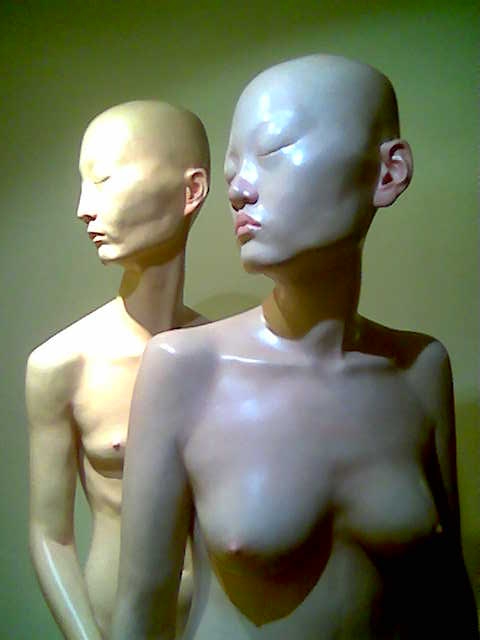
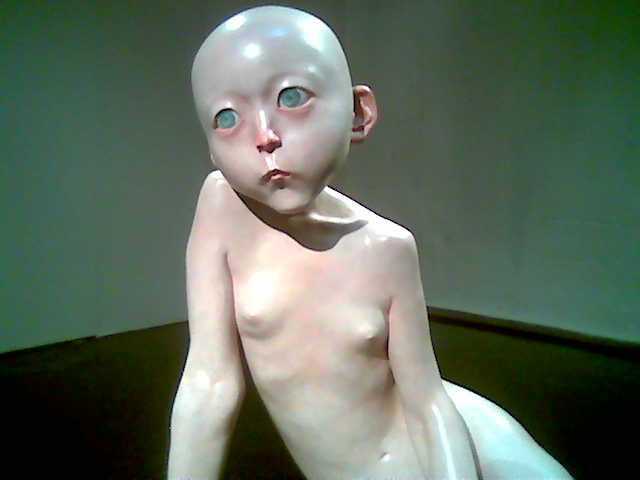
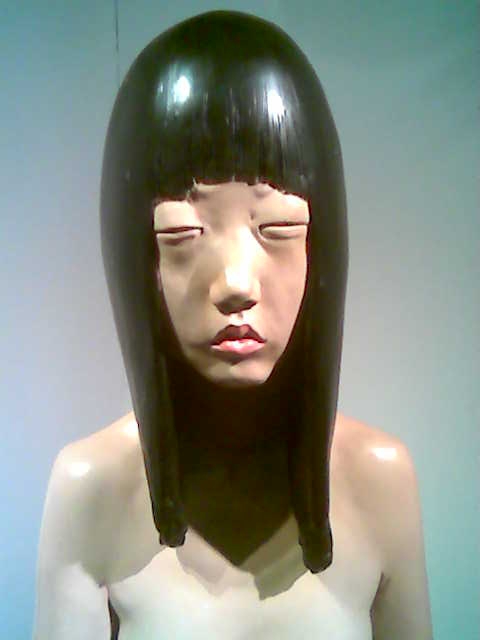
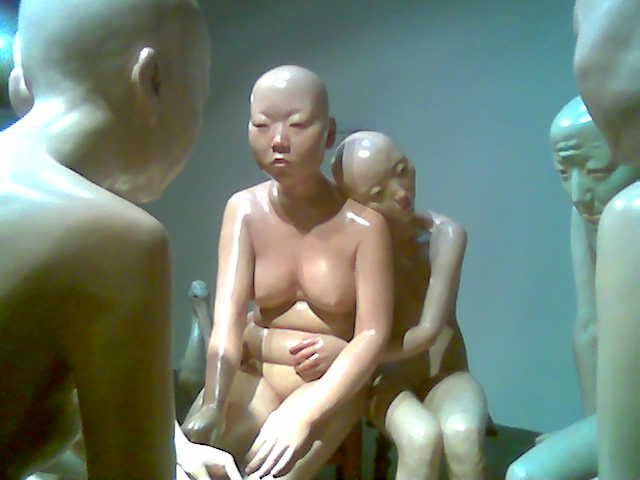
MYTHS AND MONSTROSITIES (Peggy Wauters, A+++++)
http://www.bloggang.com/viewdiary.php?id=merveillesxx&month=03-2008&group=9&date=08&gblog=21
I’m very glad you like Peggy Wauters. Noinong (Lunar) and I like it very much. Her works remind me of the world of Tod Browning and David Lynch.
-------------------------------------
More information on Wauters can be found at:
http://www.nationmultimedia.com/2008/02/21/lifestyle/lifestyle_30066030.php
http://dalihouse.blogsome.com/2008/02/26/the-horror-of-indifference/
Peggy Wauters’ website:
http://p-wauters.exto.nl/
Peggy Wauters’ works in her website:
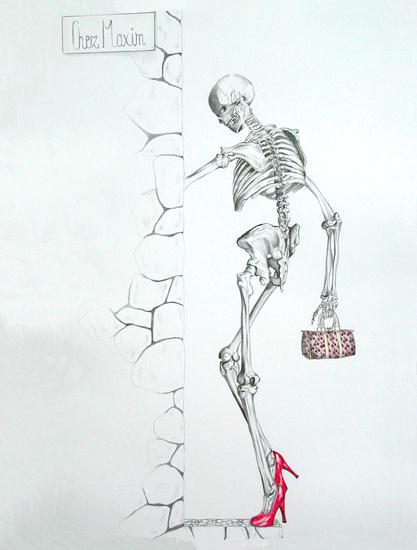
CHEZ MAXIM (2006)
http://farm4.static.flickr.com/3078/2423397768_c4666fda25_o.jpg
THE DIVINE SEDUCTION (2005)
http://farm4.static.flickr.com/3123/2423397770_844d5daab6_o.jpg
A GIFT FROM ABOVE (2006)
http://farm3.static.flickr.com/2307/2423397772_a29c3ba944_o.jpg
MAN WITH RED CUBE II (2007)
http://farm3.static.flickr.com/2287/2423397774_639f92edfd_o.jpg
ORPHAN TRIPLES (2007)
http://farm4.static.flickr.com/3291/2423397776_c7a83a8b52_o.jpg
7 GHOST GIRLS (2008)
http://farm3.static.flickr.com/2183/2423397764_2981ac8d0d_o.jpg
Thursday, April 17, 2008
SEVENTEENTH POLL: EXPERIMENTRESS
I decided to exclude some very famous names from the list, such as Maya Deren, Pimpaka Towira, Tracey Moffatt, or Marguerite Duras. I love these filmmakers very much, but I want to make my list focus on some underappreciated filmmakers.
I LOVE THESE EXPERIMENTAL FILMS BY FEMALE FILMMAKERS VERY MUCH. WHICH FILM DO YOU LIKE?
1.ATOMIK PARK (2003, Dominique Gonzalez-Foerster, France)
2.BERLIN – EXERCISES IN NINE PARTS: DREAMING UNDER WATER OF THINGS AFAR (1975, Rebecca Horn, Germany)
3.BETWEEN (1989, Claudia Schillinger, Germany)
4.BY TOMORROW (2008, Tuksina Pipitkul, Thailand)
This film is a part of the exhibition PIG'S EYE at Conference of Birds Gallery.
http://www.conferenceofbirds.com/
Images from PIG'S EYE:
http://farm3.static.flickr.com/2079/2420307677_c5b382e251_o.jpg
http://farm4.static.flickr.com/3201/2420307685_653551702a_o.jpg
http://farm3.static.flickr.com/2398/2420307679_cee3a52e02_o.jpg
http://farm3.static.flickr.com/2220/2420307681_3f60444894_o.jpg
http://farm4.static.flickr.com/3248/2420307683_551e7ff385_o.jpg
5.BIRTH OF THE SEANEMA (2004, Sasithorn Ariyavicha, Thailand)
http://thaifilmjournal.blogspot.com/2008/02/reviews-birth-of-seanama-sea-sea-part.html
6.FUN RIEM (2006, Luddawan Subpeng, Thailand)
7.FUSES (1965, Carolee Schneemann, USA)
http://www.ubu.com/film/schneeman_fuses.html
8.I'M NOT THE GIRL WHO MISSES MUCH (1986, Pipilotti Rist)
http://www.ubu.com/film/rist.html
9.THE INSANE (2006, Araya Rasdjarmrearnsook, Thailand)
10.LINEAGE OF THE DIVINE (2002, Monika Tichasek, Australia)
11.THE LITTLE GIRL (1997, Nicole Greenwood, Pantipa Tanchookiat, Thailand)
12.LIVING A BEAUTIFUL LIFE (2003, Corinna Schnitt, Gemany)
13.LOCOMOTION IN WATER (2005, Hanna Shell)
I saw this film at Conference of Birds Gallery.
14.NEWS FROM HOME (1977, Chantal Akerman)
http://www.filmref.com/directors/dirpages/akerman.html#news
15.PHANTOM LOVE (2007, Nina Menkes, USA)
16.PHYSICAL REQUIREMENTS FOR BEING AN ARTIST – ENJOY YOURSELF IN EVERY CONDITION, PART 2 (2000, Chang Jia, South Korea)
http://www.kopenhagen.dk/billeder/reportage/seoul_until_now_charlottenborg/
17.RED SAGA (2004, Gabriela Krista Dalena, Philippines)
18.RISE SON (2006, Visra Vichit-vadakan, Thailand)
19.SEEING SPACE AND HEARING SPACE (1974, Valie Export)
20.SOMETHING HAPPENED (2007, Keren Cytter)
http://www.youtube.com/watch?v=9X6XHYi44FE
You can cast multiple votes. :-)
Saturday, March 08, 2008
I'VE NEVER HEARD OF CAROLINE ROBOH, SHIMAKO SATO, LOUISE BOURQUE, AND SUZANA AMARAL
http://twilightvirus.blogspot.com/2008/03/88-favorite-films-by-female-film.html
Hahahahaha. I think “John Putch”, who directed VALERIE FLAKE, is a male director. But VALERIE FLAKE is one of my most favorite films about woman, and also one of my most favorite films of all time.
You can read John Putch’s biography here:
http://www.putchfilms.com/biography/bio.html
In your list I have seen these films:
(In no particular order)
Group A+
1. Agatha et les lectures illimitées (Marguerite Duras) France, 1981
2. The All-Around Reduced Personality (Die Allseitig reduzierte Persönlichkeit – Redupers) Germany, 1978
3. The Apple (Sib) (Samira Makhmalbaf) Iran, 1998
4. At Land (Maya Deren) USA, 1944
5. The Birth of Seanema (Sasithorn Ariyavicha) Thailand, 2004
6. Daguerréotypes (Agnès Varda) France, 1976
7. Female Perversions (Susan Streitfeld) Germany / USA, 1996
8. Final Score (Soraya Nakasuwan) Thailand, 1997
9. Freak Orlando (Ulrike Ottinger) Germany, 1981
10. The Gleaners & I (Glaneurs et la glaneuse) (Agnès Varda) France, 2000
11. The Heartbreak Kid (Elaine May) USA, 1972
12. Hotel (Jessica Hausner) Austria, 2004
13. Hungerjahre - in einem reichen Land (The Hunger Years: In a Land of Plenty) (Jutta Brückner) Germany, 1980
14. In My Skin (Dans Ma Peau) (Marina de Van) France, 2002
15. Mikey and Nicky (Elaine May) USA, 1976
16. Monster (Patty Jenkins) USA / Germany, 2003
17. My Life without Me (Isabel Coixet) Spain / Canada, 2003
18. Nathalie Granger (Marguerite Duras) France, 1972
19. Nuit et Jour (Night and Day) (Chantal Akerman) France / Belgium / Switzerland,1991
20. Peppermint - Frieden (Peppermint Freedom) (Marianne Rosenbaum) Germany, 1983
21. Petits arrangements avec les morts (Pascale Ferran) France, 1994
22. L’ Annulaire (The Ring Finger) (Diane Bertrand) France, 2005
23. Der Schlaf der Vernunft (The Sleep of Reason) (Ula Stöckl) Germany, 1984
24. Sleepwalk (Sara Driver) USA, 1986
25. Das Dritte Fenster (The Third Window) (Hanna Nordholt and Fritz Steingrobe) Germany, 1997 (short film)
(26. Valerie Flake (John Putch) USA, 1999)
27. Wanda (Barbara Loden) USA, 1970
Group A
28. Blue Steel (Kathryn Bigelow) USA, 1990
29. Gas, Food Lodging (Allison Anders) USA, 1992
30. Golden Eighties (Window Shopping) (Chantal Akerman) France /Belgium, 1986
31. Männer... (Doris Dörrie) Germany, 1985
32. Orlando (Sally Potter) UK / Russia / France, 1992
33. Sink or Swim (Su Friedrich) USA, 1990
34. Moe no suzaku (Naomi Kawase) Japan, 1997
35. 3 Men and A Cradle (3 hommes et un couffin) (Coline Serreau)France, 1985
Group A-
36. The Last Days of Chez Nous (Gillian Armstrong) Australia, 1992
37. My Father is Coming - Ein Bayer in New York (Monika Treut)Germany, 1991
38. Office Killer (Cindy Sherman) USA, 1997
39. 2 Days in Paris (Julie Delpy) France / Germany, 2007
40. Women on Top (Fina Torres) USA, 2000
Group B+
41. The Night Porter (Il Portiere di notte) (Liliana Cavani), Italy,1974
These are the films in your list which I haven't seen:
1.Clémentine Tango (Caroline Roboh) France, 1983
2. My 20th Century (Az Én XX. századom) (Ildikó Enyedi) Hungary / Germany, 1989
3. A Tale of Vampire (Shimako Sato) UK, 1992
4. Short Encounters (Kira Muratova) USSR, 1967
5. You Are Not I (Sara Driver) USA, 1981 (short film)
6. El-Havi (The Street) (Dima El-Horr) Lebanon, 1997 (short film)
7. Smooth Talk (Joyce Chopra) USA, 1985
8. Strangers in Good Company (Cynthia Scott) Canada, 1990
9. Marianne and Juliane / The German Sisters (Die Bleierne Zeit)(Magarethe Von Trotta) Germany, 1981
10. Three Sisters / Love and Fear (Paura e Amore / Fürchten und Lieben) (Magarethe Von Trotta) France / Italy / Germany, 1988
11. Sisters, or the Balance of Happiness (Schwestern oder Die Balance des Glücks) (Magarethe Von Trotta) Germany, 1979
12. Boxing Helena (Jennifer Chambers Lynch) USA, 1993
13. Summer Snow (Nu ren si shi) (Ann Hui) Hong Kong, 1995
14. Bedevil (Tracy Moffatt) Australia, 1993
15. Swept Away... by an Unusual Destiny in the Blue Sea of August (Travolti da un insolito destino nell'azzurro mare d'agosto) (Lina Wertmüller) Italy, 1974
16. Working Girls (Lizzie Borden) USA, 1986
17. Thank You and Goodnight (Jan Oxenberg) USA, 1991
18. L’ Adolescente (Jeanne Moreau) France, 1979
19. Toute une nuit (All Night Long) (Chantal Akerman) France / Belgium, 1982
20. A New Leaf (Elaine May) USA, 1971
21. Zur Sache, Schätzchen (May Spils) Germany, 1968
22. The Hitch-Hiker (Ida Lupino) USA, 1953
23. Heaven (Diane Keaton) USA, 1987
24. Peau d'homme coeur de bête (Skin of Man, Heart of Beast) (Hélène Angel) France, 1999
25. Broken Mirrors (Gebroken spiegels) (Marleen Gorris) Netherlands, 1984
26. Peppermint Soda (Diabolo menthe) (Diane Kurys) France, 1977
27. La Ciénaga, (Lucrecia Martel) Argentina, 2001
28. Neun Leben hat die Katze (The Cat Has Nine Lives) (Ula Stöckl) Germany, 1968
29. Sweetie (Jane Campion) Australia, 1989
30. Brève traversée (Brief Crossing) (Catherine Breillat) France, 2001
31. Mina Tannenbaum (Martine Dugowson) France, 1994
32. Shadow Magic (Xi yang jing) (Ann Hu) China / Germany /Taiwan, 2000
33. The People in the House (Louise Bourque) Canada, 1994
34. Hra o jablko (The Apple Game) (Vera Chytilova) Czechslovakia, 1976
35. Innocence (Lucile Hadzihalilovic) France, 2004
36. Passionless Moments (Jane Campion) Australia, 1983 (short film)
37. Hour of the Star (A Hora da Estrela) (Suzana Amaral) Brazil, 1985
38. Chocolat (Claire Denis) France, 1988
39. Le livre de Marie (Anne-Marie Miéville) France, 1984
40. Hitlers Hitparade (Susanne Benze + Oliver Axe) Germany, 2003
41. Néa (Nelly Kaplan) France, 1976
42. Miss Mary (María Luisa Bemberg) Argentina / USA, 1986
43. a segment in Lumiere and Company (Helma Sanders-Brahms) France /Germany, 1995
44. The Girl (Eltávozott nap) (Márta Mészáros) Hungary, 1968
45. The Girls (Flickorna) (Mai Zetterling) Sweden, 1968
46. Sugar Cane Alley (Rue cases nègres) (Euzhan Palcy) France / Martinique,1983
47. Olivier, Olivier (Agnieszka Holland) France, 1992